The field notes
A journey with rhythm
Private guiding, thoughtful pacing, and enough room to absorb each place rather than simply pass through it.
PrivateThoughtfulLocal

Discover the Serenity of Mount Kailash Mansarovar via Lhasa
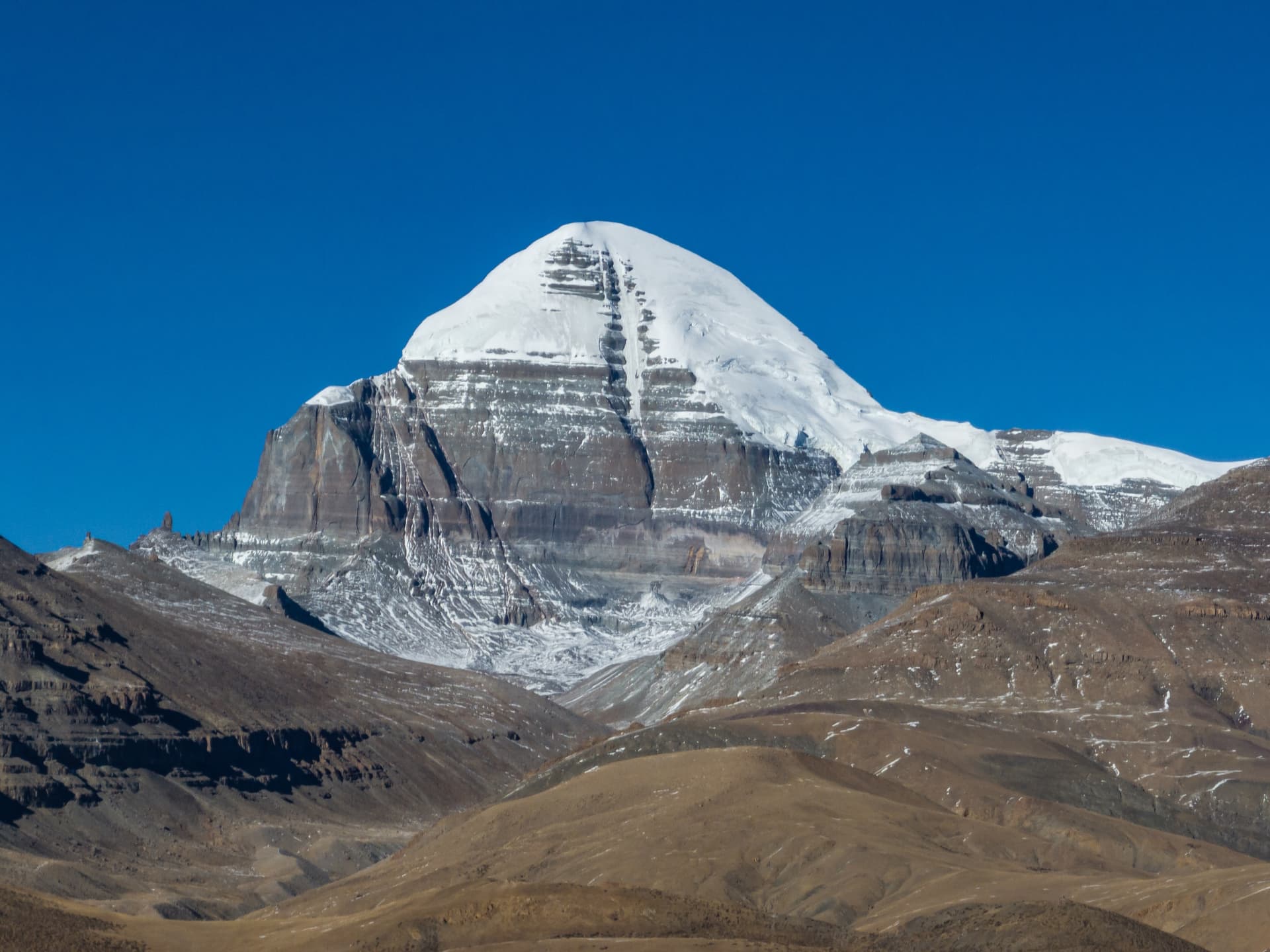
Cross Tibet from Lhasa to Kathmandu, combining its sacred capital, Everest’s North Face, Lake Manasarovar and the demanding three-day Mount Kailash kora.
Journey overview
The Lhasa to Kathmandu via Everest Base Camp and Mount Kailash Tour is a 13-day, one-way journey across central and western Tibet. It combines Lhasa’s important cultural landmarks, the northern side of Mount Everest, sacred Lake Manasarovar and the three-day Mount Kailash kora before continuing through Kyirong to Kathmandu. Unlike shorter Lhasa–Everest Base Camp tours, this itinerary travels deep into western Tibet and includes the complete outer kora around Mount Kailash.
The journey begins in Lhasa at approximately 3,650 metres. You may arrive by train from a city in mainland China or by flight from Kathmandu, Beijing, Chengdu or another connected Chinese city. After meeting your Tibetan guide, you will transfer to your hotel and spend the remainder of the day resting. Two full days of sightseeing in Lhasa provide essential acclimatization while introducing you to the Potala Palace, Jokhang Temple, Barkhor pilgrimage circuit, Drepung Monastery and Sera Monastery.
Leaving Lhasa, the overland journey passes turquoise Yamdrok Lake, Karo La Glacier and the historic town of Gyantse before reaching Shigatse. From Shigatse, you travel through the high passes and open landscapes of the Tibetan Plateau to the Rongbuk and Everest Base Camp area. When the weather is clear, the route and designated tourist viewpoint provide remarkable views of Mount Everest’s North Face. Access to the Rongbuk area uses the mandatory local eco-bus service from Tashi Dzom.
The journey then turns west toward Saga and Lake Manasarovar, one of the most sacred lakes in Asia. Time is provided beside the lake for contemplation, prayers and rituals permitted under current local regulations. You then continue to Darchen, the gateway to the Mount Kailash kora.
The three-day kora begins with a local shuttle to Yama Dwar, followed by a gradual walk to Dirapuk beneath the north face of Mount Kailash. The second day is the most physically demanding, crossing Dolma La Pass at approximately 5,630 metres before descending to Zuthulpuk. The final walking day completes the circuit and returns you to Darchen.
After the kora, the route continues to Saga and Kyirong before crossing the Tibet–Nepal border. A Nepal-side vehicle will meet you at the border and transfer you to Kathmandu, where the tour ends on Day 13.
Eight nights are provided in hotels with attached bathrooms and hot showers. The four nights at Rongbuk, Lake Manasarovar, Dirapuk and Zuthulpuk use basic dormitory-style guesthouses without hot showers. Meals are not included, although a Nepalese cook and Sherpa support team can be arranged at an additional cost.
This is a demanding high-altitude journey involving long driving days, simple mountain accommodation and three days of walking above 4,600 metres. It is most suitable for physically prepared travellers who understand the effects of altitude and are comfortable with basic facilities in remote areas.
Trip highlights
Spend three nights in Lhasa for sightseeing and gradual acclimatization.
Visit the Potala Palace, Jokhang Temple, Barkhor Street, Drepung and Sera monasteries.
Travel past Yamdrok Lake, Karo La Glacier, Gyantse and Shigatse.
See Mount Everest’s North Face from the Rongbuk and designated EBC tourist area.
Visit sacred Lake Manasarovar before beginning the Mount Kailash pilgrimage.
Complete the three-day Mount Kailash kora across Dolma La Pass at approximately 5,630 metres.
Cross the Tibetan Plateau from Lhasa to Kathmandu through Saga and Kyirong.
Day by day
Walk the route one day at a time — meals, overnight stays, and the details that shape each stage.
Arrive in Lhasa by train from mainland China or by flight from Kathmandu, Beijing, Chengdu or another connected Chinese city. Your Tibetan guide will meet you at Lhasa Railway Station or Gonggar Airport and transfer you to your hotel.
Lhasa is already at a considerable altitude, so the remainder of the day is reserved for rest and acclimatization. Avoid strenuous activity, walk slowly and drink sufficient fluids. Your guide will provide practical information about the journey, local conditions and the high-altitude route ahead.
Begin your exploration of Lhasa with a visit to the Potala Palace, the city’s most recognizable landmark and an important symbol of Tibetan history and culture. The palace contains chapels, ceremonial halls, religious artwork, and the former living quarters of successive Dalai Lamas.
Continue to the Jokhang Temple, one of the most revered pilgrimage destinations in Tibetan Buddhism. Outside the temple, walk through Barkhor Street and observe pilgrims completing their clockwise circuit around the sacred complex. The steady sightseeing pace also assists your body in adjusting to Lhasa’s altitude.
Today’s sightseeing focuses on two of Tibet’s most important monastic institutions. Visit Drepung Monastery, historically one of the largest monasteries in Tibet, and explore its assembly halls, courtyards and chapels.
Later, continue to Sera Monastery, known for its long tradition of philosophical study. When operating schedules permit, you may observe the monks’ distinctive debating sessions in the monastery courtyard.
This second full day in Lhasa provides additional acclimatization before the journey begins crossing passes above 4,500 metres.
Leave Lhasa and cross Kamba La Pass for panoramic views of Yamdrok Lake, one of Tibet’s most beautiful high-altitude lakes. Continue past Karo La Glacier before reaching the historic town of Gyantse.
In Gyantse, visit Pelkor Chode Monastery and the multi-level Gyantse Kumbum, known for its chapels, murals and religious artwork. Afterwards, continue through the Nyang Chu Valley to Shigatse, Tibet’s second-largest city.
Visit Tashilhunpo Monastery in Shigatse before beginning the drive toward the Mount Everest region. The route passes through Lhatse and Tingri and crosses high mountain passes where distant Himalayan views may be visible in clear weather.
At Gawula Pass, weather permitting, look across a remarkable Himalayan panorama that can include Everest, Lhotse, Makalu and Cho Oyu. Continue to Tashi Dzom, where private vehicles stop and travellers board the mandatory local eco-bus to the Rongbuk area.
Visit Rongbuk Monastery and enjoy views of Mount Everest’s North Face from the designated tourist area. Sunset views depend entirely on the weather. Overnight facilities at Rongbuk are basic, with dormitory beds and no hot shower.
Wake early for a possible sunrise view of Mount Everest. Visibility cannot be guaranteed, but clear mornings can provide some of the journey’s most impressive mountain scenery.
After visiting the permitted Rongbuk and Everest tourist areas, take the local eco-bus back to Tashi Dzom and rejoin your private vehicle. Continue west through the vast Tibetan Plateau toward Saga. Depending on the final road and permit arrangements, the route may provide views of Peiku Tso Lake and Shishapangma in the distance.
Arrive in Saga in the evening and rest after a long driving day.
Depart Saga early and travel west through an increasingly remote section of the Tibetan Plateau. The road passes high plains, mountain passes, rivers and small settlements before approaching the Kailash region.
On a clear day, the first distant view of Mount Kailash may appear before you reach Lake Manasarovar. Arrive beside the sacred lake and settle into the simple guesthouse.
Accommodation and sanitation facilities are basic, and hot showers are unavailable. Direct immersion in the lake may be prohibited; all prayers and shoreline rituals must follow the instructions of the guide and local authorities.
Spend the morning beside Lake Manasarovar, allowing time for contemplation, photography, prayers or permitted religious rituals. The appearance of Mount Kailash and the surrounding mountains depends on cloud and weather conditions.
Later, drive to Darchen, the base town for the Mount Kailash kora. The remainder of the day is reserved for rest and final preparation. Repack your belongings so that you carry only the essentials needed for the three walking days.
Travellers requiring a horse, horse handler or porter should discuss availability and local costs with the guide. These services are not included and cannot always be guaranteed at short notice.
Take the mandatory local shuttle from Darchen to Yama Dwar, the traditional starting point of the walking route. Begin the first stage of the Mount Kailash kora through the broad Lha Chu Valley.
The trail climbs gradually and passes Tarboche and other religious landmarks before turning toward the north face of Mount Kailash. Although this is the least difficult of the three walking days, the altitude makes even gradual terrain physically demanding.
Arrive at Dirapuk in the afternoon. The guesthouse is extremely basic, with dormitory beds, shared facilities and no hot shower.
Begin before sunrise for the most difficult day of the journey. The trail climbs steeply from Dirapuk toward Dolma La Pass, the highest point of the Mount Kailash kora at approximately 5,630 metres.
After reaching the pass, descend carefully over steep and uneven terrain. The descent passes above Gauri Kund before continuing into a broader valley leading toward Zuthulpuk.
The combination of altitude, steep ascent, rocky descent and long walking distance makes this a demanding day. Walk slowly, follow your guide’s instructions and do not continue if serious altitude symptoms develop.
Start early and follow the easier final section of the kora through a wide valley. After completing the walk, meet the vehicle for the short transfer back to Darchen.
Following a brief rest, begin the long drive to Saga. This is the longest combined trekking and driving day in the itinerary and may continue into the evening. The schedule depends on walking speed, road conditions and local traffic restrictions.
Travellers unable to complete the kora according to schedule may require additional accommodation or transportation at their own expense.
Leave Saga and travel toward Kyirong, gradually descending from the high Tibetan Plateau. The landscape changes considerably as the road approaches the Himalayan border region, with deeper valleys and increasingly green surroundings.
Arrive in Kyirong and complete any preparations required for the following day’s border crossing. Your guide will advise you about baggage, immigration procedures and the expected departure time.
NoteDue to the recent flash flood at the Rasuwagadhi–Kyirong border, entry and exit through this crossing are suspended until further notice. Please contact us to arrange a suitable alternative route.
Drive from Kyirong to the China–Nepal border and complete Chinese departure formalities. After crossing the border, complete Nepal immigration procedures and meet the Himalayan Windows representative and vehicle on the Nepal side.
Continue by road through the mountain valleys of Rasuwa toward Kathmandu. Travel time can vary considerably because of border procedures, traffic, landslides and road conditions.
The tour ends upon arrival in Kathmandu. Hotel accommodation, sightseeing and an international airport transfer in Kathmandu can be arranged separately if required.
NoteDue to the recent flash flood at the Rasuwagadhi–Kyirong border, entry and exit through this crossing are suspended until further notice. Please contact us to arrange a suitable alternative route.
Private vehicle & English-speaking guide throughout · Lhasa
Trip essentials
A clear split between what we arrange and what you budget yourself.
Before you go
Continue exploring
10 DAY(S) · 1–25 PAX
TIBET TRIP FROM KATHMANDU 2026 |GUIDED TOUR PACKAGE
9 DAY(S) · 1–12 PAX
TIBET TRIP FROM KATHMANDU 2026 |GUIDED TOUR PACKAGE