The field notes
A journey with rhythm
Private guiding, thoughtful pacing, and enough room to absorb each place rather than simply pass through it.
PrivateThoughtfulLocal

Trip to Kailash via Simikot | Shortest route for Kailash Yatra
Fly through Nepalgunj, Simikot and Hilsa to Lake Manasarovar, then complete the sacred three-day Mount Kailash kora.
Journey overview
The Kailash Mansarovar Tour via Simikot is designed for pilgrims and travellers who want to reach Mount Kailash through one of the fastest available routes from Kathmandu. Instead of spending several days driving across Nepal and western Tibet, this itinerary combines scheduled flights to Nepalgunj and Simikot with a helicopter shuttle to Hilsa, near the Nepal–Tibet border.
The 9-day journey begins with a flight from Kathmandu to Nepalgunj. The following morning, you fly to Simikot in the remote Humla region before continuing by helicopter to Hilsa. After crossing the border on foot, your Tibetan guide and driver receive you and take you to Purang, also known as Taklakot. This rapid transition from Nepal’s lowlands to the high Tibetan Plateau makes the route convenient, but it also requires careful acclimatization. A full rest day in Purang is therefore included before travelling higher.
From Purang, the journey continues to sacred Lake Manasarovar, situated at approximately 4,590 metres. You can spend time beside the lake, enjoy views of Mount Kailash and the Gurla Mandhata range, and perform prayers or other rituals permitted by the local authorities. Direct immersion in the lake is not permitted, and all activities must follow current conservation and local regulations.
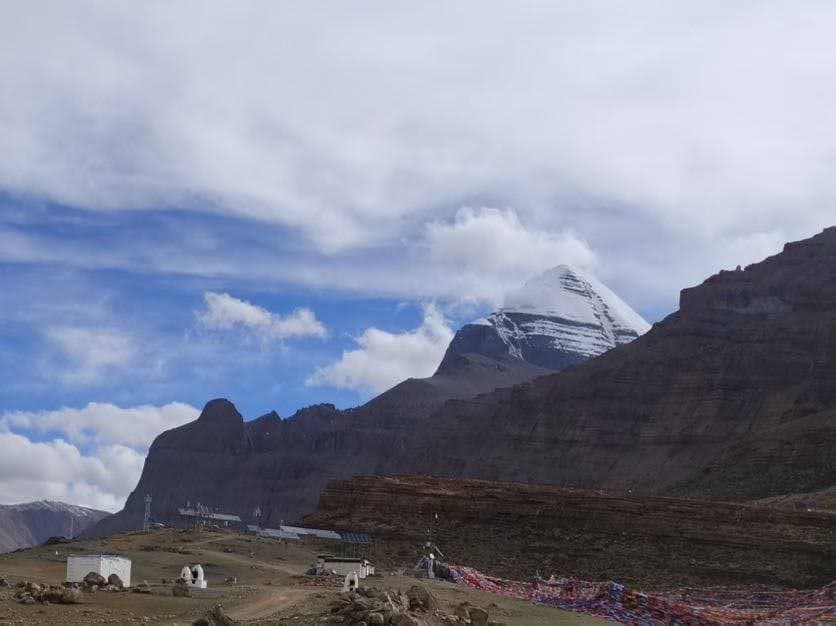
The spiritual centrepiece of the tour is the three-day Mount Kailash kora. Beginning near Darchen, the trail leads to Dirapuk beneath the dramatic north face of Mount Kailash. The second day is the most demanding, crossing Dolma La Pass at approximately 5,630 metres before descending towards Zutulpuk. The final walk completes the outer circuit, after which you return by vehicle to Purang.
This route is physically demanding despite its short duration. Travellers sleep above 4,500 metres for several nights and must be prepared for cold temperatures, basic guesthouses and long walking days. The Dolma La crossing involves steep ascents and descents at extreme altitude. Previous high-altitude trekking experience is helpful but not compulsory; appropriate fitness, realistic expectations and medical preparation are essential.
The return journey follows the same route through Hilsa and Simikot. Because the helicopter and mountain flights operate only in suitable weather, the itinerary includes a contingency day. Same-day connections to Kathmandu cannot be guaranteed.
The 9-day program begins when you depart Kathmandu for Nepalgunj. If a Tibet Group Visa is required, you should arrive in Kathmandu at least four working days earlier. Kathmandu accommodation, sightseeing and airport transfers can be arranged at additional cost.
Day by day
Walk the route one day at a time — meals, overnight stays, and the details that shape each stage.
Your journey begins with a scheduled flight from Kathmandu to Nepalgunj, a city in the western lowlands of Nepal. The flight normally takes about one hour and offers contrasting views of the hills, plains and distant Himalayan ranges.
After landing, our local representative will transfer you to the hotel. The remainder of the day is available for rest, a final equipment check and a briefing about the following morning’s mountain flight.
Your Kathmandu accommodation before this departure day is not included but can be arranged on request.
Starting elevation: Kathmandu, approximately 1,400m Sleeping elevation: Nepalgunj, approximately 150m Flight duration: Approximately 50–60 minutes Accommodation: Three-star hotel in Nepalgunj Meals: Dinner
NoteFlight duration: Approximately 50–60 minutes
Transfer to Nepalgunj Airport early in the morning for the scheduled mountain flight to Simikot. The flight takes approximately one hour and lands at Simikot Airport in the remote Humla region.
From Simikot, continue by helicopter to Hilsa. Helicopter flights normally operate as shuttles and may carry four or five passengers at a time, depending on weather, luggage weight and operating conditions. Larger groups may therefore travel in separate rotations.
After landing in Hilsa, walk for approximately 10–20 minutes to the Nepal–Tibet border. Complete immigration formalities, meet your Tibetan guide and driver, and continue by road to Purang, traditionally known as Taklakot.
The rapid ascent from Nepalgunj to Purang makes it important to rest, remain hydrated and immediately inform your guide about headaches, nausea, dizziness or unusual breathlessness.
Highest elevation: Purang, approximately 3,900m Nepalgunj–Simikot flight: Approximately 50–60 minutes Simikot–Hilsa helicopter: Approximately 15–20 minutes Driving distance: Approximately 25–30km Driving time: Approximately 1 hour, excluding border formalities Accommodation: Guesthouse in Purang Meals: Breakfast, lunch and dinner
NoteFrom Simikot, continue by helicopter to Hilsa. Helicopter flights normally operate as shuttles and may carry four or five passengers at a time, depending on weather, luggage weight and operating conditions. Larger groups may therefore travel in separate rotations.
Spend a full day in Purang to help your body adjust to the elevation. This is an essential acclimatization day rather than an ordinary sightseeing day.
Take a gentle walk around the town, rest at the guesthouse and drink plenty of fluids. Avoid strenuous exercise, alcohol and smoking. Depending on local permission and your physical condition, the guide may arrange a short walk in the surrounding area.
The guide will also brief the group about Lake Manasarovar, the Mount Kailash kora, guesthouse conditions and the equipment required for the following days.
Sleeping elevation: Approximately 3,900m Optional walking time: 1–2 hours Accommodation: Guesthouse in Purang Meals: Breakfast, lunch and dinner
After breakfast, drive across the western Tibetan Plateau towards Lake Manasarovar. The journey passes through a vast high-altitude landscape, with possible views of Rakshas Tal, Mount Kailash and the snow-covered Gurla Mandhata range.
On arrival at Lake Manasarovar, spend time beside the sacred lake for reflection, meditation and prayers. Direct bathing or full immersion in the lake is prohibited. Any puja, water collection or other religious activity must follow the instructions of the guide and current local regulations.
A vehicle journey along the permitted section of the lakeshore will be arranged. A broader lake circuit depends on road conditions, timing and authorization from the local authorities.
Sleeping elevation: Approximately 4,590m Driving distance: Approximately 90–100km, excluding the lake circuit Driving time: Approximately 2½–3 hours, plus stops and lakeshore exploration Accommodation: Basic guesthouse near Lake Manasarovar Meals: Breakfast, lunch and dinner
Enjoy the morning atmosphere beside Lake Manasarovar before driving to Darchen, the base town for the Mount Kailash kora. Continue towards Yamadwar or the designated trailhead, where the walking section begins.
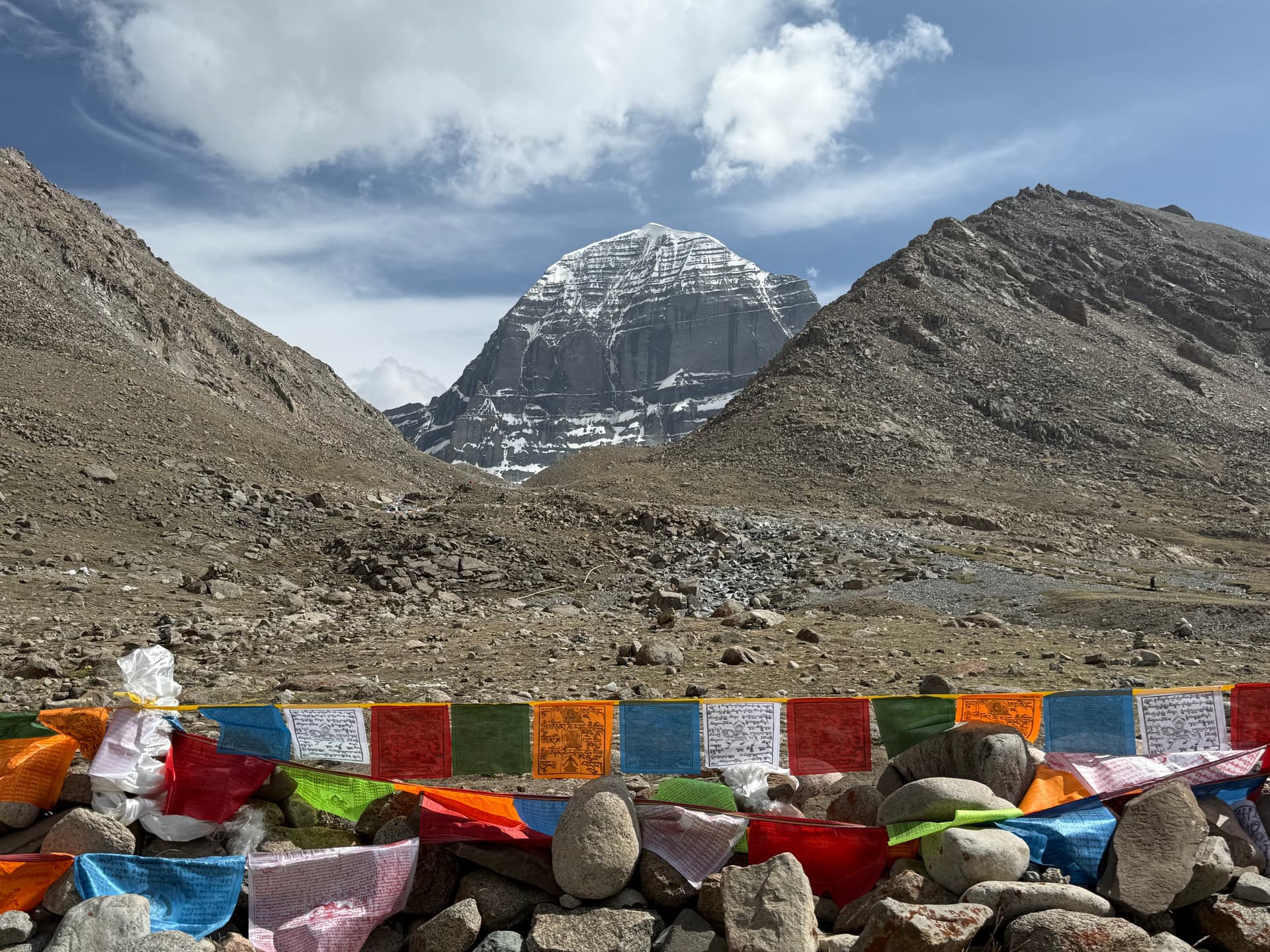
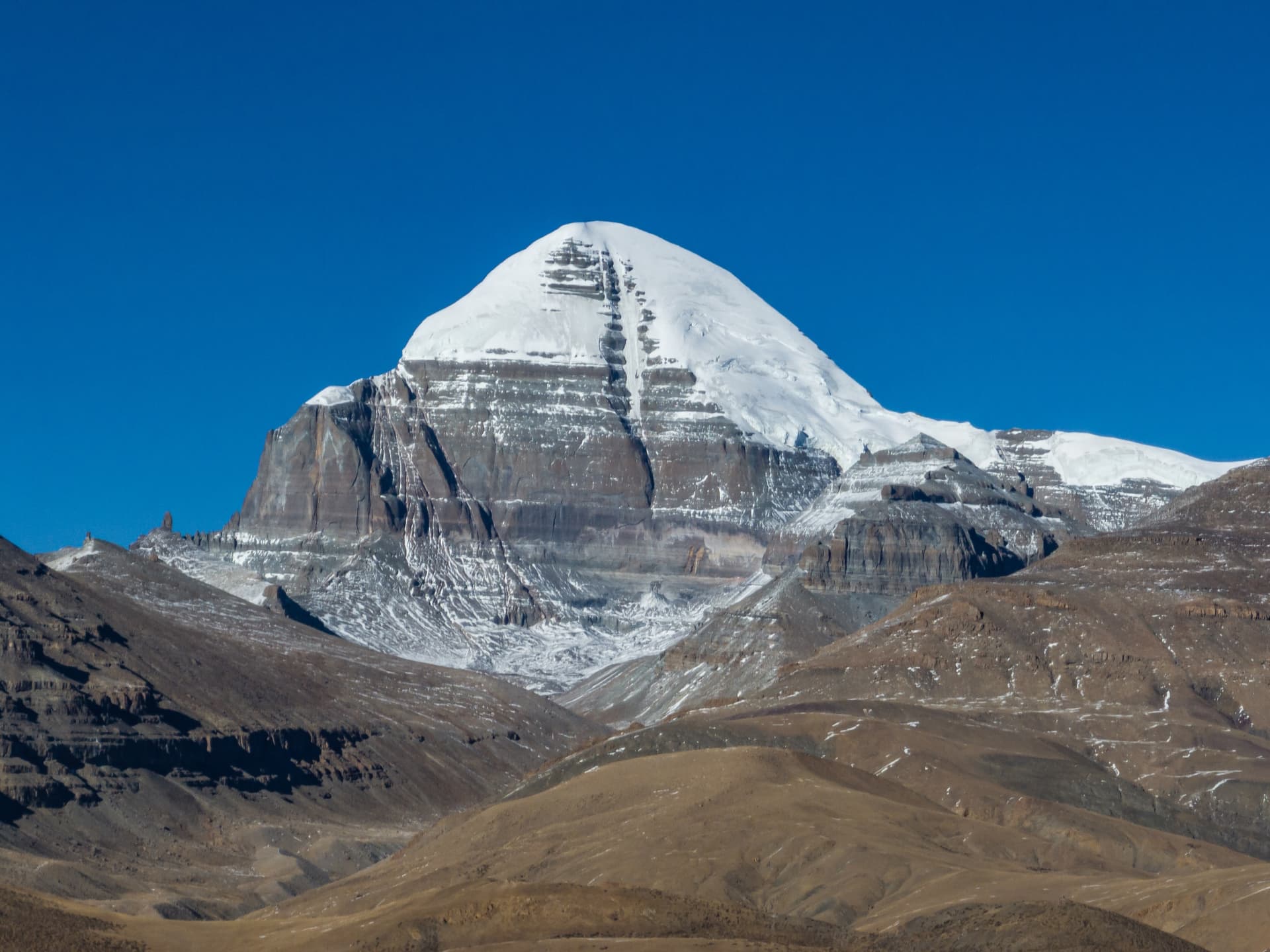
The trail follows the Lha Chu Valley through an open landscape of cliffs, prayer flags and pilgrimage sites. As you approach Dirapuk, the magnificent north face of Mount Kailash comes into view.
Walk slowly and maintain a comfortable pace. Those who decide not to undertake the kora can return to Darchen and remain there until the group completes the circuit. This alternative must be arranged in advance.
Starting elevation: Approximately 4,590m Sleeping elevation: Dirapuk, approximately 5,080m Driving time: Approximately 1½–2 hours Walking distance: Approximately 12–14km Walking time: Approximately 5–6 hours Accommodation: Basic multiple-sharing guesthouse in Dirapuk Meals: Breakfast, packed lunch and dinner
Begin before sunrise for the most challenging day of the pilgrimage. The trail climbs gradually and then steeply towards Dolma La Pass, the highest point of the Mount Kailash kora.
At approximately 5,630 metres, Dolma La is often cold and windy, and its weather can change without warning. After crossing the pass, descend carefully along a steep and rocky trail. Gauri Kund can generally be seen below the trail, but approaching the lake is difficult and may not be permitted.
Continue through the valley to Zutulpuk. This is a long day at extreme altitude, and travellers should immediately inform the guide if they experience severe headache, confusion, breathing difficulty, loss of coordination or persistent vomiting.
Starting elevation: Approximately 5,080m Highest elevation: Dolma La Pass, approximately 5,630m Sleeping elevation: Zutulpuk, approximately 4,790m Walking distance: Approximately 20–22km Walking time: Approximately 8–10 hours Accommodation: Basic multiple-sharing guesthouse in Zutulpuk Meals: Breakfast, packed lunch and dinner
Follow a comparatively gentle trail along the valley to the official endpoint of the kora. A vehicle will meet the group and transfer you back to Darchen.
After regrouping with any travellers who did not undertake the kora, continue by road to Purang. The lower sleeping elevation provides welcome relief after two nights near or above 4,800 metres.
Starting elevation: Approximately 4,790m Sleeping elevation: Purang, approximately 3,900m Walking distance: Approximately 8–10km Walking time: Approximately 3–4 hours Driving time: Approximately 3 hours Accommodation: Guesthouse in Purang Meals: Breakfast, lunch and dinner
After breakfast, drive from Purang to the border and complete Chinese and Nepalese immigration procedures. Walk to the Hilsa helicopter landing area and fly back to Simikot.
If weather, border timing and scheduled flight availability permit, continue from Simikot to Nepalgunj and then to Kathmandu. However, these connections cannot be guaranteed. You may need to stay in Simikot or Nepalgunj and continue the following day.
The final overnight location will therefore depend on that day’s operating conditions. Additional accommodation and meals caused by weather delays are payable separately.
Purang–border drive: Approximately 1 hour Border walk: Approximately 10–20 minutes Hilsa–Simikot helicopter: Approximately 15–20 minutes Possible overnight: Simikot, Nepalgunj or Kathmandu Meals: Breakfast and packed lunch
This day is reserved for weather-related delays and completion of the return flights through Nepalgunj.
If you arrived in Kathmandu on Day 8, the day is free for rest or optional sightseeing. Himalayan Windows can arrange Kathmandu accommodation, airport transfers and visits to places such as Pashupatinath, Boudhanath or other heritage sites at additional cost.
Travellers should avoid booking an inflexible international flight on this day because weather disruptions in Hilsa and Simikot can occasionally last longer than expected.
Possible flights: Simikot–Nepalgunj and Nepalgunj–Kathmandu Accommodation: Kathmandu hotel can be arranged at additional cost Meals: Not included
Private vehicle & English-speaking guide throughout · Kathmandu
Trip essentials
A clear split between what we arrange and what you budget yourself.
Before you go
Continue exploring
10 DAY(S) · 1–25 PAX
TIBET TRIP FROM KATHMANDU 2026 |GUIDED TOUR PACKAGE
14 DAY(S) · 1–12 PAX
TIBET TRIP FROM LHASA 2026 |GUIDED TOUR PACKAGE
Potala Palace