The field notes
A journey with rhythm
Private guiding, thoughtful pacing, and enough room to absorb each place rather than simply pass through it.
PrivateThoughtfulLocal

Three High Passes Everest Trek Itinerary w/Prices 2024/025
Everest Three Passes Trek 17 days crossing Kongma La, Cho La and Renjo La with Everest Base Camp, Kala Patthar, Gokyo Lakes and Gokyo Ri.
Journey overview
The Everest Three Passes Trek – 17 Days is one of Nepal’s most complete and demanding high-altitude trekking adventures. Beginning with a mountain flight to Lukla, the route crosses Kongma La (5,535m), Cho La (5,420m), and Renjo La (5,360m) while linking the Imja, Khumbu, Gokyo, and Bhote Koshi valleys. Along the way, you visit Everest Base Camp, climb Kala Patthar and Gokyo Ri, explore the Gokyo Lakes, cross the Khumbu and Ngozumpa glaciers, and return through the historic Sherpa village of Thame.
Unlike the standard Everest Base Camp Trek, this journey forms an extensive circuit through both popular and remote parts of the Everest region. After following the classic trail through Phakding, Namche Bazaar, Tengboche, and Dingboche, you enter the Imja Valley and continue to Chhukung. The first major challenge is Kongma La, the highest of the three passes, followed by a descent across the Khumbu Glacier to Lobuche.
The route then reaches Everest Base Camp (5,364m), situated beneath the dramatic Khumbu Icefall. Mount Everest itself is better seen from Kala Patthar (5,545m), the highest point of the itinerary and one of the finest viewpoints in the region. From Kala Patthar, you can enjoy close views of Everest, Nuptse, Pumori, Lhotse, and the surrounding glaciers.
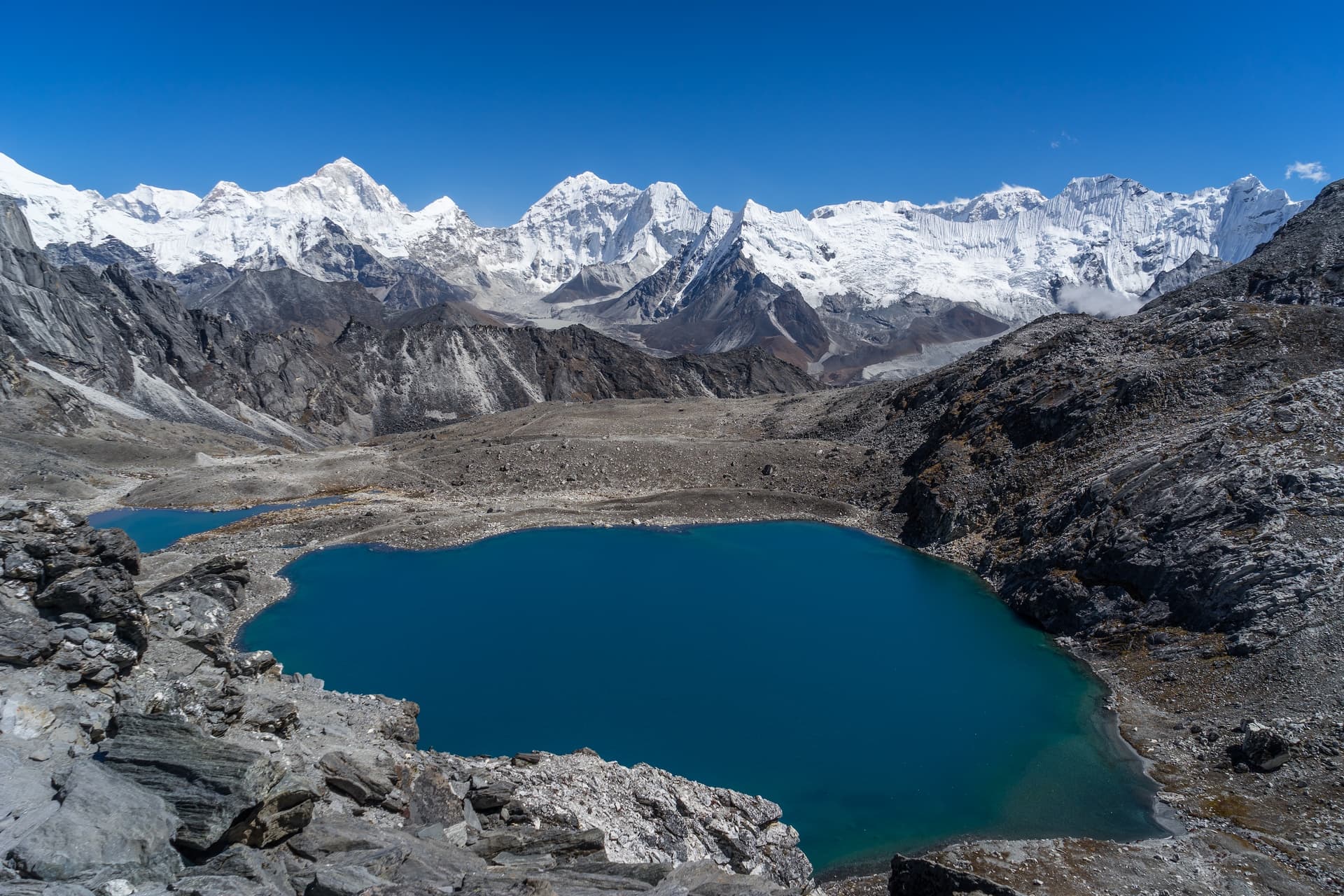
The adventure continues across Cho La to Thangnak and Gokyo. Here, the turquoise Gokyo Lakes contrast beautifully with the surrounding snow-covered mountains. A climb to Gokyo Ri (5,357m) provides a panoramic view of four of the world’s highest peaks: Everest, Lhotse, Makalu, and Cho Oyu. The final crossing, Renjo La, leads into the quieter Bhote Koshi Valley before the trail descends through Lungden and Thame to Namche Bazaar.
This 17-day Everest Three High Passes Trek covers approximately 160–170 kilometres, depending on trail conditions and acclimatization hikes. Most days involve five to eight hours of walking, while the pass-crossing days can require seven to ten hours. The itinerary includes acclimatization days in Namche Bazaar and Dingboche, helping trekkers prepare gradually before crossing three passes above 5,300 metres.
Although the route does not normally require technical mountaineering, it involves steep climbs, rocky moraine, glacier crossings, long trekking days, and possible snow or ice. Traction equipment may be necessary depending on the conditions. Previous multi-day trekking experience, excellent fitness, proper preparation, and a positive attitude are strongly recommended. This trek is not suitable for complete beginners.
The best seasons are generally March to May and October to November. However, weather can change rapidly at high altitude, and the passes may occasionally become unsafe even during the main trekking seasons. Your guide will make the final decision about pass crossings and any necessary route changes.
The trip starts in Kathmandu on Day 1 with the flight to Lukla and ends after returning to Kathmandu on Day 17. Accommodation and meals in Kathmandu before and after the trek are not included.
Trip Information Trek Difficulty and Previous Experience
The Everest Three Passes Trek is graded strenuous. It includes three passes above 5,300 metres, glacier and moraine crossings, steep ascents and descents, and several long trekking days. On ordinary days, you can expect to walk for approximately five to eight hours. Crossing a high pass may take seven to ten hours or longer, depending on weather, snow, fitness, and trail conditions.
Previous experience on a multi-day trek, preferably at altitude, is strongly recommended. Trekkers should prepare with regular cardiovascular exercise, hill walking, strength training, and consecutive hiking days before travelling to Nepal. Excellent fitness cannot prevent altitude sickness, so gradual acclimatization and honest communication with your guide remain essential.
Altitude and Acclimatization
The itinerary includes acclimatization days in Namche Bazaar (3,440m) and Dingboche (4,410m). These are active acclimatization days, with optional hikes to higher viewpoints followed by a return to a lower sleeping elevation.
The trek reaches its highest point at Kala Patthar (5,545m), while the highest overnight stop is Gorak Shep at approximately 5,164m. Your guide will monitor the group for symptoms of altitude sickness. Headache, nausea, dizziness, unusual fatigue, loss of appetite, or difficulty sleeping should be reported immediately. If symptoms worsen, delaying the itinerary or descending may be necessary.
Best Time for the Trek
The most suitable seasons are spring, from March to May, and autumn, from October to November. These months usually offer more stable weather, clearer mountain views, and better conditions for crossing the three high passes.
Early March and late November can be cold, with a greater possibility of snow and ice. Heavy snowfall can temporarily close one or more passes at any time. The monsoon months generally bring cloud, rain, flight disruption, and unstable conditions, while deep winter can make the passes extremely cold and difficult. Every departure remains subject to actual mountain and weather conditions.
Accommodation
The package includes 16 nights of teahouse or mountain-lodge accommodation during the trek. Rooms are generally simple and arranged on a twin-sharing basis. Toilets and washing facilities are often shared, particularly at higher elevations.
Single rooms may be available in Lukla, Namche, and some lower villages for an additional charge, but they cannot be guaranteed in places such as Chhukung, Lobuche, Gorak Shep, Dzongla, Thangnak, and Gokyo. During busy periods, shared or dormitory-style rooms may occasionally be necessary.
Kathmandu accommodation before and after the trek is not included, but Himalayan Windows can arrange it on request.
Meals and Drinking Water
Breakfast, lunch, and dinner are included during the trekking period as specified in the daily itinerary. Teahouse menus normally offer dal bhat, rice, noodles, soups, momos, potatoes, pasta, porridge, eggs, Tibetan bread, and other locally available meals. Menu choices may become more limited at higher elevations.
Drinking water, bottled beverages, extra tea or coffee, snacks, and alcoholic drinks are not included. Boiled water is available from most lodges for an additional charge. Trekkers may also carry a reusable bottle and an appropriate water-purification system. Staying properly hydrated is particularly important at high altitude.
Guide, Porter, and Trekking Support
The trek is led by an experienced, English-speaking, licensed local guide. The guide manages daily pacing, accommodation, route conditions, altitude monitoring, and safety decisions. Because conditions on Kongma La, Cho La, and Renjo La can change quickly, the guide has the final authority to delay, reroute, or cancel a crossing.
One porter is provided for every two trekkers. Porters carry the shared trekking duffel bags, while each trekker carries a personal daypack containing water, warm clothing, rain protection, valuables, snacks, and other daily essentials. The final baggage allowance will be explained during the pre-trek briefing and is also subject to the domestic airline’s weight limit.
Lukla and Ramechhap Flights
Flights to Lukla depend on weather, visibility, air traffic, and airline operations. During busy trekking seasons, airlines may operate Lukla flights from Ramechhap Airport instead of Kathmandu. Reaching Ramechhap normally requires an early-morning road transfer from Kathmandu.
The final departure airport and transfer arrangements will be confirmed closer to the trekking date. Lukla flights can be delayed or cancelled, so travellers should keep at least one additional contingency day in Kathmandu after the trek before taking an international flight.
If a scheduled flight is cancelled, a helicopter may sometimes be available at an additional cost, subject to weather and availability. Any additional flight, accommodation, meal, or transportation costs caused by delays should be covered by the traveller or their insurer.
Permits and Nepal Visa
All trekking permits required for the confirmed route are arranged by Himalayan Windows. These may include the Sagarmatha National Park entry permit, TIMS card, Khumbu local entry permit, or any replacement permit applicable at the time of travel.
The Nepal tourist visa is not included. Many nationalities can obtain a visa upon arrival at Kathmandu’s international airport, but travellers should confirm the current requirements for their passport before departure. Your passport should generally remain valid for at least six months from the date of entry into Nepal.
Travel Insurance and Emergency Evacuation
Comprehensive travel insurance is essential for this trek. The policy should specifically cover trekking up to at least 5,600 metres, emergency helicopter evacuation, medical treatment, hospitalization, trip interruption, flight cancellation, and lost or delayed baggage.
Himalayan Windows and the trekking team will help coordinate an emergency evacuation when necessary, but rescue, helicopter, medical, and hospital costs are not included in the package. Travellers must provide their insurance details and emergency contact information before beginning the trek.
Pass Conditions and Itinerary Changes
Kongma La, Cho La, and Renjo La may be affected by snow, ice, wind, poor visibility, rockfall, or unstable glacier conditions. The published itinerary represents the intended route but cannot guarantee that every pass will be open.
Your guide may delay a crossing, use an alternative route, retrace part of the trail, or abandon a pass if conditions are unsafe. Health, safety, weather, and local conditions always take priority over completing the published schedule.
Trekking Equipment
Trekkers need broken-in hiking boots, layered clothing, a waterproof jacket and trousers, insulated gloves, warm headwear, sunglasses, a headlamp, trekking poles, a suitable sleeping bag, and a personal first-aid supply. Depending on snow and ice, the guide may recommend microspikes or another form of traction equipment.
Himalayan Windows provides a trekking duffel bag and walking poles for use during the trek. These items must be returned after the journey. Sleeping bags, down jackets, specialised traction equipment, and personal clothing are not included unless specifically stated in the booking confirmation.
Electricity, Internet, and Mobile Coverage
Electricity, charging, Wi-Fi, and mobile coverage are available in some villages but become less reliable at higher elevations. Lodges commonly charge separately for battery charging, Wi-Fi, hot showers, and other personal services.
Carry a power bank, spare batteries, and sufficient cash in Nepalese rupees. ATM facilities are available in places such as Namche Bazaar, but they should not be relied upon for the entire trek.
Pre-Trek Briefing
One day before departure, Himalayan Windows arranges a pre-trek meeting at our office, your Kathmandu hotel, or another convenient location. We review the itinerary, equipment, weather, Lukla flight arrangements, porter baggage limits, permits, insurance, and altitude precautions. You will also meet your trekking guide whenever possible.
We can assist with Kathmandu hotel reservations before and after the trek. Airport pickup and departure transfers can be arranged according to the services confirmed in your booking.
Trip highlights
Cross Kongma La, Cho La, and Renjo La in one complete Everest circuit.
Visit Everest Base Camp and climb Kala Patthar for close Himalayan views.
Explore Gokyo Lakes, Gokyo Ri, and the vast Ngozumpa Glacier.
Experience Sherpa culture in Namche, Tengboche, Dingboche, Thame, and remote mountain villages.
Follow a carefully paced 17-day route with acclimatization in Namche and Dingboche.
Places covered
The places this journey moves through, in the order they shape the experience.
Day by day
Walk the route one day at a time — meals, overnight stays, and the details that shape each stage.
Your Everest adventure starts with a smooth flight to Lukla. After arriving at the mountain airstrip, you meet your porter and begin walking through the Dudh Koshi Valley.
The trail descends initially and then follows the river through small Sherpa settlements, mani walls, and Buddhist prayer wheels. You pass through villages like Chaurikharka and Ghat before reaching Phakding.
As a beginner, this is intentionally a short first trekking day so that your body can start to get used to the altitude.
NoteFlight: 30 minutes | Lukla Elevation: 2860m
After breakfast, cross a few suspension bridges and continue north along the Dudh Koshi River.
You enter Sagarmatha National Park at Monjo before moving on to the famous Hillary Suspension Bridge. From here, the trail climbs steeply through pine and rhododendron forest toward Namche.
The last ascent is demanding, but reaching Namche Bazaar is a major milestone. Namche is the commercial and cultural center of the Khumbu region and an important acclimatization point.
NoteElevation gain: around +850 m.
Today is one of the essential acclimatization days.
Rather than spending the entire day resting, take a gradual hike above Namche. A popular route is the trail to Syangboche, Khumjung and Everest View Hotel.
At higher places, you can see the most beautiful Himalayan peaks like Everest, Ama Dablam, Thamserku, Kongde and Lhotse.
The concept is: “climb high, sleep low”. You gain altitude in the day but return to Namche to sleep.
NoteElevation gain: +300-400m during acclimatization hike.
The trail leaves Namche and contours along the mountainside with beautiful views of Everest, Lhotse, Nuptse, Ama Dablam and Thamserku.
After descending toward the Dudh Koshi River at Phunki Tenga, you begin a sustained climb through pine, rhododendron and fir forests to Tengboche.
Tengboche is known for one of the major Buddhist monasteries in Khumbu, Tengboche Monastery.
The views of Ama Dablam from Tengboche are particularly impressive in the afternoon.
NoteElevation gain: approximately +550 m.
Descend through the forest to Deboche and cross the Imja Khola before gradually climbing toward Pangboche.
As the mountains are higher, the landscape becomes more and more alpine. You pass Sherpa settlements with the view of Ama Dablam getting much more dramatic.
From Pangboche, the trail continues towards Somare and finally reaches Dingboche, a wide high-altitude valley surrounded by spectacular peaks.
Dingboche is an important acclimatization stop before entering the high-pass section.
NoteElevation gain: approximately +550 m.
Today is another key acclimatization day.
A good hike should be to Nangkartshang Peak, from which the Imja Valley and surrounding mountain ranges are viewed.
You can see Ama Dablam, Island Peak, Makalu, and other Himalayan peaks from higher places.
This acclimatization day is particularly valuable because the next section takes you above 5,000 m.
NoteElevation gain: About +400 -500 m. Highest hiking elevation: 4,800 -5,000 m.
Today is a relatively short but strategically important day.
You leave the main Everest Base Camp trail and enter the Imja Valley, following a gradual trail toward Chhukung.
The scenery becomes more and more dramatic with views of Island Peak, Ama Dablam, Lhotse and Nuptse.
Chhukung is the final settlement before crossing Kongma La. The short day allows you to conserve energy for the following high-pass crossing.
NoteElevation gain: approximately +320 m.
First High Pass - Kongma La
This is one of the most difficult days of the entire trek.
You leave Chhukung early in the morning and climb toward Kongma La. Your path may pass through rocky areas and possibly snow-covered areas depending on trail conditions.
The climb is much steeper as you approach the pass.
At around 5,535 m, you reach Kongma La, the highest of the three named passes on the standard route. It is at this place that you have an amazing view of the surrounding Himalayan giants and glaciers.
After crossing the pass, go down to Khumbu Glacier and continue to Lobuche.
This is a long day, and it is hard work, so an early start and proper acclimatization are required.
NoteKongma La: approximately 5,535 m | Duration: 7-9 hours | Elevation gain: about +900 m cumulative ascent
The trail follows the lateral moraine of the Khumbu Glacier toward Gorak Shep.
After reaching Gorak Shep and having lunch, continue toward Everest Base Camp.
The trail passes through rugged glacial terrain and provides a fantastic view of Khumbu Icefall and its surrounding peaks.
At Everest Base Camp, you are at about 5,364 m, the starting point for climbers attempting the South Col route to Everest.
After spending time at Base Camp, return to Gorak Shep for the night.
NoteEverest Base Camp: 5,364 m | Duration: 7-8 hours, including EBC excursion | Elevation gain: around +450 m.
Kala Patthar Sunrise
Wake up early and climb towards Kala Patthar, the famous viewpoint for panoramic Everest views.
The climb is steep but relatively short. From the summit, you get one of the best views of Mount Everest, Nuptse, Pumori and the Khumbu Glacier.
After descending to Gorak Shep, have breakfast and continue toward Lobuche before taking the trail toward Dzongla.
Dzongla is located in a spectacular valley below Cho La and provides a crucial resting point before the second high pass.
NoteDuration: 7-8 hours | Elevation gain: approximately +450 m |Maximum altitude: 5,545 m (Kalapatthar)
Second High Pass - Cho La
Cho La is one of the most technically demanding areas of the Three Passes Trek because of its steep approach and glaciated terrain.
The trail climbs from Dzongla toward the Cho La glacier. Snow and ice can make this section a lot harder depending on season and weather.
At about 5,420 m you cross Cho La Pass with spectacular mountain views around you.
You then descend carefully toward the eastern side of the pass and continue toward Thangnak.
As conditions at Cho La can change rapidly, a qualified local guide and suitable equipment are very much needed. Some seasons may require traction equipment depending on snow and ice conditions.
NoteMax. Elevation: Cho La Pass (5,420m) | Duration: 7-9 hours | Elevation gain: about +650 m cumulative ascent
After the difficult Cho La crossing, today’s trek is relatively short.
You follow the trail beside the Ngozumpa Glacier toward the spectacular Gokyo Valley.
The landscape changes dramatically from the rugged Khumbu Glacier area to the turquoise glacial lakes of Gokyo.
Once you reach Gokyo, you can relax at Gokyo Lake and view Cho Oyu and the surrounding peaks.
NoteElevation gain: approximately +100 m.
Today you go to Gokyo Ri, one of the most beautiful views of the Everest range.
The climb is steep and takes several hours round trip. You can take a panoramic view of Everest, Lhotse, Makalu, Cho Oyu, Cholatse, Taboche and the Ngozumpa Glacier from the summit.
The afternoon will be spent resting and preparing for the final high pass back for Gokyo.
NoteGokyo Ri: 5,357m | Duration: 4-5 hours | Elevation gain: about +570 m.
Third High Pass – Renjo La
Today you cross the last of the three high passes.
The trail grows steadily from Gokyo to Renjo La. The climb becomes steeper as you approach the pass.
At about 5,360 m, you reach Renjo La.
From the top you can see extraordinary views from the Everest region, including the Gokyo lakes and the mountains in the distance.
After celebrating the completion of the third pass, drop down to the remote Bhote Koshi Valley and continue on to Lungden.
This completes the Kongma La–Cho La–Renjo La circuit.
NoteMax. Elevation: Renjo La (5,360m) | Duration: 7-9 hours | Elevation gain: around +650 m cumulative ascent.
After crossing the last high pass, the trail descends through the remote Bhote Koshi Valley.
You find Thame, a historic Sherpa settlement associated with famous mountaineers and traders.
From Thame, go on to Namche Bazaar through traditional villages and alpine areas.
The long descent is welcome relief after so many days above 4,500 m.
NoteElevation gain: minimal; approximately +150 m. Elevation loss: approximately -940 m.
our final trekking day is the Dudh Koshi Valley.
You pass through Monjo, Phakding and several suspension bridges before climbing gradually toward Lukla.
The trail is familiar, but can still feel long after completing the Three High Passes.
Your final evening in the Khumbu with your guide and porters.
NoteElevation gain: approximately +300 m cumulative ascent. Elevation loss: about -900 m
Take the morning flight from Lukla to Kathmandu, subject to weather and flight operations.
Because mountain flights can be affected by weather, it is wise to keep flexibility in your post-trek schedule.
Once in Kathmandu, enjoy a well-deserved rest, shower, and comfortable evening.
NoteFlight: about 30-40 minutes, subject to weather conditions.
Private vehicle & English-speaking guide throughout · Lukla
Trip essentials
A clear split between what we arrange and what you budget yourself.
Before you go
Continue exploring
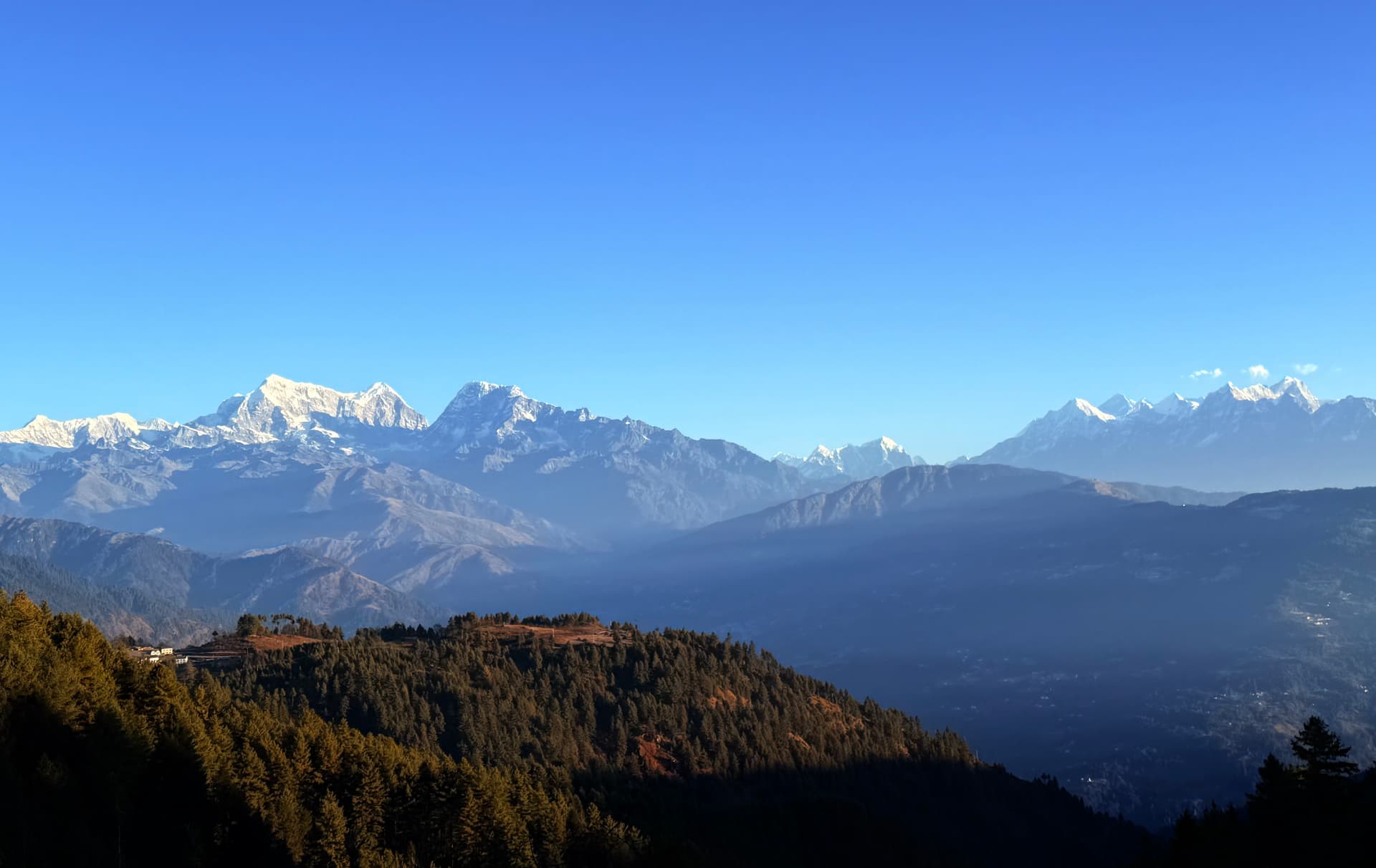
15 DAY(S) · 1–12 PAX
NEPAL TRIP FROM KATHMANDU-SALLERI 2026 |GUIDED TREK PACKAGE
Kathmandu-Salleri to Lukla
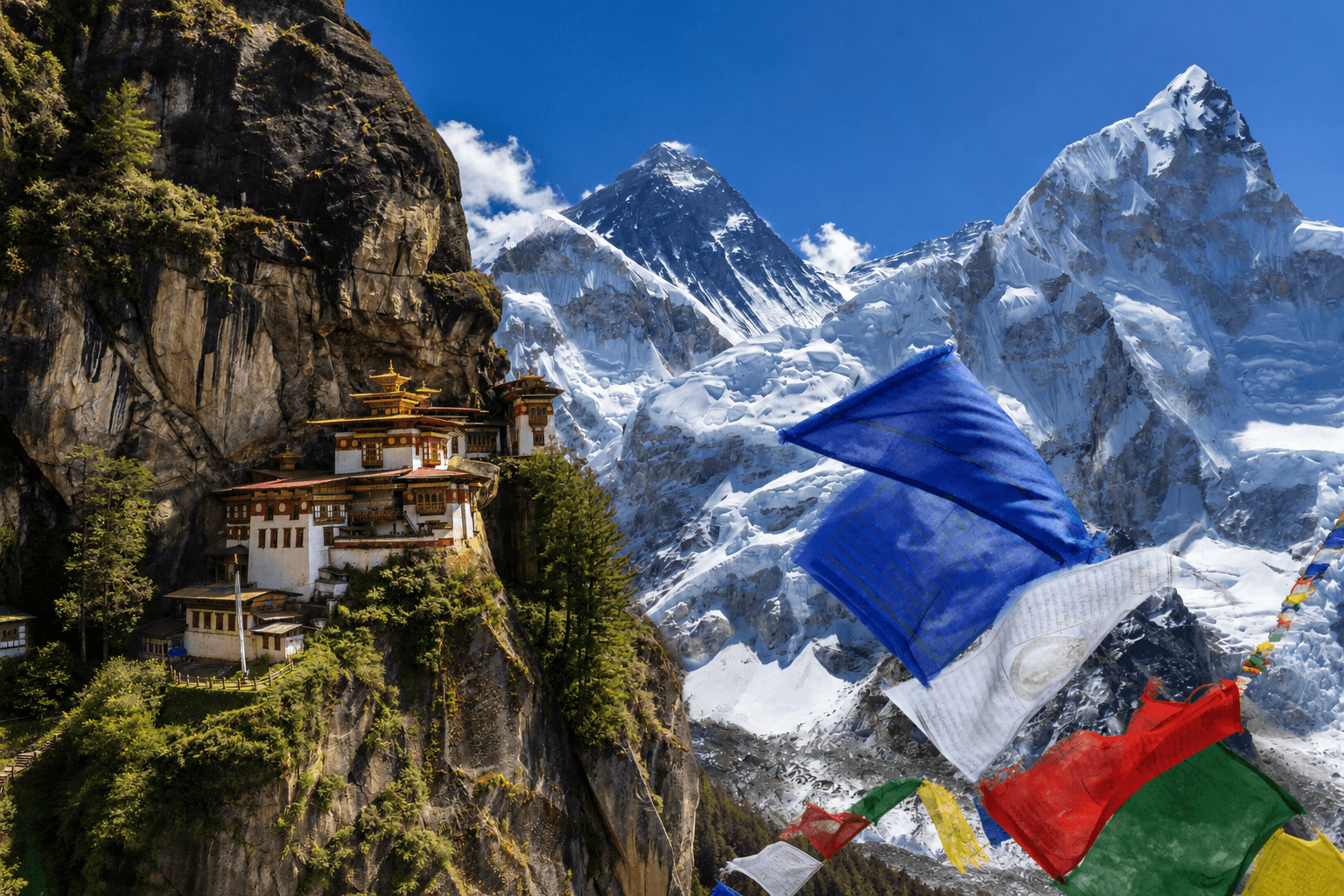
17 DAY(S) · 1–12 PAX
HIMALAYAN TRIP FROM KATHMANDU 2026 |GUIDED TREK PACKAGE
Authentic Sherpa Culture & Mountain Life
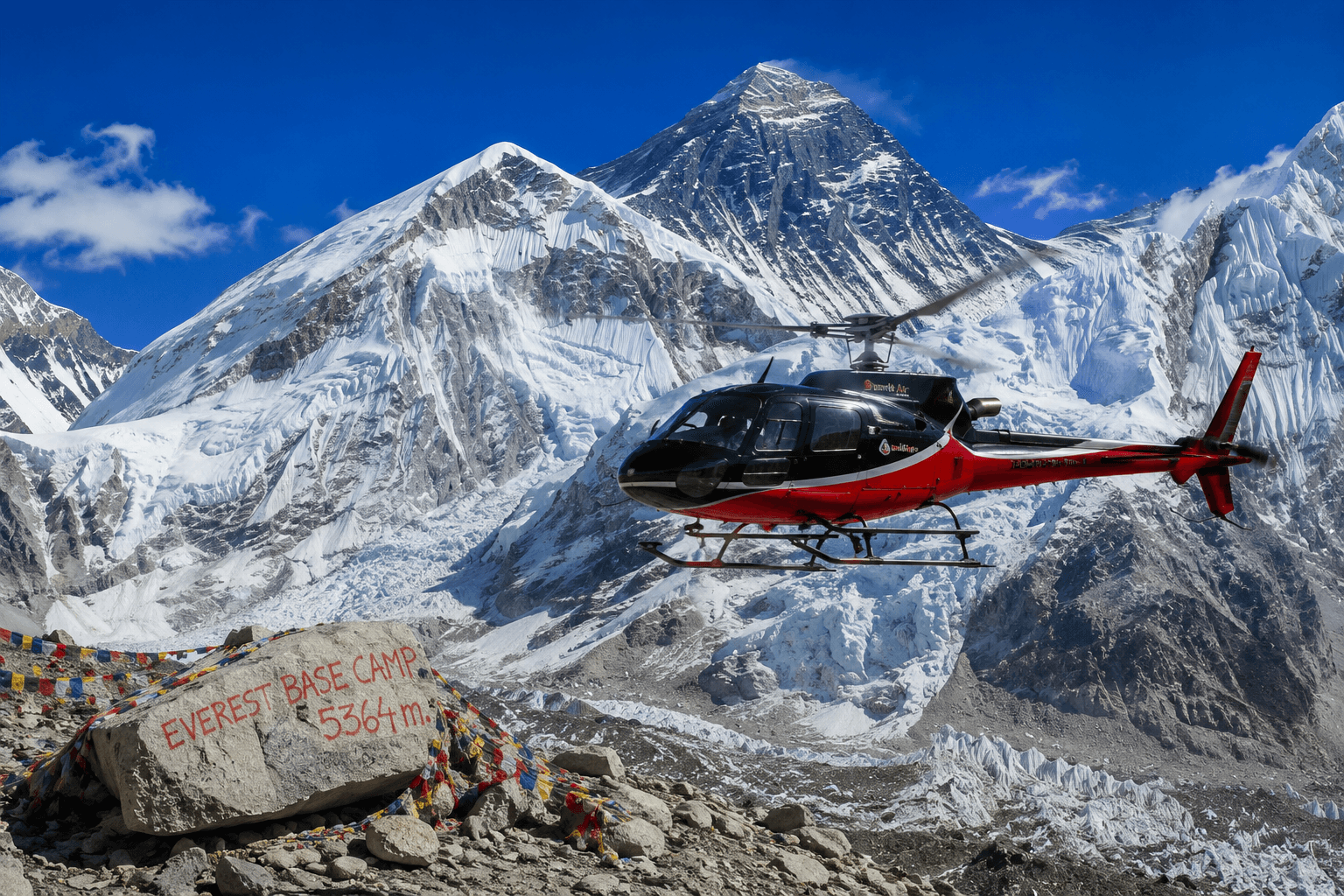
1 DAY · 1–5 PAX
NEPAL TRIP FROM KATHMANDU 2026 |GUIDED HELICOPTER TOUR
Mount Everest