
One Week in Nepal: An Honest 7-Night, 8-Day Itinerary
Planning one week in Nepal? This realistic 7-night, 8-day itinerary combines Kathmandu, Pokhara and Chitwan with honest advice about accommodation, road travel, EVs, domestic flights, rafting with children and optional Himalayan experiences.
Most one-week Nepal itineraries begin with a list of attractions. We prefer to begin with the questions travellers actually ask us: Is eight days really enough? Should we drive or fly? What is the difference between standard and deluxe accommodation? Is rafting safe for a children? Can we see Mount Everest without paying for an expensive helicopter flight? After arranging similar private tours for couples, families and groups, we have learned that the best one-week Nepal itinerary is not the one that includes everything. It is the one that matches the travellers, leaves room for Nepal’s unpredictable roads and weather, and allows enough time to experience Kathmandu, Pokhara and Chitwan properly.
What We Have Learned From Planning One-Week Nepal Tours
When travellers first contact us, they often arrive with an ambitious list: Kathmandu, Bhaktapur, Patan, Nagarkot, Pokhara, Chitwan, whitewater rafting, Mount Everest and perhaps a short trek—all within one week.
We can place all those names on paper, but that does not necessarily create a good holiday.
Nepal is a relatively small country, yet road journeys take longer than distances suggest. Domestic flights save time but remain dependent on weather and visibility. A sunrise viewpoint may be cloudy. A wildlife safari may produce several rhinoceros sightings but no tiger. A family may enjoy a full day of sightseeing, while another traveller may prefer a slower morning and an unplanned afternoon.
For this reason, our recommended 7-night, 8-day Nepal tour focuses on three destinations:
Kathmandu for history, spirituality and living culture
Pokhara for lakes, mountains and optional outdoor activities
Chitwan for wildlife, forest and Tharu culture
This route gives first-time visitors a genuine introduction to Nepal without requiring a high-altitude trek. It is suitable for couples, families, friends, senior travellers and private groups, and it can be adjusted according to accommodation preference, fitness, interests and available time.
Is It a Seven-Day or an Eight-Day Nepal Itinerary?
This is the first detail to clarify.
A trip described as “one week in Nepal” can mean either:
Seven calendar days, including arrival and departure; or
Seven nights and eight days, including arrival and departure.
There is a considerable difference between the two.
If your international arrival and departure are included within seven calendar days, we usually recommend choosing Kathmandu and Pokhara, or Kathmandu and Chitwan. Visiting all three destinations becomes possible only with carefully selected flights and a fairly fast pace.
A 7-night, 8-day Nepal itinerary is more comfortable. It provides six usable touring days between arrival and departure, making Kathmandu, Pokhara and Chitwan a realistic combination.
Day | Destination | Main experience |
|---|---|---|
1 | Kathmandu | Arrival, airport transfer and orientation |
2 | Kathmandu | UNESCO heritage sightseeing |
3 | Kathmandu-Pokhara | Road journey, optional rafting or domestic flight |
4 | Pokhara | Sarangkot, Phewa Lake and World Peace Stupa |
5 | Pokhara-Chitwan | Scenic drive to the subtropical lowlands |
6 | Chitwan | Canoeing, nature activities and jeep safari |
7 | Chitwan-Kathmandu | Return by road or optional flight |
8 | Kathmandu | International Departure |
The corresponding private package is our 7-Night 8-Day Nepal Tour Package
Questions Our Travellers Ask Before Booking
What is the difference between standard and deluxe accommodation?
The difference is not simply a star printed beside the hotel’s name. Location, room quality, facilities, service and the style of the property all affect the price.
Our standard category generally uses carefully selected three-star or equivalent hotels with clean private bathrooms, breakfast, dependable service and convenient locations. These properties are comfortable and suitable for travellers who expect good accommodation but do not require extensive luxury facilities.
The deluxe category normally uses higher-end four-star, boutique or resort-style properties. Rooms may be larger, quieter or better positioned, while facilities can include a swimming pool, spa, upgraded restaurant, garden, mountain view or more personalized service.
Unless otherwise stated in the quotation, both options receive the same sightseeing program, private transport and professional guiding service. Paying for deluxe accommodation should not be necessary to receive proper care from our team.
Hotel prices vary by season, room type and availability. Instead of offering only a vague category, we prefer to provide the proposed hotel names before confirmation so travellers can see exactly what they are paying for.
Single rooms, family rooms, connecting rooms and special dietary arrangements should also be discussed before the final price is confirmed.
What type of vehicle will be used?
The vehicle is selected according to the number of travellers, luggage, route and season.
A couple or small family may travel in a comfortable air-conditioned car or SUV. A larger family or group may require a van, minibus or coaster so passengers and luggage have sufficient space.
We do not believe that placing too many people and suitcases into a smaller vehicle creates a “private tour.” Comfort becomes especially important on the longer Kathmandu–Pokhara, Pokhara–Chitwan and Chitwan–Kathmandu drives.
The exact vehicle type should therefore be confirmed after we know:
The number of adults and children
The amount of luggage
Whether child seating is required
The chosen road route
The season of travel
Whether an electric or conventional vehicle is preferred
Is an electric vehicle practical for this Nepal tour?
This has become a genuine concern for some clients, especially after reading older reports about limited charging infrastructure.
We were cautious about using electric vehicles on long Nepal routes when the charging network was less developed. The situation has improved considerably. Long-range EVs are now available, and charging facilities have expanded along major travel corridors and in destinations such as Kathmandu, Pokhara and Chitwan. The Nepal Electricity Authority also maintains information relating to public charging facilities and EV infrastructure on its official website.
For the main Kathmandu–Pokhara–Chitwan–Kathmandu circuit, travelling in a suitable long-range EV is no longer unusual. Modern EVs are generally quiet, comfortable and technologically well equipped.
Can we return from Chitwan on Day 7 by flight?
Yes. Travellers can request a flight from Bharatpur, the airport serving the Chitwan area, to Kathmandu, subject to the operating schedule, availability and weather.
Flying is helpful for travellers who:
Prefer to avoid another long road journey
Have limited energy after the safari
Want more time in Kathmandu
Are comfortable with domestic flight luggage limits
Have allowed sufficient flexibility for weather delays
Returning by private vehicle remains a good choice for groups carrying more luggage or travellers who prefer not to depend on a domestic flight.
Whichever option you choose, we recommend spending the seventh night in Kathmandu rather than connecting directly to an international flight. A weather delay or unexpected road blockage should not put your onward journey at risk.
Is whitewater rafting suitable for a ten-year-old?
One client asked us this exact question while planning a similar family tour. They wanted to try whitewater rafting on the way to Pokhara but were travelling with a ten-year-old.
Our answer is that rafting may be possible, but the child’s age alone should not decide it.
The Trishuli is Nepal’s most practical river for combining a short rafting experience with the journey from Kathmandu towards Pokhara. The Nepal Tourism Board describes the Trishuli as an accessible rafting river with trips ranging from one to two days, while also noting that rapid grades vary by river and conditions. It recommends using trained local river teams. See the Nepal Tourism Board rafting guide.
For a ten-year-old, we would consider:
The river level on the travel date
The selected section and rapid grade
The child’s confidence around water
The rafting operator’s minimum-age policy
The guide’s assessment
Availability of a properly fitted helmet and life jacket
The weather and recent rainfall
During normal water conditions, an experienced rafting operator may approve a gentler family-appropriate Trishuli section. During heavy monsoon flow or after significant rainfall, the same section may not be appropriate.
The decision should be based on the conditions on the day, not on a permanent promise made months before arrival.
Operationally, rafting can fit well into Day 3. The private vehicle carries the luggage, drops the travellers near the rafting starting point and collects them farther downstream before continuing to Pokhara. This makes the experience part of the journey rather than requiring a separate day.
If our rafting partner or guide considers the conditions unsuitable, we would rather cancel or replace the activity than pressure a family to continue because it appears in the itinerary.
Is there a less expensive way to see Mount Everest with a child?
This is another question we receive frequently.
An Everest helicopter tour is a remarkable experience, but foreign-national prices are considerably higher than some domestic or resident fares advertised online. Prices also depend on whether the flight is shared, privately chartered or requires a shuttle because of passenger weight and high-altitude operating limitations.
The more affordable aerial alternative is normally a fixed-wing Everest scenic flight from Kathmandu. It generally provides approximately one hour in the air, with views of the Himalayan range and Mount Everest when the weather is clear. Foreign-national airfare still applies, but it is normally much less expensive than a helicopter tour.
If the scenic flight is still outside the family’s budget, we give an honest answer: there is no reliable, inexpensive ground viewpoint near Kathmandu or Pokhara that provides a close view of Mount Everest.
Nagarkot is sometimes promoted as an Everest viewpoint, but Everest is extremely distant and difficult to identify even on a very clear day. Sarangkot offers wonderful views of the Annapurna and Dhaulagiri ranges—not Mount Everest.
For families travelling with children, we would not recommend forcing a longer Everest-region trek into this eight-day itinerary. Flights to Lukla, walking time and proper acclimatization require a separate plan. However, families with children aged eight or above who are physically active and have previous hiking or trekking experience may consider the 5-Day Everest View Trek from Kathmandu. The child’s fitness, comfort at altitude and the family’s available time should all be assessed before confirming the trek.
The better option may be to enjoy the Annapurna sunrise from Sarangkot and save the Everest experience for a future trip. Travellers interested in the helicopter option can review our Everest Base Camp Helicopter Tour, but it is an optional experience rather than a compulsory day in this itinerary.
Detailed 7-Night, 8-Day Nepal Itinerary
Day 1: Arrive in Kathmandu
Elevation: Approximately 1,400 metres
Overnight: Kathmandu
Our representative will meet you at Tribhuvan International Airport and transfer you to your hotel.
The first conversation is important. We review the itinerary, discuss the weather, confirm road or flight arrangements and understand how the travellers prefer to move. Some people want early starts and full days. Others need more rest after a long international journey.
If your flight arrives early, you can take a short walk around Thamel or another nearby neighbourhood. We deliberately avoid placing a major heritage tour on arrival day because immigration, baggage collection, traffic and jet lag are unpredictable.
Day 2: Discover Kathmandu’s Living Heritage
Sightseeing: Approximately 6–8 hours
Overnight: Kathmandu
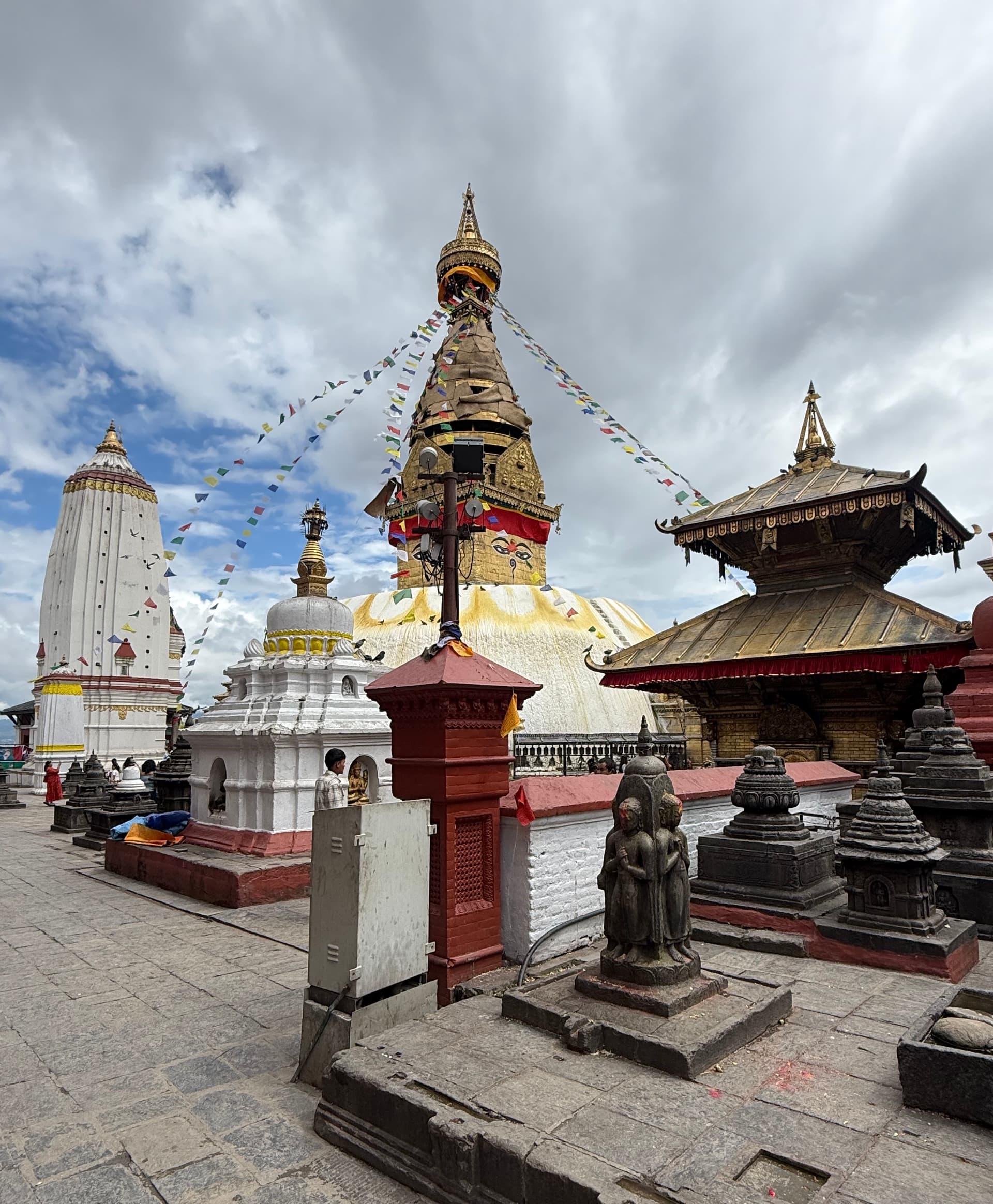
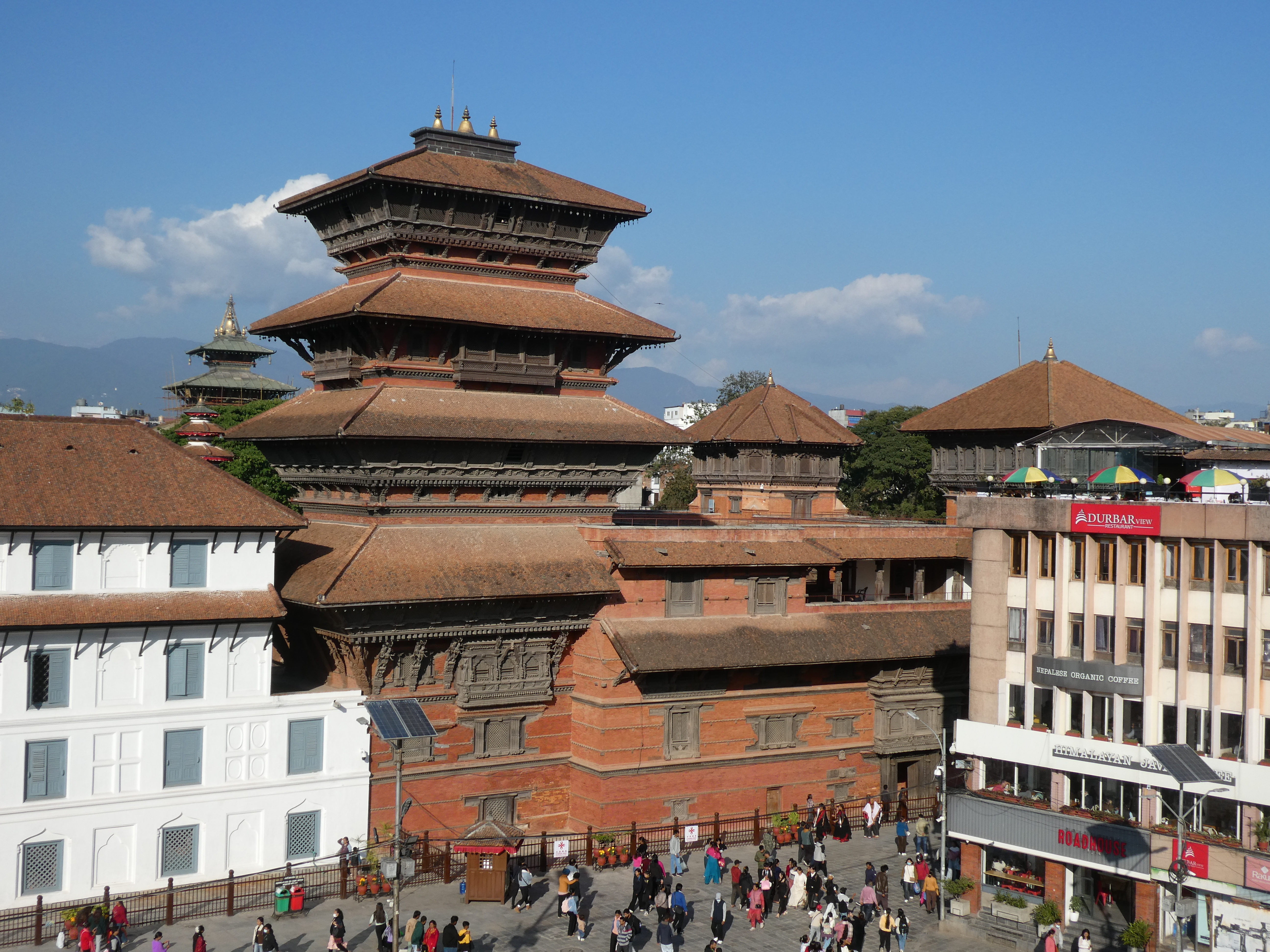
A first-day Kathmandu tour normally includes Swayambhunath, Kathmandu Durbar Square, Boudhanath and Pashupatinath.
These are four of the seven monument zones forming the UNESCO-listed Kathmandu Valley World Heritage property. The complete property also includes Patan Durbar Square, Bhaktapur Durbar Square and Changu Narayan, as confirmed by UNESCO.
At Swayambhunath, the hilltop view helps travellers understand Kathmandu Valley before entering the old city. At Kathmandu Durbar Square, your guide explains the former royal complex, Kumari tradition and ongoing relationship between monuments and daily Newar life.
Boudhanath is best experienced slowly. Walk with pilgrims around the stupa, turn the prayer wheels and, if time permits, sit at a rooftop café rather than immediately returning to the vehicle.
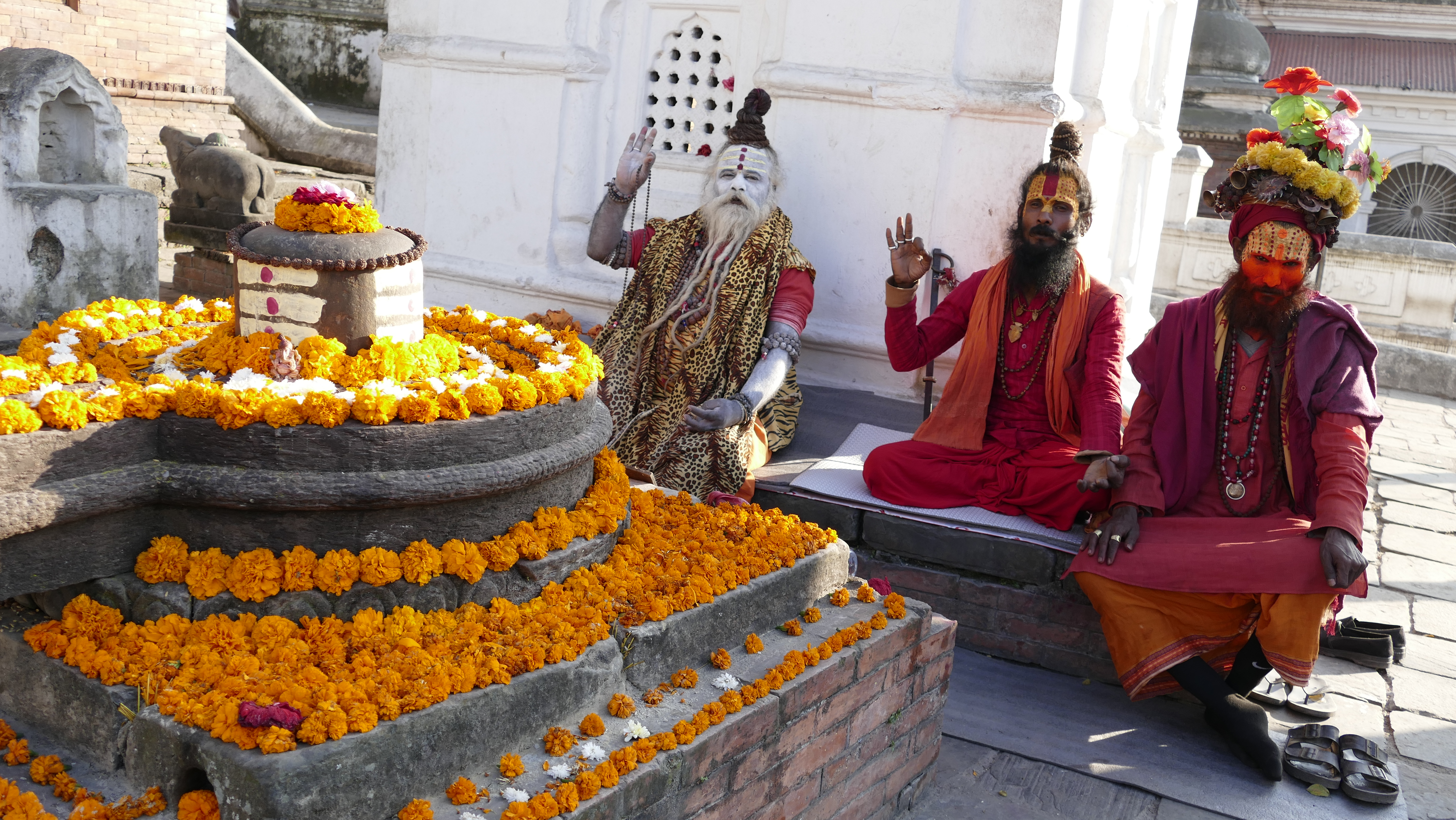
Pashupatinath requires cultural sensitivity. Non-Hindus cannot enter the main temple, but they can observe the wider complex and permitted areas beside the Bagmati River. Cremations are genuine family ceremonies, not performances, and photography should always be respectful.
The guide’s role is not simply to repeat dates. A knowledgeable local guide helps explain why Buddhist and Hindu traditions overlap, how people use these sacred places today and which customs visitors should follow.
Day 3: Kathmandu to Pokhara—Drive, Fly or Add Rafting
Road distance: Approximately 200 kilometres
Usual driving time: Around 7–9 hours, sometimes longer
Flight time: Approximately 25–30 minutes in the air
Overnight: Pokhara
Travellers regularly ask about the condition of the Kathmandu–Pokhara road. We avoid giving a permanent answer because conditions change with roadwork, traffic, rainfall and landslides.
Before each departure, we check the most recent situation and advise whether driving remains practical. In the dry season, a private road journey can be enjoyable, with views of rivers, villages, terraced slopes and everyday life outside Kathmandu.
During the wet season, we plan more carefully. Heavy rain can produce delays or temporary road blockages. A domestic flight may be preferable, although flights are also weather-dependent.
If an individual, group, or a family want Trishuli rafting, we can incorporate an approved rafting section during the road journey. This creates a longer but much more active day. After rafting and lunch, the vehicle continues to Pokhara with the travellers and luggage.
Those who fly reach Pokhara more quickly, but airport transfers, check-in and possible delays must still be considered.
After arrival, we leave the evening relatively open. A walk around Lakeside, dinner near Phewa Lake and an early night are often more enjoyable than adding another formal sightseeing program.
Day 4: Pokhara, Sarangkot and Phewa Lake
Pokhara elevation: Approximately 820 metres
Sarangkot elevation: Approximately 1,600 metres
Overnight: Pokhara
The day begins before sunrise with a drive to Sarangkot, subject to weather.
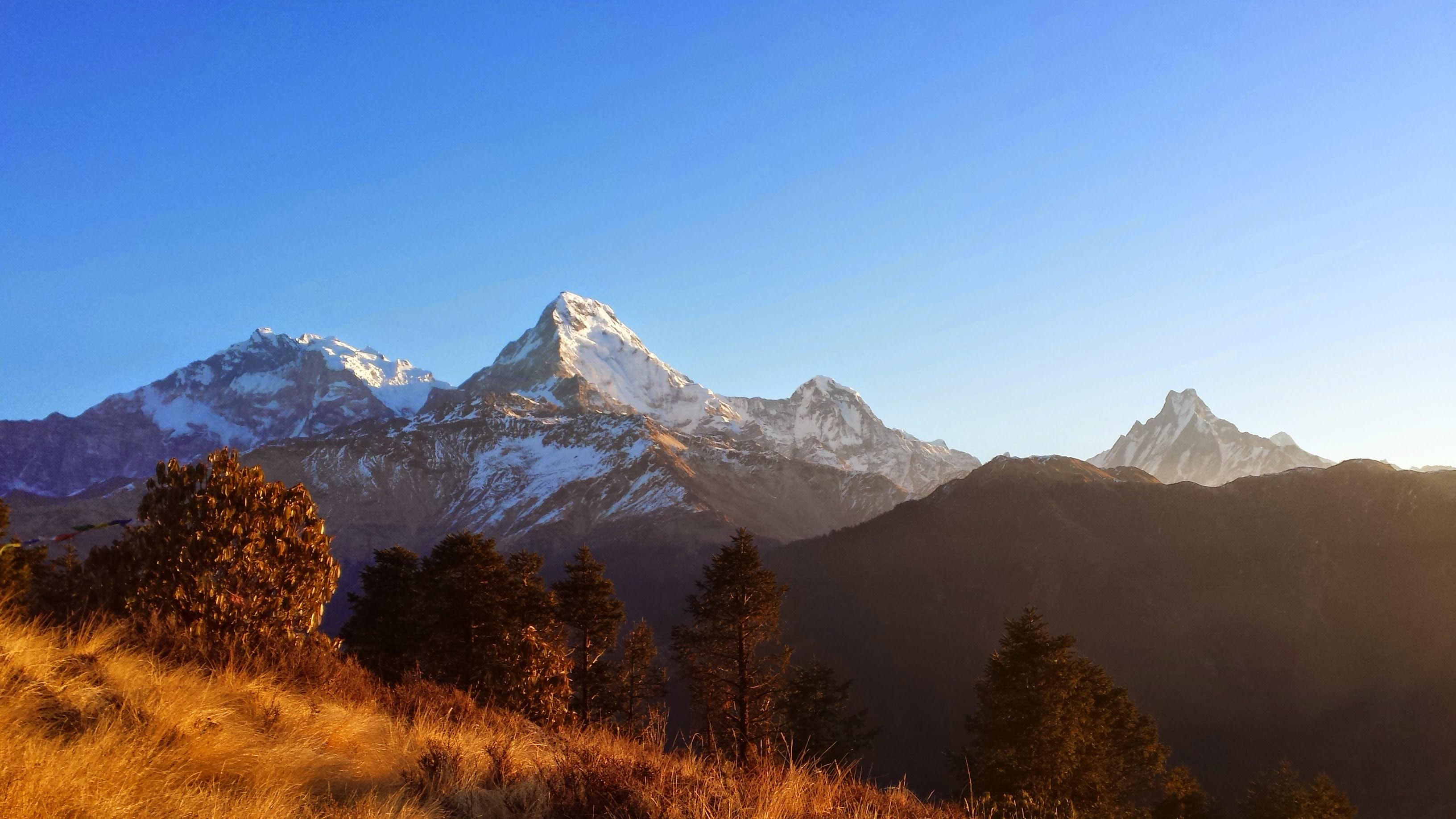
When the sky is clear, the first light appears across the Annapurna range, including Annapurna South and Machhapuchhre. However, we never guarantee a perfect sunrise or mountain view. Cloud and haze are part of travelling in the Himalayas.
After breakfast, continue with a boat ride on Phewa Lake. Active travellers can cross the lake and hike towards the World Peace Stupa, while those preferring less walking can use a vehicle for most of the journey.
Rather than rushing between every Pokhara attraction, select one or two additional experiences:
International Mountain Museum
Davis Falls and Gupteshwar Cave
Old Bazaar and Bindhyabasini Temple
Paragliding or an ultralight flight
A free afternoon around Lakeside
Peter, one of our guests, later wrote that he and his friend were not interested in hardcore trekking but still enjoyed walking in the Annapurna and Dhaulagiri foothills. This is an important reminder that Himalayan travel does not have to mean a strenuous expedition.
Day 5: Pokhara to Chitwan
Driving time: Approximately 4–6 hours
Overnight: Chitwan
The journey from Pokhara to Chitwan descends towards Nepal’s subtropical plains. The change in temperature, vegetation and architecture is noticeable.
Travellers staying in standard accommodation normally use a comfortable jungle lodge or resort with private facilities and full-board meals. Deluxe arrangements may provide a more secluded setting, upgraded rooms, a swimming pool, landscaped grounds or a stronger naturalist program.
After arrival, lunch and some rest, the evening may include a guided village walk, birdwatching or sunset beside the Rapti River.
Chitwan is also home to Tharu communities with their own traditions, architecture and relationship with the lowland environment. A thoughtful local introduction adds cultural context to the wildlife program.
Day 6: Chitwan National Park
Activities: Full day
Overnight: Chitwan
Chitwan National Park protects an important population of greater one-horned rhinoceroses and remains habitat for Bengal tigers, gharial crocodiles, sloth bears, deer and numerous bird species. It is also recognized as a UNESCO World Heritage Site.
Depending on the season, lodge and park regulations, the day may include:
Canoeing on a permitted river section
Guided nature walking
Birdwatching
Jeep safari
Naturalist interpretation
Tharu cultural activities
A rhinoceros sighting is reasonably possible, but no wildlife encounter should be guaranteed. Tigers live in the park, yet sightings are rare and depend on patience and luck.
We recommend prioritizing observation and conservation-focused activities rather than elephant riding, bathing or staged animal interaction.
A professional naturalist also makes the quieter parts of the safari interesting by identifying tracks, bird calls, vegetation and signs of animal movement.
Day 7: Chitwan to Kathmandu by Road or Flight
Overnight: Kathmandu
You can return to Kathmandu by private vehicle or fly from Bharatpur.
The road option gives the greatest luggage flexibility and does not depend on an aviation schedule, but it occupies much of the day. The flight is faster and often more comfortable for families or senior travellers, although baggage limits, weather and delays must be considered.
The most important recommendation is to sleep in Kathmandu on Day 7. Do not schedule an international departure immediately after the Chitwan road journey or domestic flight.
Once in Kathmandu, enjoy a final dinner or a quiet evening at the hotel.
Day 8: Departure
We arrange the transfer from your hotel to Tribhuvan International Airport according to the international flight schedule and current traffic conditions.
Travellers should normally reach the airport approximately three hours before an international departure. Because Kathmandu traffic can change quickly, the hotel departure time should be confirmed locally rather than calculated only through an online map.
Want to Add Poon Hill Trekking?
Outdoor travellers can extend the itinerary by approximately three days and include Poon Hill.
Kerry travelled with a group of ten friends and family on a personally designed 13-day Nepal tour. Their route combined Kathmandu, Pokhara, Bandipur, Chitwan, Trishuli and Patan, with whitewater rafting, a Chitwan safari and the Poon Hill hike.
The Poon Hill extension reaches approximately 3,210 metres and includes sustained walking and steep stone staircases. It is short, but it should not be described as effortless.
Our Poon hill Trek 3 Days can be added from Pokhara for active travellers with sufficient time. It replaces a standard sightseeing extension with teahouse accommodation, village trails and a close Annapurna experience.
For travellers who want walking without a multi-day mountain trek, the Nagarkot to Dhulikhel One-Day Hike is a lower-elevation alternative near Kathmandu.
What Our Travellers Said About Similar Nepal Itineraries
Rather than claiming that one itinerary suits everyone, it is more useful to examine how different travellers experienced variations of this route.
Peter: A Flexible Nepal and Tibet Journey Without Hardcore Trekking
Peter and his friend Luke completed a longer Nepal and Tibet journey in December 2025. Their Nepal route included Kathmandu, Chitwan, Bandipur and Pokhara, supported by guide Pratik and their driver.
They did not want a demanding trek, so their Himalayan experience focused on the Annapurna and Dhaulagiri foothills. Peter particularly appreciated the airport reception, planning, attention to detail and the flexibility to reduce the pace when their energy declined later in the journey.
His experience shows why a private itinerary should be adjustable after the trip begins. Read Peter’s full TripAdvisor review.
Kerry: A Family-and-Friends Adventure With Poon Hill and Rafting
Kerry’s group of ten completed a customized 13-day Nepal tour in March 2025. Their itinerary connected Kathmandu, Pokhara, Bandipur, Chitwan, Trishuli and Patan.
Because they were outdoor-oriented travellers, they added three experiences to the cultural route: Poon Hill trekking, whitewater rafting and a Chitwan safari.
Kerry highlighted the personally written itinerary, pre-departure communication, accommodation, guide KM and driver. The review is especially relevant to families and groups because it demonstrates how the basic itinerary can be expanded without becoming a generic fixed departure. Read Kerry’s full TripAdvisor review.
Lindsay: Detailed Planning, Dietary Care and Independence
Lindsay completed a private nine-day Nepal tour with HimalayanWindows, visiting Kathmandu, Patan, Pokhara, Chitwan and Nagarkot before continuing to Bhutan.
She valued the communication before departure, the personal arrival meeting, regular check-ins during the journey and the clear coordination between the guide and drivers.
She was also impressed by the hotel locations and room quality. Her dietary preferences were shared with the hotels in advance, and breakfast boxes were organized for early departures.
Lindsay praised our guide for balancing attentive support with her desire for independence. She also remembered the smaller services: rest stops during long drives, drinking water, help with meals and even assistance mailing a postcard after departure.
These details show that good service is not limited to completing the attractions listed in an itinerary. Read Lindsay’s detailed TripAdvisor review.
Can This Nepal Trip Be Combined With Bhutan or Tibet?
Yes. Kathmandu is a practical starting point for continuing to Bhutan or Tibet.
A short Bhutan extension can add Paro, Thimphu, Punakha and the Tiger’s Nest hike. A popular option is the 4 Nights 5 Days Bhutan Tour, although the final route depends on flight schedules and available time. Read our updated guide for how to obtain Bhutan visa traveling from Kathmandu.
Tibet requires more advance planning. Foreign travellers need the appropriate permits and must join an organized tour. The required visa procedure also depends on whether the traveller enters from Nepal or mainland China.
Border access, flights, permit processing and entry procedures can change. A Tibet extension should therefore be designed using recent information. Read our updated guide on how to travel to Tibet from Nepal or China before confirming the international route.
Best Time for This Nepal Itinerary
The Kathmandu–Pokhara–Chitwan itinerary can operate throughout the year, but the experience changes by season.
October and November generally offer the most reliable mountain visibility, pleasant temperatures and high demand for hotels, guides and domestic flights.
March and April are also excellent, with warmer weather and spring vegetation. Visibility can become hazier later in May.
December to February brings colder mornings in Kathmandu and Pokhara, but daytime sightseeing can be comfortable. Chitwan is generally pleasant during winter.
June to August is the wet season. Nepal becomes green and cultural sites receive fewer visitors, but road delays, landslides, cloudy mountain views and flight disruptions become more likely. We do not automatically discourage monsoon travel, but the transport plan must be more flexible.
Nepal Visa and Essential Preparation
Many nationalities can obtain a Nepal tourist visa on arrival, but travellers should verify their eligibility before departure.
Current tourist visa categories listed by the Nepal Department of Immigration include:
15 days: US$30
30 days: US$50
90 days: US$125
Rules can change, and some nationalities must arrange a visa in advance. Confirm the latest information through the Nepal Department of Immigration.
We also recommend:
A passport valid for at least six months
Travel insurance covering medical treatment and disruption
Comfortable walking shoes
Layered clothing for changing temperatures
Rain protection during the wet season
Sun protection
Insect repellent for Chitwan
Personal medication
A reusable water bottle
A small amount of cash for personal purchases and tips
Why We Keep This Itinerary Private and Flexible
The destinations in this article are not secret. Many travel companies can offer Kathmandu, Pokhara and Chitwan.
The difference appears in how the journey is planned and managed.
Before confirming an itinerary, we want to understand whether the traveller enjoys long drives, requires particular accommodation, has dietary needs, is travelling with children, wants independent time or prefers continual guidance.
During the trip, we remain available when weather, traffic, energy levels or personal interests require a change. A traveller may decide to fly instead of drive. A child may not feel comfortable rafting. Someone may want to remove an attraction and spend longer beside Phewa Lake. A group may enjoy walking so much that they add Poon Hill.
These are not problems with the itinerary. They are the reason to keep it flexible.
Final Thoughts
A week in Nepal should not feel like a competition to collect destinations. Kathmandu, Pokhara and Chitwan already provide an extraordinary range of experiences: sacred temples, Newar courtyards, Himalayan scenery, lakes, river valleys, subtropical forest and wildlife.
Our responsibility is to explain honestly what fits, what may be affected by weather, what costs extra and which choices are most suitable for each traveller. That is how a standard 8-day Nepal tour plan becomes a personal journey.
If you share your travel dates, group size, ages, accommodation preference and interests, HimalayanWindows can adapt this itinerary around you—whether that means deluxe hotels, EV transportation, family rafting, a flight from Chitwan, additional trekking or a carefully planned extension to Bhutan or Tibet.
Plan your trip
Ready to experience this yourself?
Our Kathmandu-based specialists build tailor-made treks and tours across Nepal, Tibet and Bhutan — tell us what you want.