The field notes
A journey with rhythm
Private guiding, thoughtful pacing, and enough room to absorb each place rather than simply pass through it.
PrivateThoughtfulLocal

Journey overland from Kathmandu to sacred Mount Kailash, encounter Everest’s North Face and finish among the palaces, temples and monasteries of Lhasa.
Journey overview
The Mount Kailash, Everest Base Camp and Lhasa Overland Tour is a continuous 14-day journey across western and central Tibet. Beginning in Kathmandu, the route enters Tibet through the Rasuwagadhi–Kyirong border and travels across the Tibetan Plateau to Lake Manasarovar and Mount Kailash. After the Kailash kora, the journey turns east toward Everest Base Camp, Shigatse, Gyantse, and Lhasa rather than returning along the same road to Nepal.
The first two nights are spent in Kyirong, including a full rest and acclimatization day. This is an important part of the itinerary because the route soon climbs above 4,000 metres. From Kyirong, the road continues to Saga and then across the vast landscapes of western Tibet to sacred Lake Manasarovar.
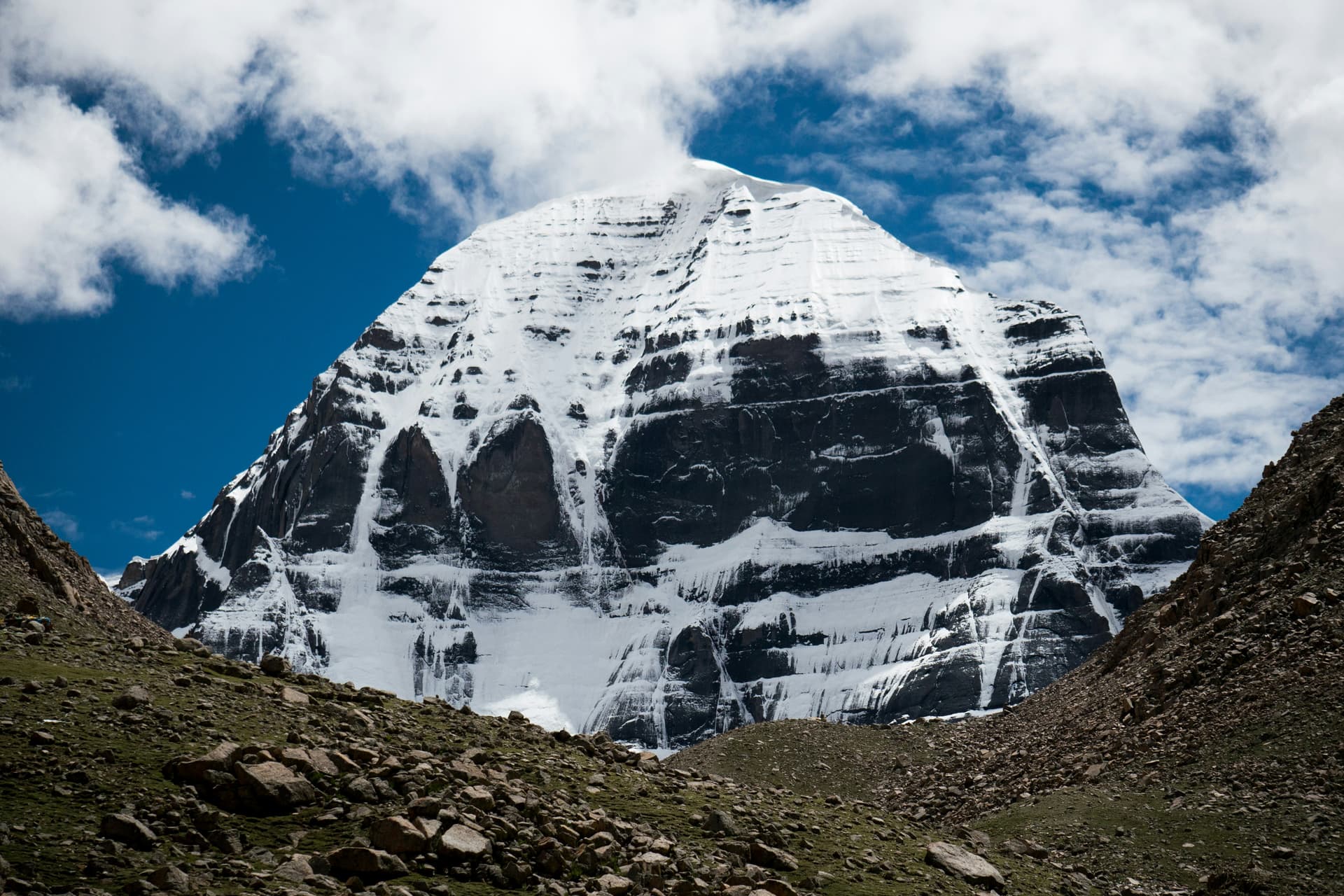
Mount Kailash is revered by Hindus, Buddhists, Jains and followers of Bon. The traditional outer kora, also known as parikrama, follows an approximately 52-kilometre circuit around the mountain. It is completed over three days, with overnight stops at basic monastery guesthouses near Dirapuk and Zuthulpuk.
The first trekking day leads to Dirapuk, where the north face of Mount Kailash rises dramatically above the surrounding valley. The second and most demanding day crosses Dolma La Pass at approximately 5,630 metres. After completing the kora, the group returns to Saga and continues toward the Everest region.
The visit to Everest Base Camp takes place on the Tibetan north side. From Rongbuk, travelers use the locally regulated shuttle or environmental bus to reach the authorized visitor area below Mount Everest. This is not a multi-day Everest Base Camp trek like the route in Nepal, but it provides an impressive close view of Everest’s North Face, weather permitting.
The cultural part of the journey begins in Shigatse with a visit to Tashilhunpo Monastery. The drive to Lhasa then follows the scenic route through Gyantse, Karo La and Yamdrok Lake. Three nights in Lhasa provide two full sightseeing days for the Potala Palace, Jokhang Temple, Barkhor, Drepung Monastery and Sera Monastery. Lhasa is therefore a major destination within the itinerary rather than simply the departure point.
Accommodation standards vary throughout the tour. Hotels in Kyirong, Saga, Darchen, Shigatse and Lhasa generally provide private rooms with attached bathrooms and hot-shower facilities. Accommodation at Lake Manasarovar, Dirapuk, Zuthulpuk and Rongbuk is basic, with dormitory beds and shared or public toilets. Blankets are normally provided, but carrying a warm personal sleeping bag is strongly recommended.
The tour operates on a full-board basis. Depending on the group size and confirmed arrangement, Himalayan Windows can send Nepalese cooks and support staff from Kathmandu with necessary kitchen equipment. Where suitable kitchen facilities are available, the team prepares meals at the hotel or guesthouse and serves them in the dining area. Packed lunches are provided during the Kailash kora and on long driving days.
Kathmandu accommodation is not included. Hotel nights, international airport transfers, sightseeing and pilgrimage visits in Kathmandu can be arranged at an additional cost.
Every foreign traveler requires the necessary Tibet travel permits. Travelers who hold an acceptable valid Chinese visa or qualify under the applicable Chinese visa-free policy may not need a Tibet Group Visa. Travelers without an acceptable Chinese visa or visa-free eligibility will normally require a paper-based Tibet Group Visa in Kathmandu.
If a Tibet Group Visa is required, travelers should plan to arrive in Kathmandu at least two weeks before the Tibet departure date. Additional time may be necessary when weekends or Chinese and Nepalese holidays fall within the processing period. Himalayan Windows should check your passport, nationality and travel route before you purchase flights to Kathmandu or finalize your onward journey from Lhasa.
Trip highlights
Travel overland from Kathmandu through Kyirong and finish in Lhasa without retracing the same road.
Visit sacred Lake Manasarovar and experience the remote landscapes of western Tibet.
Complete the three-day Mount Kailash kora and cross Dolma La Pass at approximately 5,630 metres.
Witness the magnificent north face of Mount Kailash from Dirapuk.
Visit Rongbuk and the authorized Everest Base Camp visitor area below Everest’s North Face.
Explore Tashilhunpo Monastery, Gyantse, Karo La and turquoise Yamdrok Lake.
Spend three nights in Lhasa with two full sightseeing days covering its most important cultural landmarks.
Day by day
Walk the route one day at a time — meals, overnight stays, and the details that shape each stage.
Leave Kathmandu early and drive north through Trishuli, Dhunche and the Langtang region toward Rasuwagadhi. After completing Nepalese immigration formalities, cross the border and meet the Tibetan guide and driver.
Complete the necessary Chinese immigration and permit checks before continuing through the green Kyirong Valley to Kyirong town. Check into the hotel and rest after the long journey. The total travel time may vary according to road, weather and border conditions.
NoteDue to the recent flash flood at the Rasuwagadhi–Kyirong border, entry and exit through this crossing are suspended until further notice. Please contact us to arrange a suitable alternative route.
Spend a full day in Kyirong to help your body adjust before traveling to higher elevations. A gentle walk around the town or surrounding valley may be taken if you feel comfortable.
Avoid strenuous activity, alcohol, and smoking. Drink sufficient water and inform the guide immediately if you experience persistent headaches, nausea, dizziness, unusual fatigue or difficulty breathing.
Leave Kyirong and climb toward the open landscapes of the Tibetan Plateau. The scenery changes from the green border valley to high passes, grasslands, and distant mountain ranges.
Continue to Saga, an important settlement near the Yarlung Tsangpo River. After checking into the hotel, rest and allow your body to continue adjusting to the altitude.
NoteHigh-altitude, stay hydrated.
Begin one of the longest drives of the tour, traveling through Zhongba and Paryang toward western Tibet. The road crosses immense plains, remote settlements, and high-altitude landscapes before reaching the Lake Manasarovar region. Overnight at the guesthosue near Mansarovar Lake.
NoteAccommodation tonight is basic. Travelers should expect dormitory-style beds and public or shared toilets. Blankets are normally provided, but a personal sleeping bag is recommended. Bring toilet paper, wet wipes, a towel, hand sanitizer and personal toiletries.
Spend the morning beside sacred Lake Manasarovar. There will be time for personal prayer, meditation, photography, or peaceful exploration. Religious ceremonies may be arranged when requested in advance and permitted by local authorities.
Later, drive to Darchen, the starting point of the Mount Kailash kora. Overnight at Darchen.
NotePrepare a lightweight daypack and organize the items required for the next three trekking days. The guide will provide a detailed briefing about the trail, weather, guesthouses, packed lunches, horse arrangements and safety procedures.
Take the local shuttle from Darchen to the designated kora starting point near Yam Dwar. Begin walking through the broad Lha Chu Valley, following the pilgrim trail toward Dirapuk.
The path climbs gradually, but the altitude can make even moderate walking difficult. On arrival at Dirapuk, enjoy the magnificent view of Mount Kailash’s north face, weather permitting.
Accommodation is in a basic monastery guesthouse with shared dormitory rooms and public toilets. Blankets are normally provided, but travelers should use their own sleeping bags and carry toilet paper and toiletries.
A horse and horse handler may be hired at an additional cost, subject to local availability. Advance requests are recommended, but horse availability cannot be guaranteed.
Option to End the Kora at Dirapuk
Travelers who do not wish to cross Dolma La Pass may return to Darchen using locally available transport. The guide will assist with the arrangements, but the pickup charge, transportation, and additional Darchen hotel night are not included.
NoteWalking time: Approximately 5–7 hours Accommodation: Basic monastery guesthouse with dormitory beds and public toilets
Start before sunrise for the most demanding day of the journey. The trail climbs steeply from Dirapuk toward Shiva Tsal and continues to Dolma La Pass, the highest point of the Mount Kailash kora.
After crossing the pass, descend carefully along a steep, rocky and sometimes icy trail near Gauri Kund. The route eventually becomes gentler as it enters the Zuthulpuk Valley.
The monastery guesthouse provides basic dormitory accommodation and public toilets. Carry a warm sleeping bag, toilet paper, wet wipes, and necessary toiletries.
Some exceptionally fit travelers may prefer to continue beyond Zuthulpuk and complete the kora on the same day. This should only be considered after consulting the guide and assessing the traveler’s physical condition, daylight, trail conditions, transport and room availability in Darchen. Additional accommodation and transport costs will be paid separately.
NoteDolma La elevation: Approximately 5,630 metres | Walking distance: Approximately 20–22 kilometres Walking time: Approximately 8–12 hours
Complete the final and comparatively gentle section of the kora. Walk to the designated finishing point and take the local shuttle back to Darchen.
After meeting the driver and reorganizing the luggage, begin the long return drive to Saga. This is one of the longest days of the tour because it combines the final kora walk with an extended road journey. Arrival in Saga may be late in the evening.
NoteTrek for 3-4 hours and drive to Saga, long drive today, Approximately 8–10 hours
Travel east from Saga through the high Tibetan Plateau, passing Peiku Tso and continuing toward the Everest region. On clear days, the route offers distant views of the Himalayan range.
Enter the Mount Everest nature reserve and continue to Rongbuk, situated below the north face of Mount Everest. Accommodation is basic and may consist of shared rooms, dormitory beds, and public toilets. Hot showers should not be expected.
NoteToday, you will bid farewell to the Nepalese cook and kitchen staff. They will provide a packed lunch before returning to the Kyirong border, while you continue onward to Everest Base Camp and Lhasa.
Visit the authorized Everest Base Camp visitor area in the morning. Access is normally provided by a regulated environmental bus or other locally approved transport. A short walk may be possible depending on current regulations, weather, and physical condition.
This is the visitor area on the Tibetan north side of Everest. It is different from the multi-day Everest Base Camp trekking route in Nepal and the restricted camp used by mountaineering expeditions.
After enjoying the view of Everest, return to the vehicle and drive through Tingri and Lhatse to Shigatse. The lower elevation and comfortable hotel provide a welcome rest after several nights in remote areas.
NoteEverest Base Camp visitor area: Approximately 5,150–5,200 metres
Visit Tashilhunpo Monastery, the traditional seat of the Panchen Lama and one of Tibet’s most important religious institutions.
Continue toward Gyantse and follow the scenic road across central Tibet. Depending on the schedule, stop around Gyantse before continuing past Karo La Glacier and the turquoise waters of Yamdrok Lake.
Cross the high mountain route and descend toward the Lhasa Valley. Arrive in Lhasa and check into the hotel for a three-night stay.
Begin the exploration of Lhasa with a visit to the Potala Palace, Tibet’s most recognizable historical landmark. Timed entry and security procedures apply, so the exact sightseeing order may be adjusted by the guide.
Continue to Jokhang Temple, one of the most sacred destinations in Tibetan Buddhism. Walk through Barkhor, where pilgrims perform a traditional clockwise circuit around the temple. There will also be time to observe local life and explore the surrounding lanes and shops.
Visit Drepung Monastery, once one of Tibet’s largest monastic institutions. Explore its courtyards, assembly halls and hillside setting while learning about its historical and religious importance.
Continue to Sera Monastery, another of the major monastic universities of Tibet. When the monastery schedule permits, visitors may observe the traditional monks’ debating session.
Return to the hotel after sightseeing and prepare for the following day’s departure.
After breakfast, transfer to Lhasa Gonggar Airport or Lhasa Railway Station according to the confirmed departure schedule.
Travelers may fly to Kathmandu when a suitable direct service operates, fly to a destination in mainland China, or continue by train. Flight and train tickets are not included but can be arranged on request. The selected departure route must comply with the traveler’s visa validity and entry conditions.
Private vehicle & English-speaking guide throughout · Kathmandu to Lhasa
Trip essentials
A clear split between what we arrange and what you budget yourself.
Before you go