
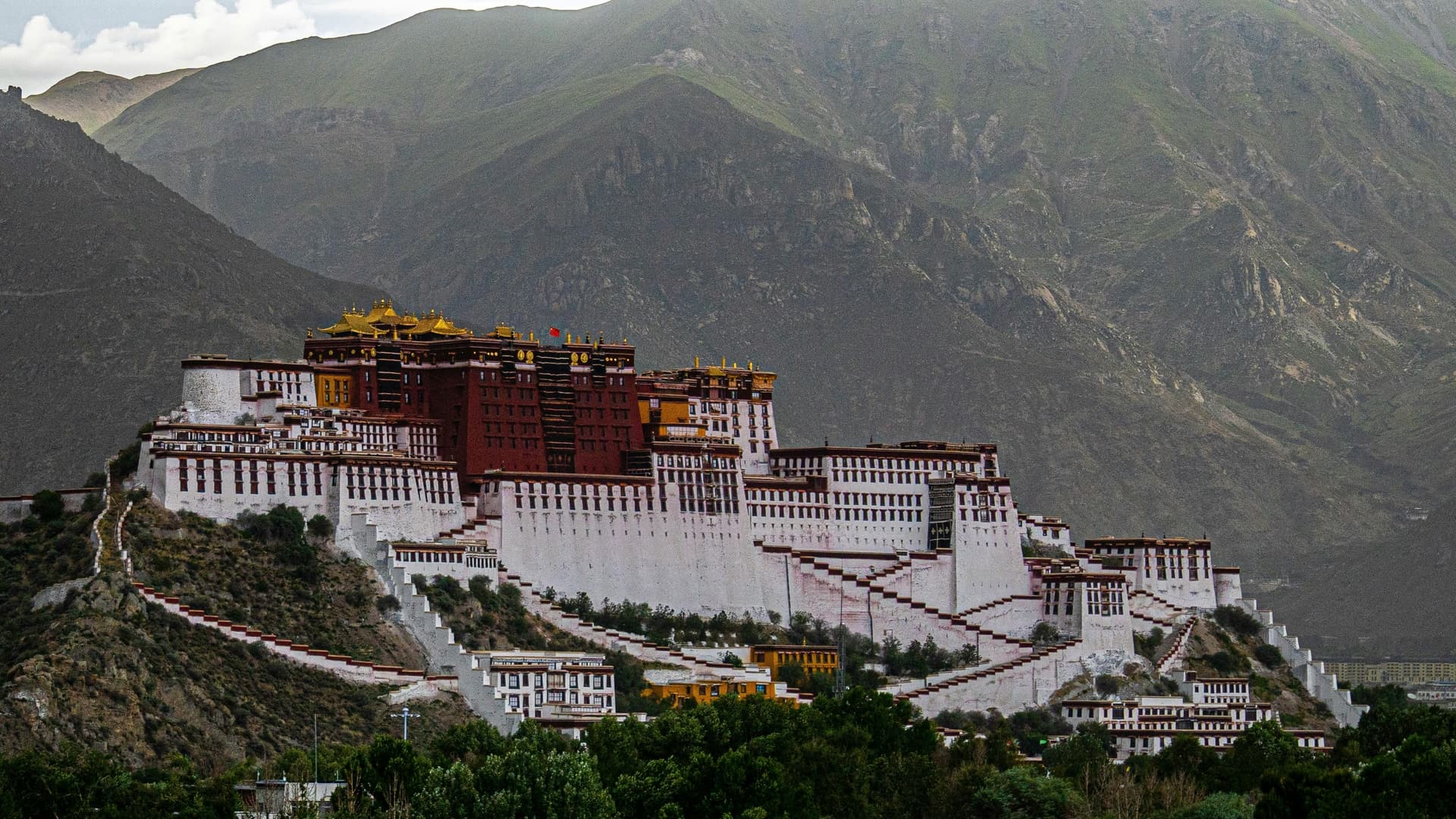
How to Travel to Tibet from Nepal or Mainland China: Complete Guide
Planning a Tibet tour now requires choosing the right gateway before confirming flights. This updated guide explains entry from Kathmandu and mainland China, Tibet permits, current visa procedures, border alternatives after the Kyirong flood, and the best itinerary for three days to two weeks.
Traveling to Tibet begins with one essential decision: will you enter from Kathmandu or through mainland China? That choice determines your visa process, Tibet permits, transport connections and even the most practical itinerary. Following the August 2026 Kyirong–Rasuwagadhi flood, careful route planning is more important than ever. This guide explains the current entry options by flight and land, the updated Tibet Group Visa procedure in Kathmandu, permit delivery for flights and trains from China, and which Tibet tour suits a holiday of three days, one week or two weeks.
Tibet remains one of Asia’s most rewarding journeys, but foreign visitors cannot simply buy a ticket and improvise after arrival. The approved itinerary, entry point, Tibet Travel Permit, guide and transport must be arranged through an authorized operator. HimalayanWindows coordinates the Kathmandu arrangements with its Lhasa partner so every stage follows one plan.
Important update: The information below reflects the operating situation in early September 2026. Tibet visa rules, permit procedures, flight schedules and land-border access can change without much notice. Reconfirm everything before buying non-refundable transport.
Three Ways to Reach Tibet from Kathmandu
The practical options from Nepal are a direct flight to Lhasa, an overland crossing through a designated Nepal–China port, or the multi-flight and helicopter route through Simikot and Hilsa for Mount Kailash.
1. Fly from Kathmandu to Lhasa
For most travelers, flying is currently the simplest and most viable way to enter Tibet from Nepal. At the time of writing, Himalaya Airlines is the only scheduled nonstop operator on the route, which normally takes about 1 hour 20 minutes in the air. It is a spectacular flight when the weather is clear, with views across the Himalayan chain.
Do not assume there will be a flight every day. Frequencies and available seats can change by season and operating conditions, so the flight date must be aligned with passport submission, visa collection and the approved Tibet itinerary. A few spare days in Nepal can protect the trip from a weekend, public holiday, visa delay or flight change.
2. Travel overland through Kodari–Zhangmu
The Kodari–Tatopani crossing on the Nepal side connects with Zhangmu, also called Khasa, in Tibet. Under the current operational arrangement, this port is being used for pre-approved foreign tour groups and is the principal land alternative while Kyirong is unavailable. Entry is not a walk-in process: the group visa or valid Chinese visa status, Tibet permits, traveler list, vehicles and guides on both sides must all be approved in advance.
The drive from Kathmandu to Kodari is roughly 115–120 kilometres, but mountain roads, traffic and immigration determine the real journey time. Travelers normally change vehicles after the border formalities, then continue towards Nyalam, Everest Base Camp, Shigatse, Lhasa or Mount Kailash according to the approved route.
Kodari–Zhangmu access is promising, but it should still be treated as conditional. A border can be open for trade or emergency movement without accepting every tourist group. HimalayanWindows therefore reconfirms the traveler’s nationality, permit and crossing approval before presenting an overland departure as final.
3. Fly via Nepalgunj, Simikot and Hilsa for Mount Kailash
The Kathmandu–Simikot–Kailash tour offers a shorter geographical approach to western Tibet. It usually involves a Kathmandu–Nepalgunj flight, a Nepalgunj–Simikot flight, a helicopter sector from Simikot towards Hilsa, a short walk across the border and a road transfer to Purang before continuing to Lake Manasarovar and Mount Kailash.
It saves days but is not usually budget-friendly. Several flights and a helicopter are required, and weather can delay the connections. It best suits travelers who prioritize time and can keep buffer days.
What Happened at the Kyirong–Rasuwagadhi Border?
On 26 August 2026, a catastrophic flash flood struck the Kyirong–Rasuwa corridor. The disaster caused immense human loss and swept away border facilities, roads, bridges and other infrastructure around the Gyirong inspection area. The Kyirong–Rasuwagadhi tourist crossing is therefore closed at the time of writing.
Road access on the Tibet side has since been restored sufficiently for heavy rescue equipment to reach the disaster zone. That should not be confused with a reopening for commercial tourist traffic. Rebuilding immigration, customs, bridge and transport facilities—and confirming the stability of the surrounding slopes—will take time.
Trips that formerly used Kyirong are being reviewed individually. A Mount Kailash overland tour may be redirected through Kodari–Zhangmu when the permits and authorities allow it. Other practical alternatives are flying from Kathmandu to Lhasa, reaching Lhasa through mainland China, or using Simikot–Hilsa for a short Kailash itinerary.
When regular operations at Kodari become stable and Kyirong hopefully reopens in the future, the classic routes can operate much as they did before the flood: Kathmandu–border–Tingri–Everest Base Camp–Shigatse–Gyantse–Lhasa, the reverse Lhasa–Kathmandu journey, and the overland Kailash Mansarovar tour. Until then, ask HimalayanWindows for a route-specific update rather than relying on an old article or map.
Tibet Visa and Permit Rules When Traveling from Kathmandu
The phrase “Tibet visa” is commonly used online, but two separate permissions may be involved:
A Chinese visa or an applicable Chinese visa exemption allows entry to China.
A Tibet Travel Permit authorizes a foreign traveler to enter the Tibet Autonomous Region on the approved tour.
Additional route permits may be arranged for destinations outside Lhasa, including Everest Base Camp, border areas and the Ngari region around Mount Kailash. The exact permit names and issuing offices depend on the itinerary; the traveler does not apply for these independently.
If you already hold a valid Chinese visa or qualify for visa-free entry
Under the current working procedure, travelers entering Tibet from Kathmandu who already hold an appropriate valid Chinese visa do not need to replace it with a Tibet Group Visa. The same applies to ordinary-passport holders who qualify for China’s current visa-free policy for the planned purpose and length of stay. HimalayanWindows and its Lhasa partner arrange the Tibet Travel Permit and any route-specific permissions.
Visa-free transit and visa-free entry are not automatically the same thing. Do not assume that a short transit policy covers a Tibet itinerary; have the passport and proposed route checked first.
If you do not hold a Chinese visa and are not visa-exempt
You will normally need a Tibet Group Visa, a paper-based single-entry Chinese group tourist visa issued in Kathmandu for the approved journey. The current invitation procedure generally requires at least five travelers following the same entry, itinerary and exit plan. Solo travelers and couples may need to join a compatible departure or enter through mainland China after arranging an individual Chinese visa.
Begin before arriving in Nepal. HimalayanWindows first requests approval for the visa appointment and prepares the supporting invitation and permit documents. The basic pre-arrival requirements are:
A full colour scan of the passport photo and information page.
A scan of one blank passport page.
A recent passport-size photograph that meets the current specifications.
A Nepal visa or electronic travel authorization/online visa record.
A fully completed personal-information form supplied by HimalayanWindows.
Further documents may be requested according to nationality, occupation, visa history or passport type. Journalists, diplomats, government officials and some professional categories can require a different authorization channel.
Appointment approval often takes two or three working days but can extend to a week. Request it at least one week before arrival and begin the full Tibet file several weeks ahead.
Once in Kathmandu, submit the original passport through the authorized process. Allow at least four working days before the planned flight or land departure. Saturdays, Sundays and Chinese or Nepali public holidays do not count as processing days. HimalayanWindows currently plans conservatively on the basis that the visa-validity count begins at the original-passport submission stage. The visa appointment, flight and Tibet itinerary must therefore be aligned.
Do travelers still need to provide fingerprints?
Not routinely for a short tourist stay. China currently exempts applicants staying no more than 180 days from fingerprint collection through 31 December 2026. This is temporary, and the authorities can still request an interview, personal appearance or additional documents.
How much does a Tibet Group Visa cost?
There is no universal price. The total varies by nationality, processing speed, official charges, visa-centre fees and authorized handling. Request a current written quotation after sharing the passport copy.
Entering Tibet Through Mainland China
Mainland China is currently one of the most reliable options. Chengdu and Xining are practical gateways, while Beijing, Chongqing, Xi’an, Kunming, Shanghai and Guangzhou may also connect with Lhasa by air or rail.
Your authorized Tibet operator applies for the Tibet Travel Permit after the itinerary and Chinese entry status are confirmed.
Flying from mainland China to Lhasa
Airline check-in normally requires the original Tibet Travel Permit. It is usually couriered to a confirmed hotel or trusted address in mainland China. Share the recipient’s exact name, hotel address, reservation details, telephone number and check-in date. Build enough time into the connection for delivery; a same-day international-to-Lhasa transfer can be difficult unless a specific airport handover has been arranged.
Taking a train to Lhasa
Trains reach Lhasa from several major Chinese cities, with Xining offering the shortest journey on the Qinghai–Tibet Railway. Tickets can be difficult to obtain during holidays and peak periods.
Permit checks vary by departure station. Some accept a clear colour copy; others may require the original. Confirm the boarding city and document format shortly before travel. The train does not replace two easy acclimatization days in Lhasa.
Which Tibet Itinerary Should You Choose?
Choose the route by time, altitude tolerance and entry point—not only by the longest list of attractions.
The essential Lhasa circuit includes the Potala Palace, Jokhang Temple, Barkhor, Sera and Drepung. Extra days open the way to Ganden Monastery, Yamdrok Tso, Namtso, Gyantse and Shigatse; longer journeys reach the Tibet side of Everest Base Camp or sacred Lake Manasarovar and Mount Kailash.
Time available | Recommended trip | Best for |
3 days | Travelers with a strict schedule who accept only one main sightseeing day | |
4 days | First-time visitors wanting two sightseeing and acclimatization days | |
5 days | More cultural depth without a long plateau drive | |
5–7 days | Travelers wanting sacred lakes and landscapes beyond the capital | |
8 days | A road-based visit to the north face of Everest without crossing into Nepal | |
About 14 days | Pilgrims and experienced high-altitude travelers prepared for the three-day Kailash kora |
A three-day trip is possible but compressed. Four days is a better minimum because it provides an arrival day plus two days around Lhasa. With five to seven days, add one realistic extension rather than rushing among distant sites.
For eight or nine days, the return-to-Lhasa Everest Base Camp itinerary is the strongest choice while the Nepal border situation remains unsettled. With about two weeks, the Lhasa–Mount Kailash journey combines cultural acclimatization, central Tibet and western Tibet before returning to Lhasa. The Kailash kora crosses very high terrain and should never be treated as an ordinary sightseeing add-on.
Best Time to Visit Tibet
April to October is the main travel season for most routes. April–May and September–October often offer clearer mountain views and relatively stable conditions. June–August is warmer but coincides with the plateau’s wetter season, when landslides and road delays can affect Nepal approaches. Mount Kailash trips are generally planned in the warmer operating months, subject to snow and permit access.
Winter can be rewarding in Lhasa, with fewer visitors and crisp light, but it is much colder outside the city and some routes, hotels or attractions may operate differently. Permit issuance can also pause during particular periods. Confirm access before booking flights.
Potala Palace, Road Travel, Hotels and Food
The Potala Palace is capacity controlled. Foreign visitors travel on a pre-arranged tour, and the agency books the passport-linked ticket when the reservation window opens. Entry is assigned to a fixed time and sometimes a particular route. During busy periods the sightseeing order may be changed to match the allotted slot, so do not build a day around an assumed morning visit.
Main highways between Lhasa, Gyantse and Shigatse are generally paved, but journeys are slower than the distance suggests because of altitude, checkpoints, scenic stops and controlled driving speeds. Roads towards Everest, Kailash and border areas are more exposed to snow, rain, wind, landslides and temporary restrictions. The guide and driver must follow the permitted route.
Lhasa offers comfortable three-, four- and five-star hotels, and Shigatse has reliable choices. Towards Rongbuk, Manasarovar and the Kailash kora, expect basic guesthouses, limited heating, simple bathrooms, occasional power interruption and fewer meal choices.
In Lhasa and Shigatse, travelers can find Tibetan, Chinese, Nepali, Indian and some international food. Remote menus are simpler, commonly featuring noodles, rice, soup, dumplings, eggs and seasonal vegetables. Tell HimalayanWindows about vegetarian, vegan, gluten-free or medical dietary needs in advance, and carry a few familiar snacks for long driving days.
Mobile payments are widespread in China. International visitors can link eligible cards to Alipay or WeChat Pay, but it is still wise to carry some Chinese yuan for remote stops. International cards are mainly useful at larger hotels and businesses.
Health and Altitude Planning
Lhasa is already high enough to cause altitude symptoms, and Everest Base Camp, Namtso and the Kailash route go much higher. Keep the arrival day quiet, avoid hard exercise and alcohol during the first 48 hours, eat lightly, stay normally hydrated and tell the guide immediately if symptoms worsen.
Anyone with heart, lung or other significant health conditions should discuss the trip with a qualified clinician. Ask a medical professional—not a travel website—whether preventive medication is appropriate. Severe headache, confusion, loss of coordination or breathlessness at rest requires urgent attention and may require descent.
Plan the Documents and Route as One Journey
The best Tibet itinerary is not simply the cheapest flight or shortest road. It is the route whose visa, permit, border, transport and acclimatization days fit together reliably.
For current conditions, flying to Lhasa from Kathmandu or entering from mainland China is the most practical choice for most travelers. Kodari–Zhangmu offers an overland alternative when the specific group receives approval, while Simikot–Hilsa remains a fast but weather-sensitive and comparatively expensive Kailash route. Kyirong–Rasuwagadhi should remain off the plan until the authorities restore border facilities and formally reopen tourist movement.
HimalayanWindows checks the details with its Lhasa partner before confirmation. One change to a flight date, passport, border or exit city can affect the whole file. Share your nationality, dates, entry preference and available days for an itinerary that is rewarding and workable.
Frequently Asked Questions
1. Can foreign travelers visit Tibet independently?
No. Foreign travelers must book an organized itinerary through an authorized operator. The Tibet Travel Permit, guide, vehicle and approved route are arranged before arrival.
2. Do I need a Tibet Group Visa if I fly from Kathmandu to Lhasa?
It depends on your passport status. Under the current procedure, an appropriate valid Chinese visa or confirmed Chinese visa exemption can be used with the Tibet Travel Permit. Travelers without either generally need a Tibet Group Visa arranged in Kathmandu.
3. How many people are required for a Tibet Group Visa in Kathmandu?
The current invitation procedure generally requires a minimum of five travelers sharing the approved travel plan. Because this rule can change, reconfirm it before committing to flights.
4. How early should I arrive in Kathmandu for the Tibet Group Visa?
Arrive at least four working days before departure, excluding weekends and holidays. Begin the appointment-approval and permit file earlier; one week for appointment approval and several weeks for the complete Tibet arrangement is safer.
5. Is biometric fingerprint collection required in 2026?
China currently exempts short-term visa applicants staying no more than 180 days from fingerprint collection through 31 December 2026. This temporary policy can be extended, revised or withdrawn.
6. Is the Kyirong–Rasuwagadhi border open after the August 2026 flood?
No, not for normal tourist crossings at the time of writing. A road has reopened for rescue access on the Tibet side, but the border inspection complex and associated infrastructure require reconstruction. Wait for formal tourist-opening confirmation.
7. Can foreign tourists currently enter Tibet through Kodari–Zhangmu?
The port is presently being used as an alternative for pre-approved foreign tour groups under the current operating arrangement. Entry remains subject to nationality, visa, permit, vehicle, road and border approval; do not travel to the border without confirmation.
8. Is flying through Simikot and Hilsa the cheapest Mount Kailash route?
Usually not. It is shorter in days but requires multiple scheduled flights and a helicopter, making it more expensive and vulnerable to weather delays. It is best for travelers who value time over budget.
9. Do I need the original Tibet Travel Permit to fly or take a train from mainland China?
For a flight, plan to carry the original permit. Train requirements vary by departure station: some accept a clear colour copy, while others may require the original. HimalayanWindows confirms the rule for the exact boarding city.
10. How many days are ideal for a first Tibet tour?
Four days is a practical minimum for Lhasa. Allow five to seven days for Ganden, Yamdrok Tso, Shigatse or Namtso; eight days for a Lhasa–Everest Base Camp–Lhasa journey; and about two weeks for a Lhasa–Mount Kailash tour with the three-day kora.
Final Thoughts
A journey to Tibet is far more than a sightseeing holiday: it is an opportunity to experience ancient Buddhist culture, extraordinary Himalayan landscapes and some of the world’s most meaningful pilgrimage sites. However, planning a Tibet tour from Kathmandu or Mainland China requires careful coordination of the Tibet Travel Permit, visa arrangements, flights and border conditions. Following the recent flooding at the Kyirong–Rasuwagadhi border, flying to Lhasa currently remains the most practical option for many international travellers, while overland routes through Kodari–Zhangmu and Simikot–Hilsa depend on official approval and local operating conditions.
Tibet’s border access, flight schedules and visa procedures can change with little notice, so travellers should avoid making non-refundable arrangements before their route and permits are confirmed. HimalayanWindows works closely with its local partners to provide updated information, prepare the necessary documents and recommend the most suitable itinerary for your available time and budget. Before finalizing your journey, contact our team for the latest Tibet border and visa updates so your trip can be planned as smoothly and responsibly as possible.
Plan your trip
Ready to experience this yourself?
Our Kathmandu-based specialists build tailor-made treks and tours across Nepal, Tibet and Bhutan — tell us what you want.