
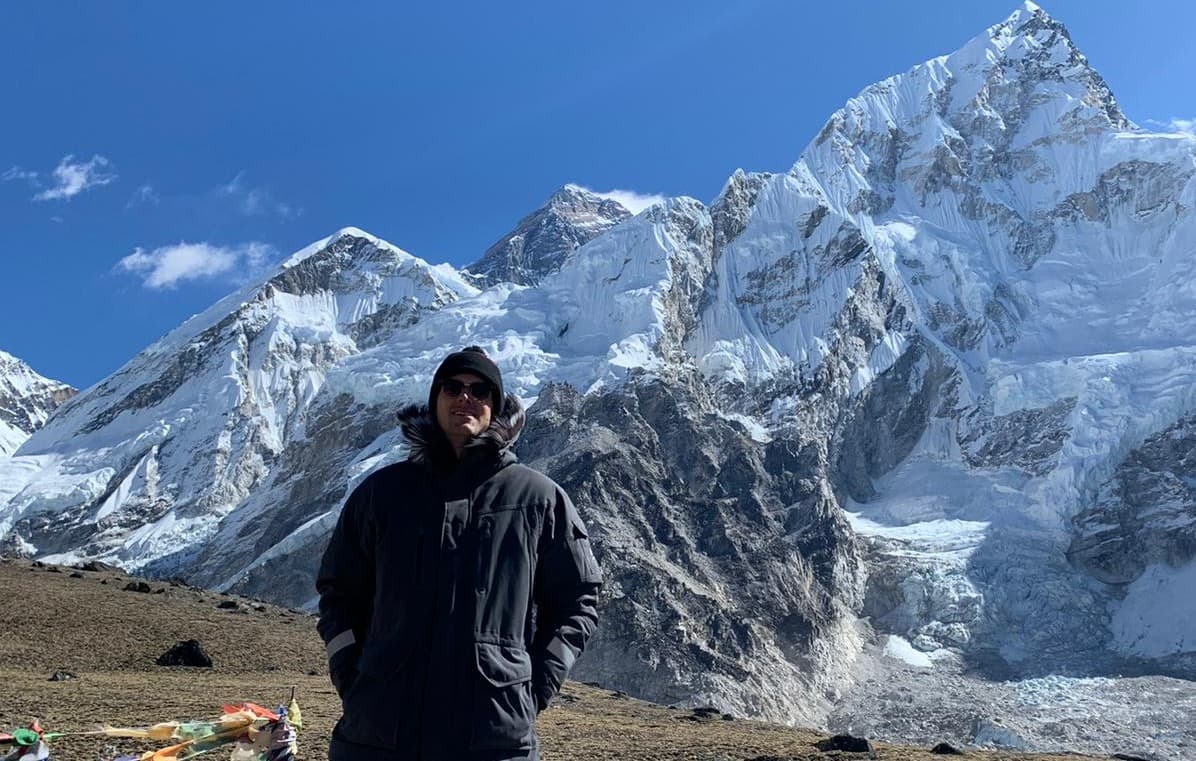
How to Plan an Everest Base Camp Helicopter Tour from Kathmandu
Planning an Everest Base Camp helicopter tour? This guide explains the flight route, possible landing, shared and private costs, weather, passenger weight, safety and what to bring.
Dreaming of seeing Mount Everest without spending nearly two weeks on the trail? An Everest Base Camp helicopter tour from Kathmandu takes you above the spectacular Khumbu, Everest Base Camp and the Khumbu Icefall—with a possible authorized high-altitude landing—all within one morning.
Although the experience is straightforward for passengers, the flight operation depends on mountain weather, aircraft performance, passenger weight, aviation clearance and landing conditions. A responsible plan should therefore allow flexibility and distinguish between an Everest Base Camp flyover and a possible high-altitude landing.
Drawing on our experience arranging Himalayan journeys, this guide explains how the tour normally operates, what affects the price and how to compare shared departures with private helicopter charters.
Everest Base Camp Helicopter Tour at a Glance
Trip detail | Typical arrangement |
Departure and return | Kathmandu Domestic Terminal |
Total program time | Approximately 4–5 hours |
Tour type | Shared flight or private charter |
Group size | Usually 1–5 passengers |
Main route | Kathmandu–Lukla–upper Khumbu–Kathmandu |
Scenic areas | Namche Bazaar, Tengboche, Everest Base Camp, Khumbu Glacier and Kala Patthar area |
Planned maximum altitude | Up to approximately 5,545 metres around Kala Patthar |
Physical difficulty | Easy; no trekking required |
Best seasons | March–May and September–December |
Starting price | From US$1,250 per person based on five confirmed passengers |
All timings, routes and stops are approximate. The pilot and helicopter operator make the final decision according to the conditions on the day.
What Is the Everest Helicopter Flight Really Like?
The tour normally starts early in the morning. After arriving at Kathmandu Domestic Terminal, passengers complete check-in, present their identification documents, verify their body weight and attend a helicopter safety briefing.
Accurate passenger weight is essential because the operator must calculate aircraft balance and high-altitude carrying capacity before departure. Seats are assigned according to these calculations rather than individual seating preferences.
The helicopter flies east from Kathmandu toward Lukla, where a brief refuelling and operational stop is commonly required. As the flight leaves the Kathmandu Valley, the hills, river valleys and settlements of eastern Nepal gradually give way to the Himalayan landscape.
Beyond Lukla, the aircraft follows the Dudh Koshi Valley into the Khumbu. The route may pass above or near Namche Bazaar, Tengboche, Pheriche and Gorak Shep. On a clear morning, passengers may see Mount Everest, Lhotse, Nuptse, Ama Dablam, Pumori, Thamserku and numerous other Himalayan peaks.
The upper section normally provides aerial views of Everest Base Camp, the Khumbu Glacier, the Khumbu Icefall and the Kala Patthar area. When aviation regulations, visibility, wind, snow, landing-surface conditions, passenger weight and aircraft performance permit, the pilot may make a brief landing at Kala Patthar or another authorized high-altitude viewpoint.
The landing is intentionally short because passengers travel rapidly from Kathmandu to an altitude above 5,000 metres. It should be considered a photography and mountain-viewing stop rather than an opportunity for walking or exploring.
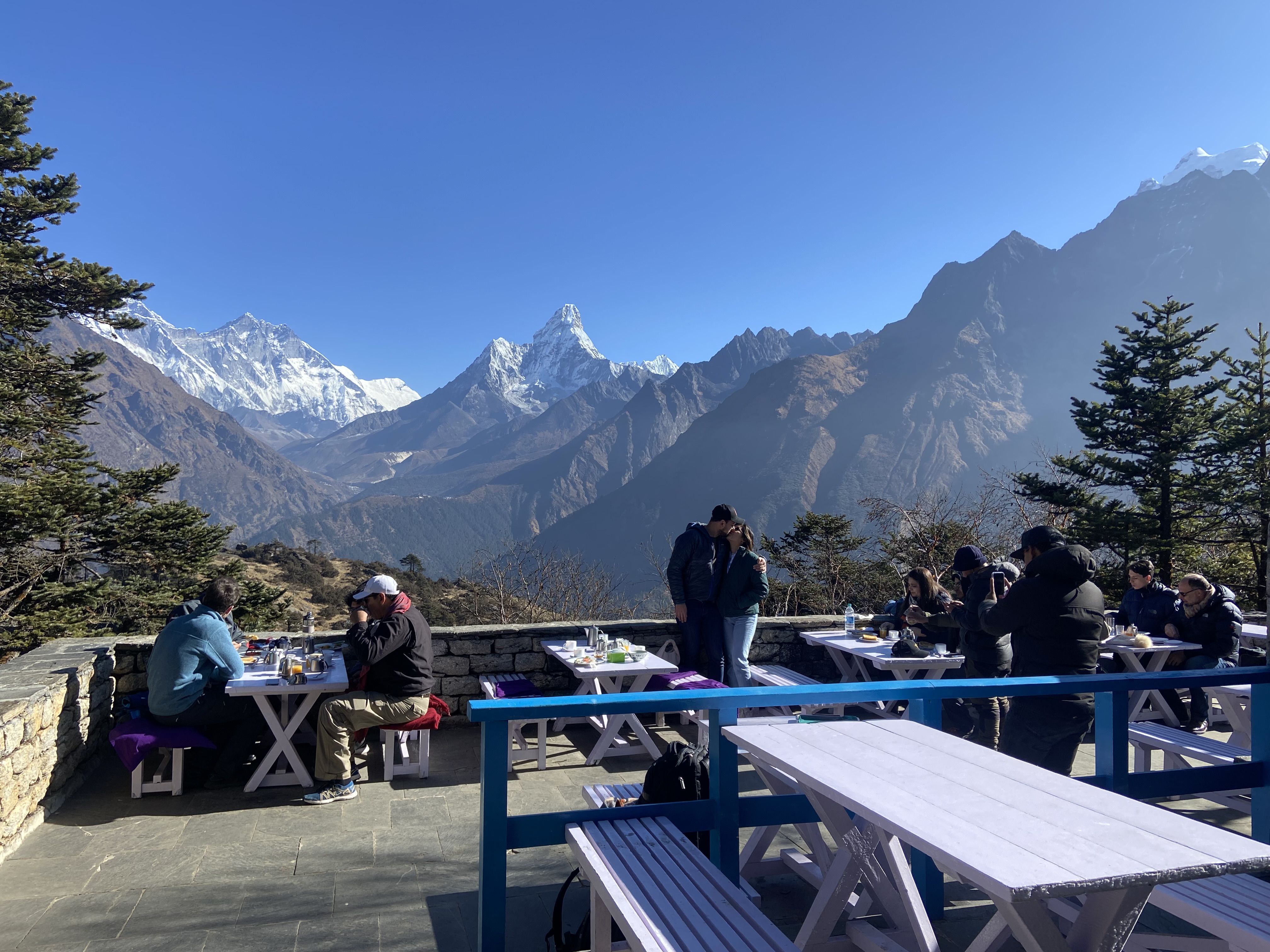
When weather and timing permit, the helicopter may also stop near Hotel Everest View at Syangboche. Passengers can enjoy another panoramic view of the Everest range and purchase breakfast or refreshments. This stop and the meal are not guaranteed parts of every operation.
Does the Helicopter Land at Everest Base Camp?
This is one of the most important questions to clarify before booking an Everest helicopter tour.
Everest Base Camp is situated on the moving Khumbu Glacier and should not be advertised as a guaranteed helicopter landing location. The tour normally includes an aerial view or scenic flyover of Everest Base Camp, the Khumbu Icefall and the surrounding glacier.
A possible high-altitude landing is usually planned at Kala Patthar or another approved viewpoint. Kala Patthar is known for its open panorama toward Mount Everest, Nuptse, Pumori and the surrounding mountains. However, even a Kala Patthar landing cannot be guaranteed in advance.
Temporary aviation restrictions, weather, visibility, wind, snow, air traffic and the condition of the landing surface can change the operating plan. The helicopter operator and pilot confirm the safest available landing location on the day of the flight.
A trustworthy tour company will clearly separate the guaranteed scenic flight service from any landing that remains subject to operational approval.
Everest Base Camp Helicopter Tour Route
Phase 1: Kathmandu to Lukla
The flight begins at Kathmandu Domestic Terminal after the morning check-in and safety briefing. The journey to Lukla generally takes approximately 40–45 minutes.
During the flight, passengers can see hills, river valleys, rural settlements and distant Himalayan ranges. A short landing at Tenzing–Hillary Airport in Lukla is normally made for refuelling and an operational check.
The stop at Lukla usually lasts approximately five to ten minutes, although the timing depends on airport traffic and operating requirements.
Phase 2: Lukla to the Upper Khumbu
After departing Lukla, the helicopter follows the Dudh Koshi Valley toward the upper Everest region. This section normally takes approximately 25–30 minutes.
The route may provide aerial views of Namche Bazaar, Tengboche Monastery, Pheriche, Gorak Shep, Sherpa settlements, alpine valleys and the Khumbu Glacier.
As the helicopter gains altitude, the Himalayan peaks appear increasingly close. Mount Everest may be seen alongside Lhotse, Nuptse, Ama Dablam, Pumori, Thamserku and other surrounding mountains when visibility is clear.
Phase 3: Everest Base Camp Flyover and High-Altitude Landing
The helicopter continues toward the Khumbu Glacier for aerial views of Everest Base Camp and the Khumbu Icefall. This is normally the main scenic section of the tour.
When regulations and operating conditions allow, the helicopter may make a brief landing at Kala Patthar or another authorized high-altitude viewpoint. The stop generally lasts approximately five to ten minutes.
Passengers should move slowly, remain close to the helicopter and follow the pilot’s instructions. The landing may be shortened, relocated or omitted if conditions change.
For a group of four or five passengers, the operator may divide the passengers into smaller shuttle loads from Pheriche or another approved location.
Phase 4: Hotel Everest View Area
After the upper Khumbu flight, the helicopter may continue toward Syangboche for a possible stop near Hotel Everest View.
The stop usually lasts approximately 20–30 minutes when permitted by the operating schedule. Passengers can enjoy views of Everest, Lhotse, Nuptse and Ama Dablam and purchase breakfast or refreshments directly from the hotel.
The Hotel Everest View stop may be shortened or omitted when weather, flight clearance or air traffic requires an earlier return.
Phase 5: Return to Kathmandu
The helicopter returns toward Lukla for refuelling when required and then continues to Kathmandu.
The complete tour normally takes approximately four to five hours. However, delays can occur because of changing weather, air traffic, refuelling requirements or high-altitude shuttle arrangements.
Keep the full morning available and avoid booking an international flight or important onward connection immediately after the tour.
Shared Helicopter Flight or Private Charter?
A shared departure is generally the most affordable option for solo travellers, couples and small groups. The total helicopter operating cost is divided among the confirmed passengers.
The lowest advertised per-person price normally applies when five passengers are confirmed. If fewer passengers are available, the price per person may increase because the operating cost must be divided among a smaller group.
Solo travellers can request to join an existing departure. If a suitable group is unavailable for the selected date, the traveller may choose another date, accept the applicable smaller-group price or book a private charter.
A private charter gives your party exclusive use of the helicopter. It provides greater privacy and can make coordination easier, but it does not remove aviation, landing, weather or weight restrictions. The pilot continues to control the route, seating plan, shuttle arrangement and landing decisions.
For the current Himalayan Windows program, shared seats start from approximately US$1,250 per person when five passengers are confirmed. The final price depends on group size, season, helicopter availability, fuel cost and operational requirements.
Before booking, request a written quotation showing the confirmed group size, included permits and fees, transfer arrangements, meal policy, landing conditions and cancellation terms.
Why Passenger Weight Matters
Every passenger must provide an accurate body weight before the flight. This information is required for aircraft balance, fuel planning and high-altitude performance calculations.
A helicopter can carry less weight at very high altitude than it can at Kathmandu or Lukla. A group of four or five passengers may therefore travel together for the lower sections but be separated into smaller shuttle loads for the highest part of the route.
Pheriche or another approved location may be used as the shuttle point. Some passengers may wait there while the helicopter operates the high-altitude section with a reduced load.
The pilot also assigns seats according to verified passenger weights. Consequently, a particular seat or window position cannot be guaranteed.
Never reduce or guess your weight when booking. Accurate information allows the operator and pilot to plan the safest possible flight.
Best Time for an Everest Base Camp Helicopter Tour
The most popular periods are spring from March to May and autumn into early winter from September to December. These months often offer favourable visibility and mountain views, although no season can guarantee clear weather or an on-time departure.
January and February flights may operate when conditions are suitable. However, temperatures can be extremely low, and snow may affect landing surfaces and flight operations.
The summer monsoon, particularly from June through August, usually brings more rain, cloud and weather disruption. Flights may still operate on clear mornings, but the risk of delays or cancellations is generally higher.
Even during the best seasons, Himalayan weather can change quickly. A departure may be delayed, rerouted, rescheduled or cancelled when visibility, cloud, wind or landing conditions are unsuitable.
Build at least one buffer day into your Nepal itinerary whenever possible, especially if the helicopter flight is one of the main reasons for your visit.
High-Altitude Health and Safety
The tour requires no trekking, but it involves a rapid ascent from Kathmandu to elevations above 5,000 metres. The high-altitude landing is therefore kept very short.
During the landing, walk slowly, avoid running and follow the pilot’s instructions. Return to the helicopter immediately when asked.
Inform HimalayanWindows before booking if you have a heart, lung, blood-pressure or other significant medical condition. Pregnant travellers, older passengers, families travelling with children and anyone concerned about rapid altitude exposure should obtain appropriate medical advice before participating.
Carry essential medication in your day bag. Passenger insurance provided through the helicopter operator should not be considered a replacement for comprehensive personal travel, medical and trip-cancellation insurance.
What to Wear and Bring
Conditions around Kala Patthar and other high-altitude viewpoints can be freezing and windy even when Kathmandu is warm.
Wear or bring:
Warm layered clothing
An insulated jacket
A windproof outer layer
Warm gloves and a hat
UV-protective sunglasses
Sunscreen and lip protection
Closed walking shoes or boots
Your original passport or accepted government-issued ID
Essential medication
A fully charged phone or camera
A small bottle of water
One small day bag
Dark, non-reflective clothing can help reduce window glare when taking photographs. Large suitcases and unnecessary equipment should remain at your hotel.
Important Questions to Ask Before Booking
Before paying a deposit, confirm the following details:
Is the departure a shared flight or private charter?
How many passengers are currently confirmed?
Is the quoted price per passenger or for the complete helicopter?
Which park fees, airport charges, taxes and landing permissions are included?
Are Kathmandu hotel transfers included or available for an additional charge?
Is breakfast at Hotel Everest View included?
What happens if the flight is delayed or cancelled because of weather?
When must passport details and final passenger weights be submitted?
Will high-altitude shuttle flights be used if required?
What refund or rescheduling conditions apply?
Protected-area fees may change and can differ according to nationality. Confirm the applicable fee and whether it is included in your quotation before paying.
Frequently Asked Questions
How long does the Everest Base Camp helicopter tour take?
The complete tour normally takes approximately four to five hours from the morning check-in at Kathmandu Domestic Terminal until the return landing. Weather, air traffic, refuelling and shuttle arrangements may extend the schedule.
Can a solo traveller join a shared flight?
Yes. Himalayan Windows can try to match a solo traveller with an existing shared departure. The lowest advertised price applies when the necessary number of passengers is confirmed.
Is a high-altitude landing guaranteed?
No. A brief landing may be made at Kala Patthar or another authorized high-altitude viewpoint when regulations and operating conditions permit. The landing location, duration or the landing itself may change for safety reasons.
Does the helicopter land directly at Everest Base Camp?
Everest Base Camp is situated on the moving Khumbu Glacier and is not a guaranteed helicopter landing point. The flight normally provides an aerial view of Everest Base Camp, while any authorized landing is planned at Kala Patthar or another suitable viewpoint.
Will every passenger receive a window seat?
A particular seat or window position cannot be guaranteed. The pilot assigns seats according to passenger weight and aircraft balance. Passengers may be asked to change seats during the operation.
Why are shuttle flights sometimes required?
Helicopter lifting capacity decreases at high altitude. Larger groups may be separated into smaller loads from Pheriche or another approved location before flying to the highest section of the route.
Is breakfast at Hotel Everest View included?
Breakfast is not included in the standard package. When a stop near Hotel Everest View is operationally possible, passengers can purchase breakfast or refreshments directly.
Are Kathmandu hotel transfers included?
Kathmandu hotel pickup and drop-off are not included in the standard package. Transfers can be arranged separately for an additional charge.
What happens if the weather is unsuitable?
The flight may be delayed, rerouted, rescheduled or cancelled. Himalayan Windows will first try to arrange another suitable departure. Refunds and deductions follow the conditions stated in the confirmed booking.
Is the tour suitable for children and older travellers?
The tour does not involve trekking, but it includes rapid exposure to very high altitude. Children, older travellers and passengers with medical concerns should obtain suitable medical advice before booking.
Plan Your Everest Helicopter Flight Responsibly
An Everest helicopter journey can deliver extraordinary Himalayan views in a single morning, but the best experience begins with realistic expectations.
Choose a suitable season, keep a buffer day, provide accurate passenger information and treat all flight routes, landing locations and stop durations as conditional.
Most importantly, book an itinerary that clearly separates the Everest Base Camp scenic flyover from the possible high-altitude landing.
If you are ready to compare shared seats and private charter options, explore our Everest Base Camp helicopter tour or contact HimalayanWindows for the latest operating plan, availability and confirmed price.
Plan your trip
Ready to experience this yourself?
Our Kathmandu-based specialists build tailor-made treks and tours across Nepal, Tibet and Bhutan — tell us what you want.