The field notes
A journey with rhythm
Private guiding, thoughtful pacing, and enough room to absorb each place rather than simply pass through it.
PrivateThoughtfulLocal

Everest Luxury Trek: Comfort and Adventure Combined
Follow the classic trail to Everest Base Camp, stay in premium mountain lodges where available, and exchange the long return trek for a spectacular shared helicopter flight to Kathmandu.
Journey overview
The Luxury Everest Base Camp Trek with Helicopter Return – 9 Days combines the classic journey to the foot of Mount Everest with upgraded accommodation, personalized trekking support and a time-saving helicopter return to Kathmandu. You complete the entire ascent on foot, visit Everest Base Camp and hike Kala Patthar before avoiding the three- to four-day return walk to Lukla.
Your journey begins with a scenic flight from Kathmandu—or from Ramechhap when seasonal flight arrangements apply—to Lukla, the gateway to the Everest region. From Lukla, you trek to Phakding before following the Dudh Koshi River towards Namche Bazaar. Suspension bridges, mani stones, prayer wheels and villages surrounded by forest introduce you to the natural and cultural character of the Khumbu.
Two acclimatization days are built into the itinerary. The first is in Namche Bazaar, where you can hike to Hotel Everest View for your first clear panoramas of Everest, Lhotse, Nuptse and Ama Dablam. The second is in Dingboche, where an acclimatization hike towards Nangkartshang Ridge helps prepare your body for the higher stages of the trek.
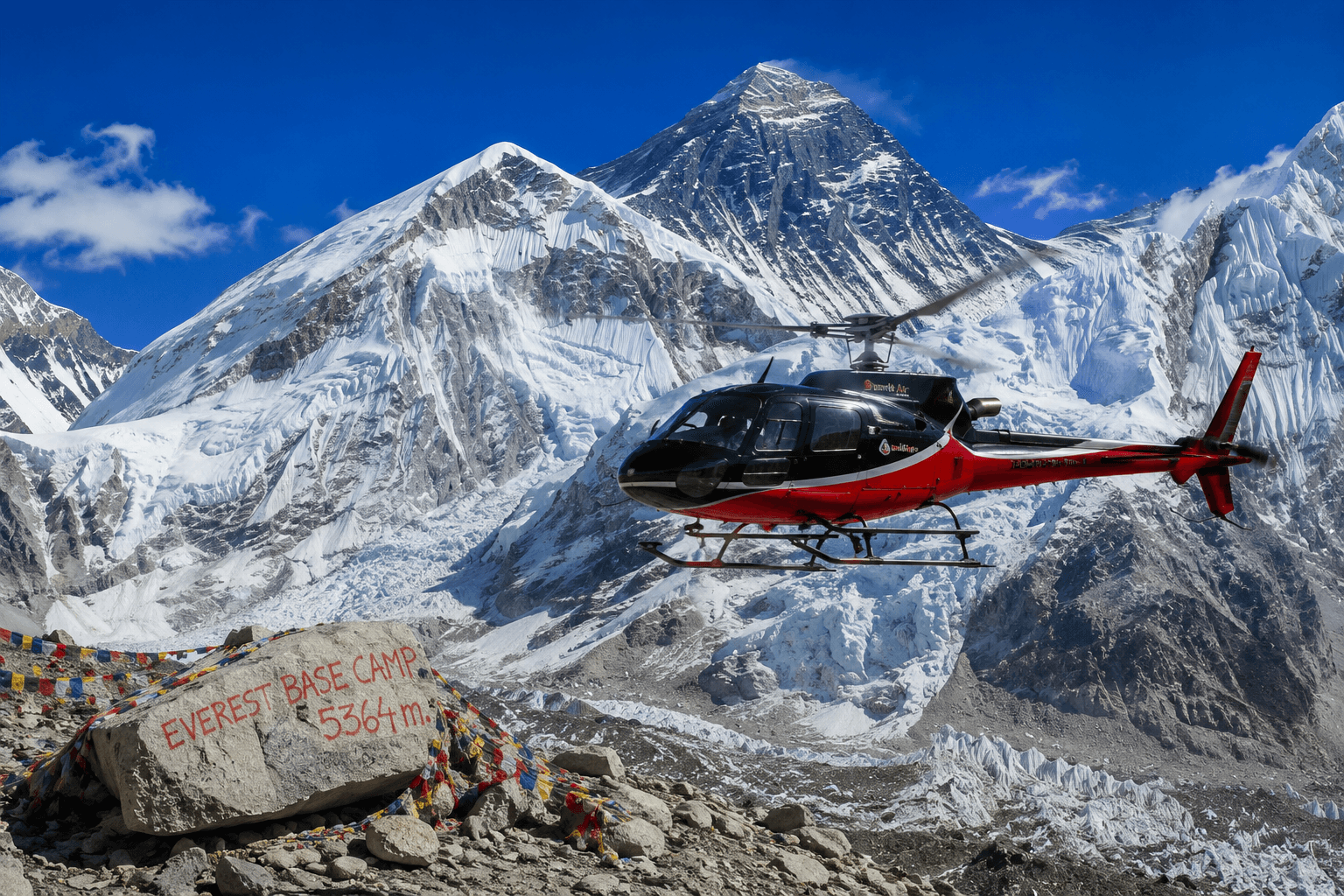
The route continues through Tengboche and Deboche before reaching Dingboche, Lobuche and Gorak Shep. On Day 8, you trek to Everest Base Camp at 5,364m, where the Khumbu Glacier and Khumbu Icefall create one of the Himalayas’ most dramatic landscapes. The following morning, weather and physical condition permitting, you hike Kala Patthar at 5,545m for an outstanding panorama of Everest and its neighboring peaks.
After returning to Gorak Shep, you board a shared helicopter for the flight back to Kathmandu. Depending on weather, passenger weight and operational requirements, the flight may involve a short shuttle to a lower helipad and one or more stops, normally including Lukla for refuelling. The pilot and helicopter operator determine the final flight plan.
Luxury in the Everest region changes with altitude. Premium lodges with comfortable rooms, good dining facilities and private bathrooms are available in places such as Phakding and Namche Bazaar. Farther above Dingboche, accommodation becomes more basic because of the remoteness and extreme environment. At Lobuche and Gorak Shep, we use the best available lodge rather than promising facilities that cannot be reliably delivered.
The helicopter return saves time and reduces the physical strain of retracing the route, but the ascent to Everest Base Camp remains demanding. You should be prepared to walk for approximately five to seven hours on most days over steep, rocky and uneven terrain. Previous high-altitude trekking experience is helpful but not essential for fit travelers who train properly and follow the guide’s acclimatization advice.
The nine-day package begins and ends in Kathmandu but does not include Kathmandu accommodation or sightseeing. We can add hotels, private sightseeing tours and international airport pickup and drop-off services on request.
One day before departure, we arrange a pre-trip briefing at the Himalayan Windows office or at your hotel. During the meeting, we review the itinerary, check essential trekking equipment, explain the Lukla flight and helicopter arrangements, and introduce you to your trekking guide.
Trip Information Pre-Trip Briefing and Kathmandu Services
The nine-day itinerary starts with the flight to Lukla on Day 1. One day before departure, we arrange a pre-trip meeting at the Himalayan Windows office or at your Kathmandu hotel. We review the itinerary, check essential equipment, discuss the flight arrangements and introduce you to your trekking guide.
Kathmandu hotels, sightseeing and international airport pickup and drop-off are not included in the standard package. We can arrange any of these services on request, including additional contingency nights before or after the trek.
What Does Luxury Mean on This Trek?
Luxury in the Everest region is relative to the altitude and remoteness. In Phakding and Namche Bazaar, premium lodges generally provide comfortable beds, good dining facilities and private bathrooms. Deboche also offers an upgraded lodge where availability permits.
Above Dingboche, facilities become progressively simpler. Lobuche and Gorak Shep have limited accommodation, shared facilities and fewer amenities. At these elevations, “luxury” means using the best available lodge, reliable meals, careful organization, porter support and personalized guidance—not five-star hotel facilities.
Trek Difficulty and Fitness
The trek is graded demanding. Although the helicopter eliminates the return walk from Gorak Shep to Lukla, it does not reduce the difficulty of the ascent or the effects of altitude.
Most trekking days involve five to seven hours of walking over steep, rocky and uneven terrain. Begin cardiovascular and leg-strength training at least six to eight weeks before departure. Previous high-altitude experience is helpful but not compulsory for healthy and well-prepared travelers.
Altitude and Acclimatization
Everest Base Camp is located at 5,364m, while the highest point is Kala Patthar at 5,545m. The itinerary includes acclimatization days in Namche Bazaar and Dingboche to support a gradual ascent.
Your guide will monitor your condition and may adjust the pace or hiking plan if you show symptoms of altitude sickness. Travelers must follow the guide’s advice, walk slowly, stay hydrated and report headaches, nausea, unusual fatigue or breathing difficulties immediately.
Mountain Accommodation
Eight mountain-lodge nights are included. Premium properties are used in Phakding and Namche, with upgraded or best-available lodges in Deboche and Dingboche. Lobuche and Gorak Shep offer more basic accommodation because of their altitude and remote location.
Specific lodges remain subject to availability, weather and local operating conditions. Where an advertised property is unavailable, we arrange the best comparable option.
Meals and Drinking Water
Full-board meals are included from lunch on Day 1 through breakfast on Day 9. Most lodges offer Nepali, Tibetan, Indian and simple continental dishes. Dal bhat, soups, noodles, potatoes, rice, pasta, eggs and seasonal vegetables are commonly available.
Vegetarian and many dietary requirements can be accommodated with advance notice, although choices become more limited at higher elevations. Bottled, boiled or purified drinking water and additional beverages are not included unless stated in your quotation.
Lukla Flight Arrangements
Flights to Lukla are weather-dependent. Depending on the season and aviation arrangements, the outbound flight may operate directly from Kathmandu or from Ramechhap Airport. When Ramechhap is used, an early road transfer from Kathmandu is required.
Delays and cancellations are possible because of cloud, wind or poor visibility. Travelers should keep at least one additional contingency day in Kathmandu after the scheduled return.
Shared Helicopter Return
The package includes a shared helicopter return from Gorak Shep to Kathmandu. It is not a private charter and does not include a helicopter landing at Everest Base Camp.
High-altitude payload limitations may require passengers to fly in smaller groups to Pheriche or another lower helipad before regrouping. A refuelling or operational stop at Lukla is normally required. The final routing is determined by the pilot and operator according to weather, weight and safety conditions.
A private helicopter charter can be arranged for an additional charge.
Guides, Porters and Luggage
A licensed English-speaking trekking guide accompanies the group. One porter is normally provided for every two trekkers, with a maximum porter allowance of approximately 10kg per traveler.
Scheduled Lukla flights commonly allow a combined total of approximately 15kg per passenger, including checked and hand luggage. Helicopter baggage limits may be lower because of altitude and payload conditions. Any excess luggage can be stored at your Kathmandu hotel.
Permits
The required Everest trekking permits are arranged as part of the package. These include the applicable TIMS documentation, Sagarmatha National Park entry permit and Khumbu Pasang Lhamu Rural Municipality entry permit.
Travelers must provide a clear passport copy and any other requested information before departure.
Travel Insurance and Emergency Assistance
Comprehensive travel insurance is mandatory. Your policy must cover high-altitude trekking up to at least 6,000m, medical treatment, trip interruption and emergency helicopter evacuation in Nepal.
Himalayan Windows will coordinate emergency assistance when required, but medical treatment, helicopter evacuation and rescue costs are not included in the package price.
Weather, Electricity and Communication
Mountain weather can change quickly, particularly around Lukla, Gorak Shep and Kala Patthar. The itinerary may be adjusted for safety.
Mobile coverage and Wi-Fi are available in several villages but become less reliable at higher elevations. Charging, Wi-Fi and hot showers may require additional payment and cannot be guaranteed at every lodge.
Trip highlights
Reach Everest Base Camp at 5,364m: Follow the classic Khumbu trail through Namche, Tengboche, Dingboche, Lobuche and Gorak Shep.
Hike Kala Patthar at 5,545m: Enjoy panoramic views of Everest, Lhotse, Nuptse, Pumori and the surrounding Himalayan peaks.
Acclimatize in Namche and Dingboche: Two carefully positioned acclimatization days support a safer and more comfortable ascent.
Stay in the best available mountain accommodation: Use premium lodges in the lower Khumbu and carefully selected high-altitude lodges farther up.
Return to Kathmandu by shared helicopter: Avoid the long return trek to Lukla while viewing the Khumbu landscape from the air.
Places covered
The places this journey moves through, in the order they shape the experience.
Day by day
Walk the route one day at a time — meals, overnight stays, and the details that shape each stage.
Early in the morning, we transfer you from your Kathmandu hotel to the appropriate departure airport. Depending on the season and current aviation arrangements, the flight to Lukla may depart directly from Kathmandu or from Ramechhap Airport, which requires an early drive from Kathmandu.
The mountain flight offers views of Nepal’s hills and Himalayan ranges before landing at Tenzing–Hillary Airport in Lukla. Here, you meet the porter team, organize the luggage and begin walking.
The first stage follows a generally descending and undulating trail through Chaurikharka and smaller Sherpa settlements. Pass mani walls, prayer wheels and suspension bridges while following the Dudh Koshi Valley to Phakding. The relatively short first day provides a gentle introduction to the trail.
Accommodation: Mountain Lodges of Nepal or a similar premium lodge
Notehigh-altitude, walk slowly, stay hydrated
After breakfast, follow the Dudh Koshi River through pine forest and the villages of Toktok, Benkar and Monjo. At Monjo, your permits are checked as you enter Sagarmatha National Park.
The trail continues to Jorsalle before crossing several suspension bridges, including the high bridge above the meeting point of the Dudh Koshi and Bhote Koshi rivers. From here, a sustained uphill climb leads towards Namche Bazaar.
On a clear day, you may catch your first distant view of Mount Everest before reaching Namche. The town is the principal commercial and cultural center of the Khumbu region.
Accommodation: Mountain Lodges of Nepal or a similar premium lodge
Notehigh-altitude, walk slowly, stay hydrated
Today is reserved for acclimatization. Rather than remaining inactive, take a gradual morning hike towards Syangboche and Hotel Everest View. The higher viewpoint offers impressive views of Everest, Lhotse, Nuptse, Ama Dablam, Thamserku and other surrounding peaks when the weather is clear.
Depending on your pace and interests, the hike may be extended towards Khumjung village. Return to Namche for lunch and spend the afternoon resting, exploring the market or visiting the Sherpa Culture Museum.
Hiking higher and returning to sleep at a lower elevation helps your body adjust before continuing farther into the mountains.
Accommodation: Mountain Lodges of Nepal or a similar premium lodge
Notehigh-altitude, walk slowly, stay hydrated
The trail initially contours around the hillside above the Dudh Koshi Valley, offering views of Everest, Lhotse and Ama Dablam. Descend through forest to Phunki Tenga before beginning the steady climb to Tengboche.
Tengboche is home to the region’s most important Buddhist monastery. When open, you may visit the monastery and appreciate its setting beneath Ama Dablam.
After the visit, descend gently through rhododendron and conifer forest to Deboche. This quieter settlement provides a peaceful overnight stop below Tengboche.
Accommodation: Rivendell Lodge or best available lodge
Notehigh-altitude, walk slowly, stay hydrated
Cross the Imja Khola and continue through Pangboche, one of the oldest permanent Sherpa settlements in the upper Khumbu. The landscape gradually becomes more open as you climb beyond the tree line.
Pass stone walls, seasonal yak pastures and small settlements while enjoying close views of Ama Dablam. The trail then enters the broad valley leading to Dingboche, a village surrounded by Lhotse, Island Peak, Taboche, Cholatse and other mountains.
The afternoon is kept relaxed so you can rest and continue adjusting to the increasing altitude.
Dingboche Resort or the best available lodge
Notehigh-altitude, walk slowly, stay hydrated
A second acclimatization day is essential before moving towards Lobuche and Gorak Shep. After breakfast, begin a gradual hike above Dingboche towards Nangkartshang Ridge.
You do not need to reach the highest point for the hike to be beneficial. Your guide will select a suitable turnaround point based on your pace, weather and physical condition. From the ridge, enjoy views of Makalu, Lhotse, Ama Dablam, Island Peak and the surrounding valleys.
Descend to Dingboche for lunch and spend the rest of the day resting, hydrating and preparing for the higher stages of the trek.
Dingboche Resort or the best available lodge
Notehigh-altitude, walk slowly, stay hydrated
Leave Dingboche and climb gradually across the open alpine valley towards Thukla. After a break, ascend the steep trail to Thukla Pass, where memorials commemorate climbers who lost their lives on Everest and other Himalayan expeditions.
Continue along the lateral moraine of the Khumbu Glacier, surrounded by increasingly rugged mountain scenery. The final section leads gradually to Lobuche, a small high-altitude settlement beneath Lobuche Peak.
Overnight at Italian Pyramid Lodge or best available
NoteAccommodation at this elevation is simpler than in Namche or Phakding, but we reserve the best suitable lodge available.
Begin early and follow the rocky glacial trail towards Gorak Shep, the final settlement before Everest Base Camp. After reaching the lodge, take a short break and leave unnecessary luggage before continuing towards Base Camp.
The route crosses uneven moraine beside the Khumbu Glacier. Upon reaching Everest Base Camp, spend time taking photographs and observing the Khumbu Icefall and surrounding peaks. During the spring climbing season, expedition camps may be visible across the glacier.
The summit of Everest is not fully visible from Base Camp, but the glacial setting makes this the symbolic destination of the trek. Return to Gorak Shep for the night.
Notehigh-altitude, walk slowly, stay hydrated - Accommodation at this elevation is simpler than in Namche or Phakding, but we reserve the best suitable lodge available.
Weather and physical condition permitting, begin the hike to Kala Patthar before or shortly after sunrise. The climb is steep and demanding, but the viewpoint offers one of the finest panoramas of Everest, Nuptse, Lhotse, Pumori and the Khumbu Glacier.
Descend to Gorak Shep for breakfast and prepare for the helicopter flight. The included service is a shared helicopter return rather than a private charter. Because of the altitude and payload restrictions, passengers may be transported in smaller groups to a lower helipad before continuing. The flight normally includes an operational or refuelling stop at Lukla.
All helicopter movements depend on weather, visibility, aircraft availability and the pilot’s decision. After landing in Kathmandu, we transfer you to your hotel. The nine-day package ends after the hotel drop-off.
Notehigh-altitude, walk slowly, stay hydrated
Private vehicle & English-speaking guide throughout · Kathmandu
Trip essentials
A clear split between what we arrange and what you budget yourself.
Before you go
Continue exploring

7 DAY(S) · 1–12 PAX
HIMALAYAN TRIP FROM KATHMANDU 2026 |GUIDED TOUR PACKAGE
Tiger’s Nest Monastery
17 DAY(S) · 1–12 PAX
HIMALAYAN TRIP FROM KATHMANDU 2026 |GUIDED TREK PACKAGE
Authentic Sherpa Culture & Mountain Life