
Annapurna Base Camp Trek Guide: Routes, Itineraries, Poon Hill and Tips
Planning an Annapurna Base Camp trek? Compare the classic ABC route with the scenic route via Ghorepani and Poon Hill, explore updated itineraries, permits, costs, difficulty, and the best time to trek. Discover how Himalayan Windows can personalize your journey- from Kathmandu airport pickup and hotel arrangements to a complete trekking-only package.
The Annapurna Base Camp trek is a journey from Nepal's warm, cultivated foothills into a natural amphitheatre of glaciers and some of the highest mountains on Earth. In a relatively short distance, the trail passes terraced farms, Gurung villages, rhododendron and bamboo forests, waterfalls, deep river valleys, Machhapuchhre Base Camp and finally Annapurna Base Camp at 4,130 metres. Yet there is no single itinerary that suits everyone. Some trekkers want the most direct route from Pokhara, others want to add the sunrise panorama from Ghorepani and Poon Hill, and some have only enough time for a shorter, lower-altitude introduction to the Annapurna region. This updated HimalayanWindows guide compares those choices honestly and explains the route, difficulty, permits, seasons, accommodation, packing and flexible ways to organize the trip.
Why the Trek to Annapurna Base Camp Is So Special
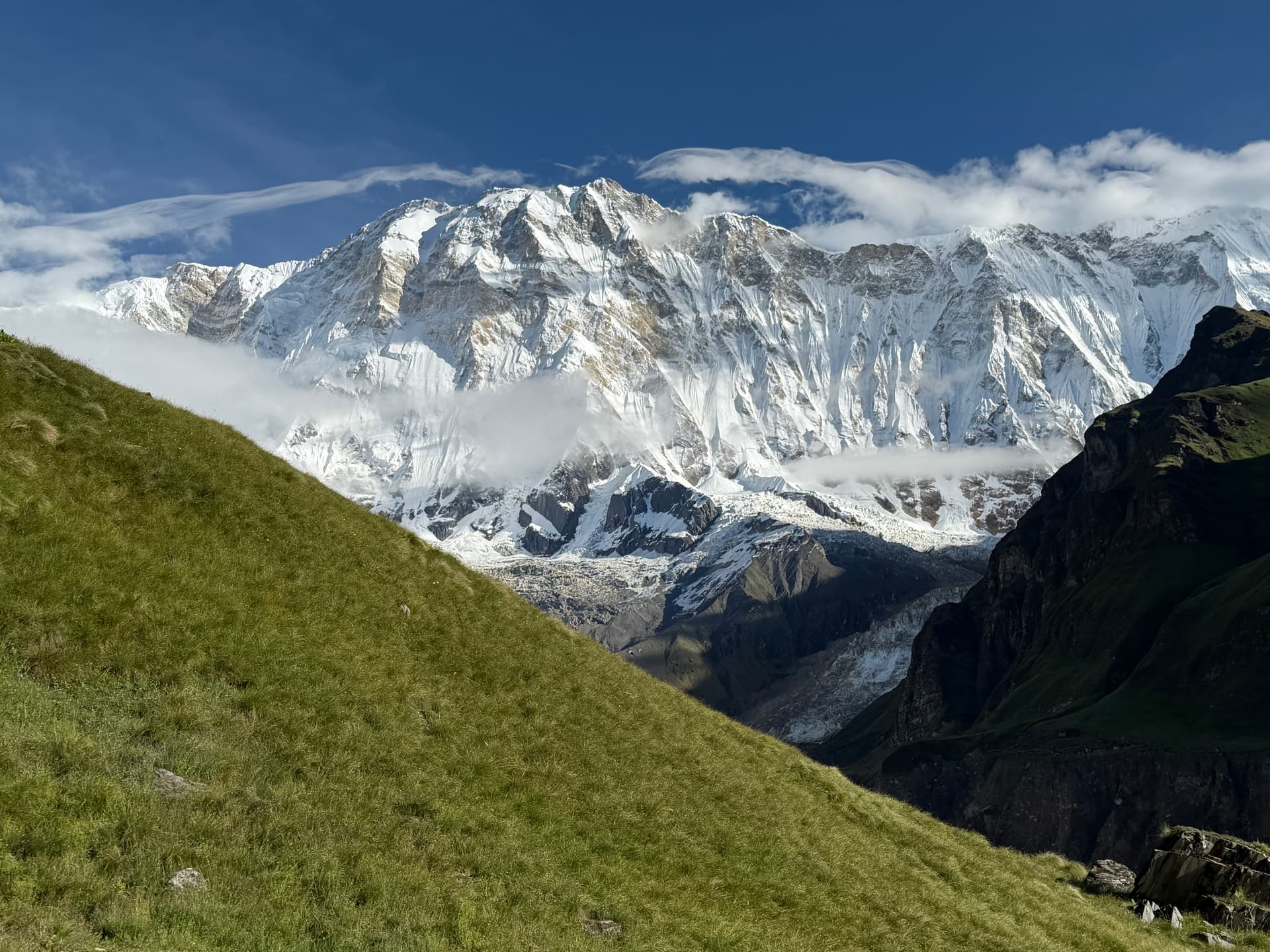
The trek to Annapurna Base Camp, also known as the Annapurna Sanctuary trek, is one of Nepal's most rewarding mountain journeys because the scenery changes almost every day. The approach begins in the green middle hills near Pokhara. Stone steps climb between rice terraces and villages, forest trails follow the sound of streams, and open ridges reveal Machhapuchhre, Annapurna South and Hiunchuli.
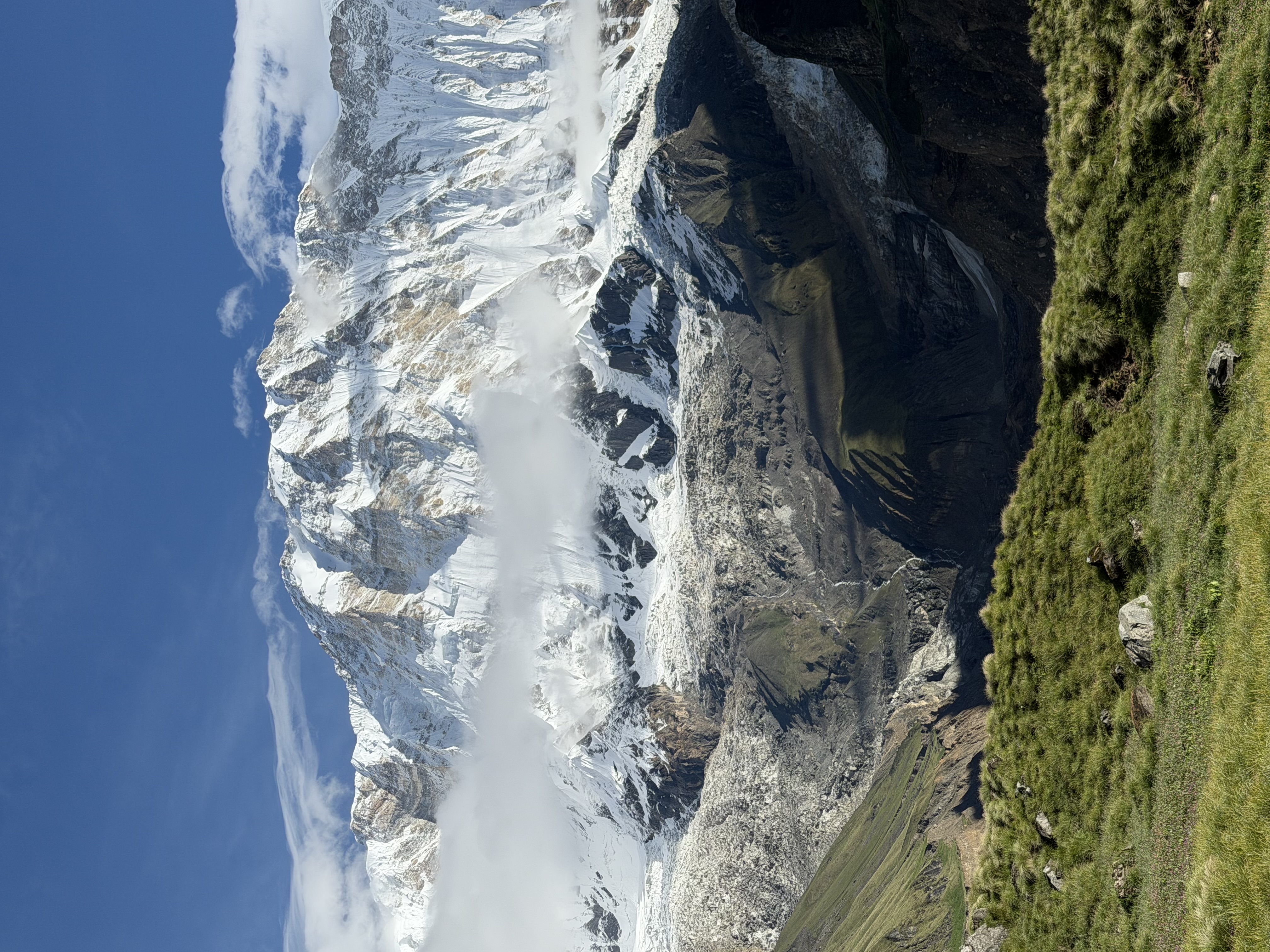
After Chhomrong, the trail enters the narrow Modi Khola valley. Settlements become smaller, the forest feels deeper and the mountains rise more dramatically above the route. Beyond Deurali, the valley opens towards Machhapuchhre Base Camp, usually called MBC. From there, a final gradual climb enters the Annapurna Sanctuary, where Annapurna I, Annapurna South, Hiunchuli, Machhapuchhre, Gangapurna and neighbouring peaks form an extraordinary circle around the base camp.
Unlike a mountaineering expedition, this is a lodge-based trek. You do not need technical climbing skills, ropes or crampons under normal trekking conditions. However, that does not make the journey effortless. The route contains thousands of stone steps, repeated ascents and descents, uneven forest paths, long walking days and a final altitude of 4,130 metres. A sensible itinerary, steady pace, suitable insurance and an experienced local guide all matter.
The trek is equally memorable for its human landscape. Gurung and Magar communities have shaped the culture of the lower Annapurna region, while teahouses provide meals, simple rooms and a welcoming place to rest. A good guide adds context to what you see: how families live in the hills, why certain mountains are considered sacred, how weather affects village life and how tourism supports the local economy.
Direct ABC, ABC via Poon Hill or Poon Hill Only?
Choosing the right itinerary is more important than choosing the shortest advertised number of days. The following comparison gives a practical starting point.
Route | Typical trekking time from/to Pokhara | Highest point | Best suited to | Main experience |
Direct Annapurna Base Camp trek | About 7 days | ABC, 4,130m | Trekkers who want to reach base camp efficiently | Modi Khola valley, MBC, ABC and Jhinu area |
Annapurna Base Camp via Poon Hill | About 10 days; 11 days at a relaxed pace | ABC, 4,130m | Trekkers who want the most varied route | Poon Hill sunrise, Ghorepani forests, Gurung villages and ABC |
Ghorepani Poon Hill trek | About 4-5 days; a faster 3-day version is possible | Poon Hill, 3,210m | First-time trekkers, families, active seniors or travellers with limited time | Himalayan sunrise, rhododendron forest and village culture |
If reaching Annapurna Base Camp is your priority and your holiday is limited, choose the direct route. If you have several extra days, the Annapurna Base Camp trek via Poon Hill is the more complete journey because it approaches the sanctuary through Ghorepani, the Deurali ridge, Tadapani and traditional villages.
If you want an easier trip or have only a few days, consider the Ghorepani Poon Hill trek instead. It remains physically active - especially on the Ulleri stone steps - but it stays much lower than ABC, requires fewer consecutive walking days and offers exceptional views of the Annapurna and Dhaulagiri ranges. HimalayanWindows normally recommends four or five trekking days for a comfortable Poon Hill experience. The 3-day Poon Hill trek is best for fit travellers who accept a faster pace and a long final descent.
Where Is Annapurna Base Camp and How High Is It?
Annapurna Base Camp lies inside the Annapurna Sanctuary north of Pokhara in central Nepal. Its accepted trekking elevation is approximately 4,130 metres or 13,550 feet. The base camp is surrounded by high Himalayan walls, including Annapurna I at 8,091 metres, the world's tenth-highest mountain.
The word “base camp” can cause confusion. ABC is a trekking destination and a staging area associated with climbing expeditions, but ordinary trekkers do not climb Annapurna I. The trek ends at the lodge settlement and viewpoint inside the sanctuary.
Important overnight and viewpoint elevations are approximate:
Place | Approximate elevation |
Pokhara | 820m |
Jhinu Danda | 1,780m |
Chhomrong | 2,140-2,170m |
Bamboo | 2,310m |
Dovan | 2,500m |
Himalaya | 2,920m |
Deurali | 3,200m |
Machhapuchhre Base Camp | 3,700m |
Annapurna Base Camp | 4,130m |
Ghorepani | About 2,850m |
Poon Hill | 3,210m |
Tadapani | About 2,630m |
Updated Direct Annapurna Base Camp Trek Itinerary: 7 Days from Pokhara
This direct itinerary is designed for reasonably fit trekkers who want a safe, efficient route without adding Ghorepani and Poon Hill. It is more balanced than extremely compressed five-day schedules and includes an overnight at Annapurna Base Camp when conditions and lodge availability allow.
Day 1: Drive from Pokhara towards Jhinu and trek to Chhomrong
Walking: Approximately 3-4 hours
Distance: Approximately 5-6km, depending on the roadhead
Overnight: Chhomrong, approximately 2,140-2,170m
Leave Pokhara after breakfast and drive through the lower Modi Khola valley to the best accessible roadhead near Jhinu. Road access can change with construction, landslides and the season, so the exact vehicle stop is confirmed locally. Begin trekking through cultivated hillsides and climb to Chhomrong, a large Gurung village with impressive views towards Annapurna South and Machhapuchhre.
Day 2: Trek from Chhomrong to Bamboo
Walking: Approximately 5-6 hours
Distance: Approximately 8-9km
Overnight: Bamboo, approximately 2,310m
Descend the long stone staircase to Chhomrong Khola, cross the bridge and climb to Sinuwa. Beyond Sinuwa, the path enters dense forest and passes Kuldighar before descending towards Bamboo. The day involves more ascent and descent than the map may suggest.
Day 3: Trek from Bamboo to Deurali
Walking: Approximately 5-6 hours
Distance: Approximately 8-9km
Overnight: Deurali, approximately 3,200m
Continue through bamboo, rhododendron and mixed forest via Dovan and Himalaya. Waterfalls descend from the cliffs, and the valley becomes narrower and cooler. The climb to Deurali brings you above 3,000 metres, so a steady pace and good hydration are important.
Day 4: Trek from Deurali to Annapurna Base Camp via MBC
Walking: Approximately 5-6 hours
Distance: Approximately 7-8km
Maximum and overnight altitude: Annapurna Base Camp, 4,130m
Leave Deurali and climb through increasingly open alpine terrain to Machhapuchhre Base Camp at approximately 3,700 metres. After a rest and meal, continue into the sanctuary. The gradient is often gradual, but the thinner air makes the final section tiring. Reach ABC beneath a vast ring of snow peaks and glaciers.
Alternative itinerary note: Instead of walking directly to Annapurna Base Camp, you may stay overnight at Machhapuchhre Base Camp (MBC). The following morning, hike to ABC early to enjoy the sunrise and spectacular mountain views before descending to Bamboo.
Day 5: Sunrise at ABC and descend to Bamboo
Walking: Approximately 6-7 hours
Distance: Approximately 14- 15 km
Overnight: Bamboo, approximately 2,310m
Wake early for changing light across Annapurna I and the surrounding peaks. After breakfast, retrace the route through MBC, Deurali, Himalaya and Dovan to Bamboo. Although most of the day is downhill, stone steps and uneven ground still demand care.
Day 6: Trek from Bamboo to Jhinu Danda
Walking: Approximately 5-6 hours
Distance: Approximately 8-9km
Overnight: Jhinu Danda, approximately 1,780m
Climb back to Sinuwa, descend to Chhomrong Khola and make the final climb to Chhomrong before continuing down to Jhinu. If time, river level and local access permit, you may visit the natural hot-spring area beside the Modi Khola. The visit is optional and conditions should be checked locally.
Day 7: Walk to the roadhead and drive to Pokhara
Walking: Approximately 20 minutes to 1.5 hours, depending on road access
Drive: Commonly 3-4 hours, but variable
Overnight: Pokhara
After breakfast, walk to the current vehicle-access point and drive to Pokhara. Keep the afternoon free for a shower, laundry and rest beside Phewa Lake.
Travellers who want a faster programme can review the short Annapurna Base Camp trek. HimalayanWindows will explain which days are longer and whether the schedule is appropriate for your fitness and season rather than recommending a compressed route simply because it is shorter.
Updated Annapurna Base Camp via Poon Hill Itinerary: 10 Days from Pokhara
This route combines the famous Ghorepani Poon Hill trek with the full journey to Annapurna Base Camp. It is an excellent choice for travellers who have enough time and want broader scenery, more villages and a sunrise viewpoint before entering the sanctuary.
Day 1: Drive from Pokhara to Hile or Ulleri and begin trekking
Walking: Approximately 3-5 hours
Overnight: Ulleri or nearby, approximately 2,050m
Drive from Pokhara through the Annapurna foothills to the practical starting point available that day. Begin walking through villages, terraces and forest. If starting below Ulleri, the stone staircase is a demanding introduction, so take it slowly.
Day 2: Trek from Ulleri to Ghorepani
Walking: Approximately 5-6 hours
Distance: Approximately 8-9km
Overnight: Ghorepani, approximately 2,850m
Climb through Banthanti and extensive rhododendron forest to Ghorepani. In spring, the forest can be filled with red, pink and white blossoms. Clear sections of the trail reveal Annapurna South and Dhaulagiri.
Day 3: Sunrise hike to Poon Hill and trek to Tadapani
Walking: Approximately 6-7 hours including Poon Hill
Distance: Approximately 11-13km
Maximum altitude: Poon Hill, 3,210m
Overnight: Tadapani, approximately 2,630m
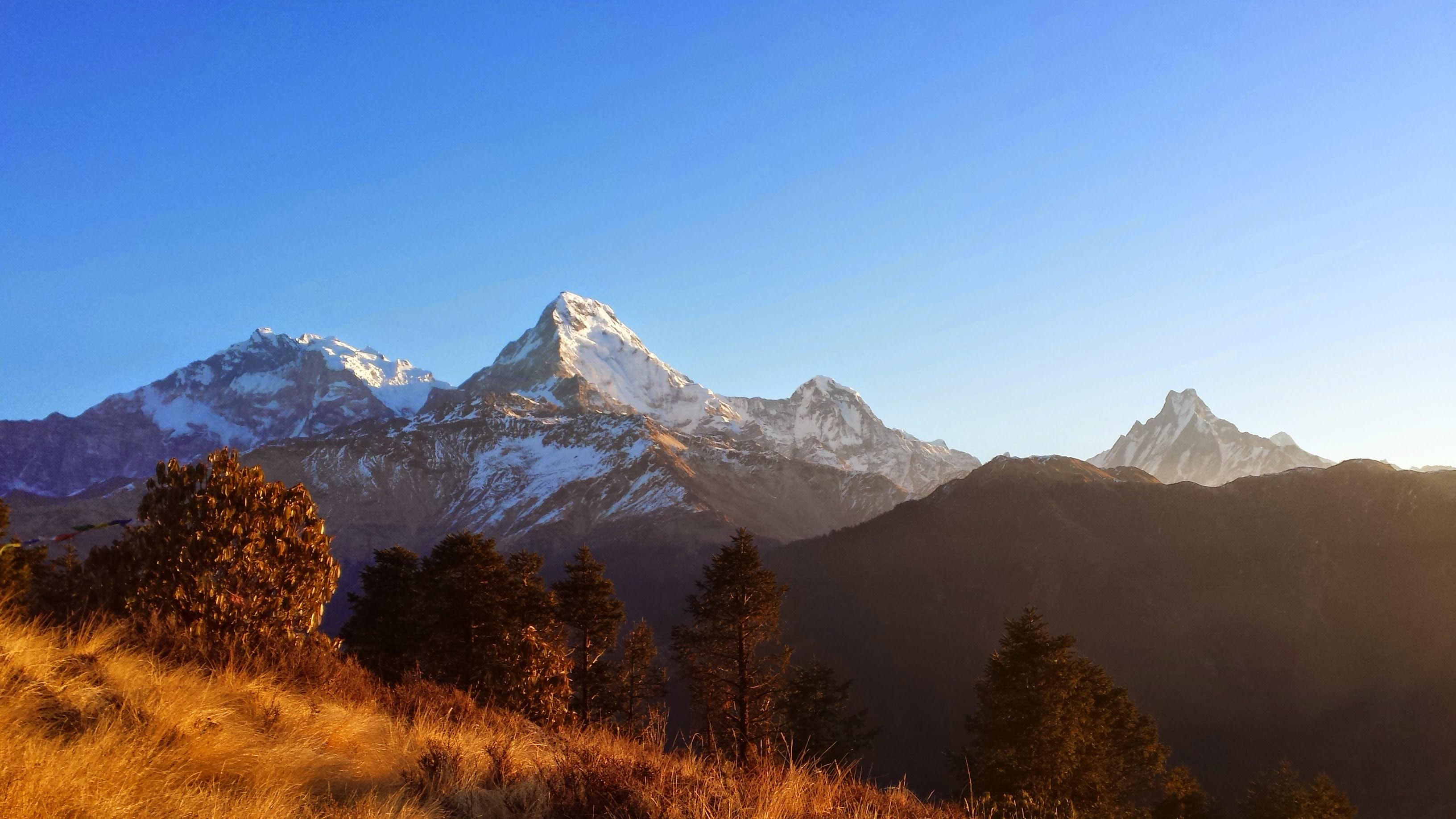
Start before dawn for the climb to Poon Hill. When skies are clear, sunrise illuminates Dhaulagiri, Tukuche Peak, Nilgiri, Annapurna South, Annapurna I, Hiunchuli and Machhapuchhre. Return to Ghorepani for breakfast, then cross the Deurali ridge and forest trails towards Tadapani.
Day 4: Trek from Tadapani to Chhomrong
Walking: Approximately 5-6 hours
Distance: Approximately 9-10km
Overnight: Chhomrong, approximately 2,140-2,170m
Descend through forest and village paths before climbing towards Chhomrong. This is where the Poon Hill route joins the main approach to the Annapurna Sanctuary.
Day 5: Trek from Chhomrong to Bamboo
Walking: Approximately 5-6 hours
Distance: Approximately 8-9km
Overnight: Bamboo, approximately 2,310m
Descend to the Chhomrong Khola, climb to Sinuwa and continue into the forested valley. The combination of stone steps and repeated elevation changes makes this a substantial day even though the net altitude gain is modest.
Day 6: Trek from Bamboo to Deurali
Walking: Approximately 5-6 hours
Distance: Approximately 8-9km
Overnight: Deurali, approximately 3,200m
Pass Dovan and Himalaya as the route climbs beside waterfalls and high valley walls. The landscape changes from subtropical forest to a cooler mountain environment.
Day 7: Trek from Deurali to Annapurna Base Camp via MBC
Walking: Approximately 5-6 hours
Distance: Approximately 7-8km
Maximum and overnight altitude: ABC, 4,130m
Climb to MBC and continue through the open sanctuary to Annapurna Base Camp. Walk slowly, drink regularly and tell the guide about any headache, nausea, unusual fatigue or loss of coordination.
Alternative itinerary note: Instead of walking directly to Annapurna Base Camp, you may stay overnight at Machhapuchhre Base Camp (MBC). The following morning, hike to ABC early to enjoy the sunrise and spectacular mountain views before descending to Bamboo.
Day 8: Sunrise at ABC and descend to Bamboo
Walking: Approximately 6-7 hours
Distance: Approximately 14-15km
Overnight: Bamboo, approximately 2,310m
Enjoy the early mountain light before descending through MBC, Deurali, Himalaya and Dovan. The lower elevation generally feels easier, but tired knees make trekking poles valuable.
Day 9: Trek from Bamboo to Jhinu Danda
Walking: Approximately 5-6 hours
Distance: Approximately 8-9km
Overnight: Jhinu Danda, approximately 1,780m
Return through Sinuwa and Chhomrong to Jhinu. Depending on the available time and local conditions, relax or visit the hot-spring area.
Day 10: Walk to the roadhead and drive to Pokhara
Walk to the current vehicle-access point and return to Pokhara. A final night in Pokhara is strongly recommended before flying or driving onward.
For a gentler version, add one flexible day at Chhomrong before entering the sanctuary. A real planning conversation with an ABC group showed why this matters: the travellers preferred an extra Chhomrong night so the trek would feel easier and more relaxed, while keeping another day available for the trail, Pokhara or Kathmandu. This is the kind of useful flexibility that cannot be captured by a rigid brochure itinerary.
Explore the full Annapurna Base Camp trek 12 Days or ask HimalayanWindows to adapt it to ten or eleven trekking days.
Shorter and Easier Alternative: Ghorepani Poon Hill Trek
Not every traveller needs to reach 4,130 metres to have a meaningful Himalayan experience. If you have a short holiday, are uncertain about high altitude, are travelling with family or simply want a more comfortable introduction, the Poon Hill trek from Pokhara is a strong alternative.
A recommended four-day version follows this outline:
Drive from Pokhara to the Hile/Ulleri area and trek to Ulleri.
Trek through rhododendron forest from Ulleri to Ghorepani.
Hike to Poon Hill for sunrise, return for breakfast and trek to Tadapani.
Trek towards Ghandruk or the nearest roadhead and drive to Pokhara.
Add a fifth day to spend more time in Ghandruk and reduce the pressure on the final day. A three-day route is possible, but it compresses the walking and may include a long descent after the Poon Hill sunrise. “Shorter” should not automatically be understood as “easy.” The stone staircases can be tiring, especially for knees, but the lower maximum elevation and shorter overall duration make Poon Hill more manageable than ABC for many people.
See the Ghorepani Poon Hill and Ghandruk trek for a relaxed route or the 3-day shortest Poon Hill trek when time is the deciding factor.
How Difficult Is the Annapurna Base Camp Trek?
The Annapurna Base Camp trek difficulty is best described as moderate to demanding, depending on itinerary length, fitness, weather and previous experience. It is not a technical climb, and many first-time Himalayan trekkers complete it successfully. However, you should be comfortable walking for five to seven hours on consecutive days over uneven terrain.
The principal challenges are:
Long stone staircases, especially around Chhomrong and on the Poon Hill approach.
Repeated descents followed by climbs, which make net elevation figures misleading.
Cold mornings and nights above 3,000 metres.
Rain, snow, ice or slippery forest trails depending on the season.
Basic accommodation and limited room choice at higher settlements.
The rapid change from low hills to 4,130 metres on shorter itineraries.
Train for at least six to eight weeks if possible. Regular walking, stairs, hill hiking, cycling and basic leg and core exercises are more useful than concentrating only on speed. Complete some back-to-back hiking days while carrying the daypack you will use in Nepal.
Altitude and Acclimatization
Altitude illness is possible above approximately 2,500 metres and can affect a fit person. Good fitness does not prevent it. The most practical safeguards are a well-paced itinerary, sufficient fluids, adequate food, warm sleep and honest communication with the guide.
Common early symptoms can include headache, nausea, dizziness, unusual fatigue and disturbed sleep. Symptoms should never be hidden to avoid delaying the group. A guide may recommend rest, stop further ascent or descend. Severe symptoms require immediate descent and medical attention.
The Poon Hill-only route reaches 3,210 metres briefly and sleeps lower at Ghorepani, while ABC reaches 4,130 metres and normally includes several nights above 3,000 metres. This altitude difference is one reason Poon Hill is a better choice for travellers seeking a less demanding trip.
Best Time for the Annapurna Base Camp Trek
The best time for the Annapurna Base Camp trek is normally spring and autumn, but each season has advantages and limitations.
Spring: March to May
Spring brings longer days, warmer lower valleys and rhododendron flowers, particularly around Ghorepani and Tadapani. March can still be cold at MBC and ABC, and late winter snow may remain. April is popular, while May becomes warmer and may see more afternoon cloud before the monsoon.
Autumn: Late September to November
Autumn often brings dry trails and clear mountain views after the monsoon. October is the busiest month, so early booking is important if room preference matters. November is cooler and usually quieter, with cold nights at high elevations.
Winter: December to February
Winter trekking is possible for well-prepared travellers, but temperatures can fall far below freezing at ABC. Snow may cover the upper trail, lodge operations can be reduced and itinerary changes may be necessary. Poon Hill is a more practical winter alternative when conditions are suitable.
Monsoon: June to Early September
The lower route is humid, wet and green. Clouds frequently hide the mountains, trails may be slippery, leeches are common in forested areas and road disruption or landslides can affect access. The trek is possible, but it is not the first recommendation for a traveller whose priority is reliable mountain visibility.
No month guarantees a clear sunrise, an open trail or a fixed road journey. Mountain weather changes quickly, which is why itinerary flexibility is essential.
Permits, Guide Rules and Current Fees
The route enters the Annapurna Conservation Area, so an Annapurna Conservation Area Permit (ACAP) is required. Nepal Tourism Board currently lists the Poon Hill-ABC route among the itineraries requiring a licensed trekking guide and an agency-issued TIMS Card under the revised TIMS provision. Because route classifications and enforcement can change, HimalayanWindows confirms the requirements for the final itinerary and arranges the necessary documents before departure.
At the time this guide was checked, Nepal Tourism Board listed the following official fees:
TIMS: NPR 2,000 for most non-SAARC foreign trekkers and NPR 1,000 for SAARC citizens.
Annapurna Conservation Area entry: NPR 3,000 for foreigners and NPR 1,000 for SAARC citizens; children below ten are listed as free.
Government fees and rules may change. Treat these figures as planning guidance, not a permanent price guarantee.
Teahouse Accommodation, Meals, Charging and Connectivity
Accommodation is in locally operated teahouses or trekking lodges. Rooms normally contain two simple beds, mattresses, pillows and blankets. Bathrooms may be shared, heating in bedrooms is uncommon and single rooms cannot always be guaranteed in small high-altitude settlements.
Menus are surprisingly varied. Common choices include dal bhat, noodles, soup, fried rice, potatoes, pasta, momos, eggs, porridge, pancakes and bread. Food becomes more expensive higher on the trail because ingredients must be transported by porter, mule or helicopter. Vegetarian meals are widely available. Tell HimalayanWindows in advance about allergies, coeliac disease or other dietary needs so the guide can help at each lodge.
Charging and Wi-Fi may be available for an extra fee, but service is not guaranteed. Carry a power bank and keep batteries warm at night. Mobile reception varies. Water should be boiled, properly filtered or treated; reduce plastic waste by using a refillable bottle rather than buying disposable bottles whenever safe refill options are available.
Baggage, Porters and What to Pack
From direct client planning experience, a common arrangement is one porter for every two trekkers. The exact porter limit must be confirmed for the package, but travellers should pack lightly and avoid treating the maximum allowance as a target. A practical personal duffel weight is often around 10-12kg, while the trekker carries a daypack of approximately 5-7kg containing water, rain protection, warm layers, sun protection, valuables and medication.
Unneeded luggage can usually be stored securely at the Kathmandu or Pokhara hotel. For an Annapurna trek, storage in Pokhara is often convenient because clean clothes are immediately available after returning from the trail.
Essential items include:
Broken-in trekking boots with good grip.
Lightweight shoes or sandals for lodges.
Moisture-managing base layers and insulating mid-layers.
Warm jacket suitable for freezing high-altitude mornings.
Waterproof and windproof outer jacket and trousers.
Warm hat, sun hat, gloves and spare socks.
Sleeping bag appropriate to the season; rental can be arranged in Kathmandu or Pokhara.
Trekking poles, particularly useful on stone steps and long descents.
Sunglasses, high-SPF sunscreen and lip protection.
Refillable water bottles and an approved treatment method.
Personal medication, small blister kit and basic toiletries.
Headlamp, power bank and waterproof bags for electronics.
Travel documents and a copy of the insurance policy.
Meals are available on the trail, so carrying expedition food is unnecessary. A few familiar energy bars or snacks can be useful on longer days.
Kathmandu to Pokhara: Road or Flight?
Pokhara is the gateway to both ABC and Poon Hill. A scheduled domestic flight normally takes about 25-30 minutes in the air, but it remains subject to weather and operational delays. Road travel takes most of a day; traffic, construction, weather and road condition can extend published estimates, so allow approximately seven to ten hours rather than planning a tight same-day connection.
HimalayanWindows can arrange a tourist bus, private vehicle or domestic flight. A private vehicle offers more control over departure time and rest stops, while the flight saves time. The right choice depends on budget, group size, season and onward international connections.
Travel Insurance and Safety
Every ABC trekker should hold travel insurance that specifically covers trekking to at least 5,000 metres, emergency helicopter evacuation in Nepal, medical treatment, hospitalization, trip interruption, cancellation and delays. Confirm the altitude and activity directly with the insurer; a general travel policy may exclude high-altitude trekking.
Helicopter evacuation is not a substitute for a well-paced itinerary. Weather, visibility and aircraft availability affect rescue operations. The guide and HimalayanWindows can coordinate assistance, but medical and evacuation costs remain the responsibility of the traveller or insurer.
Other sensible precautions include using trekking poles, starting early, following the guide around avalanche- or rockfall-exposed sections, keeping warm layers accessible and never walking alone after dark. Trail conditions above Deurali can change after snowfall, and the guide may delay, reroute or turn back for safety.
Two Ways to Plan the Trip with HimalayanWindows
HimalayanWindows offers more than one service level because not every traveller needs the same package.
Option 1: Complete Nepal Arrangement from Kathmandu Airport
This is the most convenient choice for first-time visitors, groups or anyone who wants one local team to coordinate the whole journey. It can include:
Pickup at Tribhuvan International Airport.
Kathmandu hotel accommodation.
Pre-trek briefing and guide introduction.
Kathmandu-Pokhara transport by flight, private vehicle or tourist bus.
Pokhara hotels before and after the trek.
ACAP, TIMS and currently required documentation.
Licensed guide, porter support, teahouse accommodation and meals during the trek.
Airport and road transfers connected with the itinerary.
Kathmandu sightseeing, extra nights or a contingency day on request.
Final international airport transfer.
Depending on the route, allow roughly 10-12 days in Nepal for a direct ABC programme and approximately 13-15 days for ABC via Poon Hill with sensible city nights and a buffer.
Option 2: Trekking-Only Arrangement from Pokhara
Independent travellers who have already booked their own Kathmandu and Pokhara hotels can ask HimalayanWindows to manage only the trekking sector. A trekking-only plan can begin with pickup from a Pokhara hotel or airport and include the route transport, permits, guide, porter, lodges and meals specified in the quotation.
The boundary of service is clearly written before booking. Flights, city hotels, meals outside the trek and airport transfers can be included or excluded rather than hidden inside a standard package.
Why Book the Annapurna Trek with HimalayanWindows?
The strongest reason is personal attention before, during and after the trek. HimalayanWindows is a Kathmandu-based company, so travellers communicate with a local team that understands both the trail and the logistics connecting it with the rest of Nepal.
A real conversation, not a fixed sales script
Route planning begins with the traveller's available dates, fitness, walking experience, group profile and preferred pace. If an extra night in Chhomrong makes the journey safer and more enjoyable, the itinerary can be adjusted. If a spare day is not needed on the mountain, it can be used in Pokhara or Kathmandu.
Practical preparation before arrival
The team answers the questions that determine whether a traveller feels ready: how much a porter carries, what belongs in the daypack, where luggage can be stored, whether a sleeping bag can be hired, what meals are available and what documents are needed for permits. Airport pickup, hotel address, transport choice and guide introduction are coordinated rather than left as disconnected tasks.
Local guides and porter care
An experienced licensed guide sets a suitable pace, checks how trekkers are feeling, communicates with lodges and makes safety decisions as conditions change. Porter arrangements include agreed weight limits and the staff costs stated in the quotation. Travellers are asked to pack responsibly so support staff are not overloaded.
Flexibility when Nepal changes the plan
Road conditions, weather and mountain trails do not always follow a brochure. A local operations team can reorganize transport, communicate with the guide and help use a contingency day intelligently. That responsive support is especially valuable when a group is far from home.
Full service or only what you need
Some travellers want airport-to-airport care, while others want only a guide, porter and permits from Pokhara. HimalayanWindows provides both approaches and itemizes the confirmed inclusions. Personal service does not mean forcing every traveller into the same package; it means understanding which support will genuinely improve the trip.
Public feedback repeatedly emphasizes this personal style. One traveller described receiving “exceptional, personal customer service”, while another Poon Hill guest valued meeting the trekking guide before departure and said the guide and porter enriched the experience. That is the standard HimalayanWindows aims to carry into every Annapurna journey.
Responsible Trekking in the Annapurna Conservation Area
Carry a reusable bottle, avoid unnecessary single-use plastic, keep batteries and wrappers with you until they can be disposed of properly, and use toilets rather than polluting water sources. Refill or treat water using a safe method recommended by the guide.
Respect village life by asking permission before close-up photographs, dressing appropriately and keeping noise low around homes and religious places. Buy locally where practical, but avoid purchasing wildlife products or removing plants and stones from the conservation area.
Hot showers and heated dining rooms consume fuel. Use them thoughtfully, especially higher on the route where supplies are difficult to transport. Stay on the established trail and follow temporary local restrictions designed to reduce erosion or avoid hazardous sections.
Looking for a longer Annapurna adventure? If you are interested in the Annapurna Circuit Trek, which traditionally begins near Besisahar and finishes in Pokhara, consider our carefully planned Annapurna Circuit Trek itinerary. This classic journey crosses the dramatic Thorong La Pass and introduces you to changing landscapes, diverse mountain communities, and some of the finest Himalayan scenery in Nepal.
Frequently Asked Questions
How many days are needed for the Annapurna Base Camp trek?
A direct ABC trek commonly needs about seven trekking days from and back to Pokhara. Adding Ghorepani and Poon Hill normally increases it to about ten trekking days, or eleven with a relaxed Chhomrong or contingency day. Include additional nights for Kathmandu, Pokhara and international connections.
Can a beginner trek to Annapurna Base Camp?
Yes, a healthy and well-prepared beginner can complete ABC with suitable training, an adequately paced itinerary and a licensed guide. It should not be described as easy: long stone steps, repeated climbs and altitude make it a serious multi-day trek.
Is Poon Hill easier than Annapurna Base Camp?
Generally, yes. Poon Hill is shorter, stays lower and involves fewer consecutive trekking days. It still contains steep steps and can be tiring, especially on a rushed three-day schedule. Four or five days is the better choice for an easier pace.
Should I choose ABC directly or ABC via Poon Hill?
Choose the direct route if time is limited and reaching base camp is the main goal. Choose ABC via Poon Hill if you can add three days and want sunrise views, Ghorepani forest, more village scenery and a more varied journey.
What is the highest point of the ABC trek?
Annapurna Base Camp is the highest point at approximately 4,130 metres. Machhapuchhre Base Camp is approximately 3,700 metres, while Poon Hill is 3,210 metres.
Do I need a guide and permits?
An ACAP entry permit is required. Nepal Tourism Board currently lists the Poon Hill-ABC route among those requiring a licensed guide and agency-issued TIMS Card. Himalayan Windows checks the current rule for your confirmed route and arranges the documentation.
How much does the Annapurna Base Camp trek cost?
Cost depends on route length, group size, season, guide and porter arrangement, transport choice, city hotels, meals and private-room requests. Ask for an itemized current quotation. A single fixed figure copied from an older blog can be misleading because permit fees, wages, transport and lodge costs change.
Can HimalayanWindows pick me up at Kathmandu airport and arrange hotels?
Yes. The complete package can begin with international airport pickup and include Kathmandu and Pokhara hotels, transport, trek services and final departure transfer. A trekking-only arrangement beginning in Pokhara is also available.
Can I leave extra luggage in Kathmandu or Pokhara?
Usually, yes. Luggage can generally be stored at the hotel while you trek. Pokhara storage is often most convenient for ABC because your clean clothes are ready when you return from the mountains.
Is there electricity and Wi-Fi on the ABC trail?
Charging and Wi-Fi are available at many lodges for an additional fee, but reliability decreases higher on the route. Carry a power bank and do not depend on continuous connectivity.
Is the Poon Hill sunrise guaranteed?
No. Poon Hill is an excellent viewpoint, but cloud, rain, snow or mist can obscure the mountains in any season. The quality of a trek should not depend on a guaranteed sunrise that no operator can honestly promise.
Final Thoughts
The Annapurna Base Camp trek succeeds because it offers much more than one photograph at 4,130 metres. The journey begins in living villages, follows rivers and forests into an increasingly dramatic valley, and finishes inside one of the Himalaya's great natural sanctuaries. The direct route is efficient, the Annapurna Base Camp trek via Poon Hill is broader and more varied, and the shorter Ghorepani Poon Hill trek offers an excellent alternative for travellers who want lower altitude or fewer days.
The best itinerary is not always the longest or shortest one. It is the route that fits your time, fitness and expectations while preserving enough flexibility for real mountain conditions. HimalayanWindows can take care of the complete journey from Kathmandu international airport, including hotels and transfers, or organize only the trekking services from Pokhara. In both cases, the personal touch begins with listening carefully, answering practical questions and building a plan around the traveller rather than asking the traveller to fit a fixed plan.
Explore Annapurna region trekking options or contact Himalayan Windows to compare the direct ABC route, ABC via Poon Hill and the shorter Poon Hill trek.
Plan your trip
Ready to experience this yourself?
Our Kathmandu-based specialists build tailor-made treks and tours across Nepal, Tibet and Bhutan — tell us what you want.