
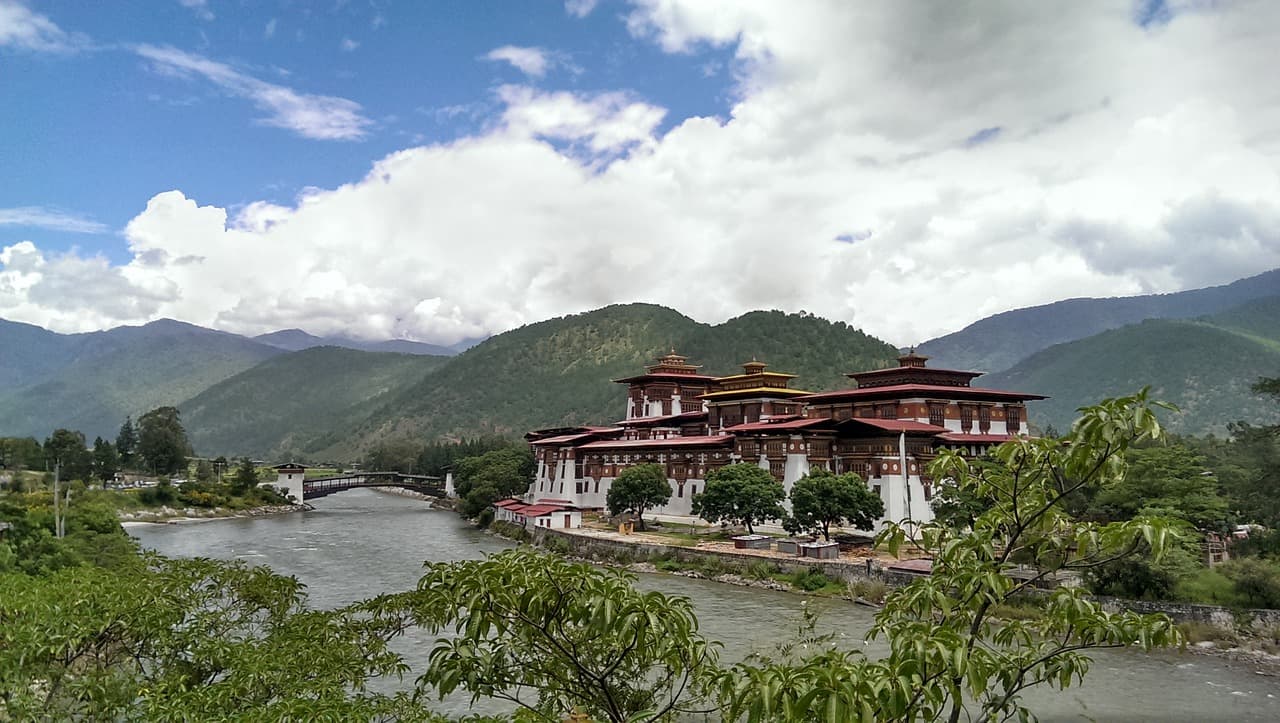
All You Need To Know Before Traveling To Bhutan
Planning a trip to Bhutan? Explore essential advice on visas, travel costs, flights, packing and Tiger’s Nest, with practical insights from HimalayanWindows to help you plan a comfortable and rewarding journey.
A journey to Bhutan begins with the promise of cliffside monasteries, forested valleys and a rich Buddhist culture—but a memorable holiday also depends on thoughtful planning. Understanding visa requirements, the Sustainable Development Fee, flight connections and how much to include each day will help you make the most of your visit. At Himalayan Windows, we recommend leaving time beyond the main sights: enjoy a quiet valley walk, ask your guide about local traditions and pause over a Bhutanese meal. This guide combines essential travel information, our planning advice and feedback shared by clients to help you arrive prepared and explore at a pace that suits you.
Bhutan rewards travellers who give it time. The photograph of Tiger’s Nest may inspire your journey, but leave room for quieter experiences: a walk through a valley, a conversation with your guide, or an unhurried lunch between monastery visits. Before you book, a little preparation around visas, costs, flights, and the pace of your itinerary can make a considerable difference.
At HimalayanWindows, our approach is to build the journey around what matters to you. This Bhutan travel guide brings together essential planning information and our practical recommendations for a comfortable, thoughtfully arranged holiday.
Understanding Bhutan’s visa and entry requirements
Most visitors must obtain a Bhutan visa before departure. Indian nationals use an entry permit; Bangladeshi and Maldivian nationals can obtain their visa in advance or on arrival. Check the requirements applicable to your passport. Official entry guidance
You can apply online yourself or have a tour operator or hotel apply on your behalf. The application requires a passport copy, a recent photograph, travel dates, and payment details. The visa application fee is USD 40, and the official portal advises allowing five working days for review. Bhutan visa application information
Our recommendation is to arrange the paperwork well before departure rather than treating the published processing time as a booking deadline. Check that your name matches your passport across the visa application and airline tickets, and keep accessible copies of your documents.
Combining Nepal and Bhutan does not remove either country’s entry requirements. Tell us your complete route, including any return to Kathmandu, so the arrangements can be checked together.
How much does it cost to visit Bhutan?
Start with the Sustainable Development Fee, then add the services needed for your trip. The SDF is a government levy; it does not buy your accommodation, meals, transport, or flights. Avoid budgeting from old articles describing a compulsory, all-inclusive minimum daily package. Bhutan tourism pricing background
The standard published SDF rates are:
Visitor category | SDF per person, per night |
International visitors aged 12 and above, standard USD rate | USD 100 |
Children aged 6–11, standard USD rate | USD 50 |
Children under 6 | No SDF |
Indian visitors aged 12 and above | INR/Nu. 1,200 |
Indian children aged 6–11 | INR/Nu. 600 |
Nationality-specific concessions may apply, including for eligible Bangladeshi visitors; confirm eligibility when booking. Official SDF guidance
The USD 100 incentive is scheduled through 31 August 2027. For later travel, obtain a fresh confirmation of the applicable fee. SDF incentive announcement reported by Luxury Travel Advisor
For example, an adult paying the standard USD rate on a five-day, four-night Bhutan tour pays USD 400 in SDF. Adding the USD 40 visa fee brings those two charges to USD 440, before travel services.
When comparing quotations, ask whether they include hotel names and room categories, meals, guide and driver services, entrance fees, applicable taxes, flights and baggage. Ask separately about single rooms, optional activities and cancellation conditions.
Our advice: compare the complete arrangements. A lower headline price is only useful if it includes the things you actually need. For a couple or small group, sharing transport and guide costs can improve value; a solo traveller should request a quotation reflecting their individual arrangements.
Getting to Bhutan by air
For an itinerary focused on Paro, Thimphu and Punakha, start by comparing flights into Paro. Connection options include Kathmandu, Delhi, Bangkok and Singapore; Drukair also lists Dubai and other regional destinations. Availability depends on your dates, and some services involve intermediate stops. Drukair route and schedule information
For travellers combining Nepal and Bhutan, Kathmandu is a natural option. It allows you to include Kathmandu Valley sightseeing or a Nepal trek before continuing to Bhutan. A window seat can offer memorable Himalayan views when conditions permit, but mountain visibility should be treated as a bonus. Check out our package: Bhutan Tour from Kathmandu.
We recommend comparing the whole journey: airfare, overnight accommodation, baggage arrangements, connection time, and any transit requirements. The cheapest international flight can become less attractive if it creates an awkward onward connection.
Old fare tables are a poor basis for a new booking. Request a dated quotation showing the exact routing, baggage allowance and ticket conditions, and check the airline’s current flight schedule.
Our planning recommendation: leave an overnight buffer before an important onward flight where practical, especially when using separate tickets. Confirm baggage transfer and transit arrangements directly for your booking; another traveller’s successful connection is not a guarantee that yours will work the same way.
Can you enter Bhutan by road?
Overland entry through India is another option. Phuentsholing is a practical starting point to discuss for a western Bhutan itinerary. Nepal and Bhutan do not share a border, so a road journey between them passes through India.
For a short holiday, we suggest comparing the additional driving days with the flight cost before choosing an overland route. It can suit a wider regional journey, but it should be planned as part of the experience rather than assumed to be an effortless saving. Have your operator verify the proposed crossing and immigration arrangements before committing.
Do you need a tour operator and guide?
You may book independently, but Bhutan’s current tourism guidance requires a guide. Treks need an accredited operator or guide, and accommodation must be tourism-approved. Official booking and guide requirements
For us, the value of a guided journey is also personal. Tell your guide what interests you: architecture, Buddhism, food, photography or village life. A good itinerary should allow that interest to influence the day, instead of becoming a succession of short stops.
How many days should you spend in Bhutan
Our suggested starting points are:
Three to four days: keep the journey compact, concentrating on Paro and possibly Thimphu, depending on your flights.
Five to six days: consider Paro, Thimphu and Punakha, with a dedicated day for Tiger’s Nest.
Seven to nine days: allow more time in the western valleys or discuss adding Phobjikha.
Ten days or longer: consider a wider cultural itinerary or a separately planned trekking programme.
These are planning recommendations, not fixed rules. An early arrival and late departure create a different experience from two partial travel days.
Our honest view: if an itinerary feels crowded, remove a destination before removing every rest stop. Leave space for a walk, a café visit, or an unexpected conversation. You do not need to visit every monastery to enjoy Bhutan.
Choosing the best time to visit Bhutan
Spring and autumn are useful starting points for planning. Winter is colder, while summer brings monsoon rain and potential transport disruption. Conditions vary with elevation and region. Bhutan’s seasonal guidance
Rather than choosing dates from a single “best month” claim, tell us your priorities. Are you hoping to attend a festival, photograph mountain landscapes, take gentle walks or complete a trek? Those interests should guide the timing.
If a festival is central to your trip, have its dates confirmed before purchasing flights. If you are considering trekking, assess the particular route and season separately from a cultural tour. A pleasant day in a valley does not establish conditions on a high pass.
We also recommend packing based on the forecast for your actual overnight locations. A countrywide temperature table cannot tell you what you will need in every valley.
Preparing for the Tiger’s Nest hike
Tiger’s Nest Monastery, or Paro Taktsang, stands at approximately 3,120 metres. Expect a sustained uphill walk and allow roughly five to six hours for the return outing, adjusting for your pace and time at the monastery. See our Tiger’s Nest hiking guide.
Our recommendation is to schedule the hike after some time in Bhutan, start in the morning and keep the rest of the day flexible. Bring familiar walking shoes, a light daypack, water, sun protection, and a weatherproof layer. Walking poles may help if you find descents uncomfortable.
Be candid about your walking experience and any mobility concerns before booking. Discuss a shorter outing if needed, and do not judge your day by another group’s pace. Your itinerary should support an enjoyable experience, including when that means adjusting the original plan.
Hotels, meals and the details worth discussing
Choose accommodation by the experience you want, then compare the category. Ask about location, heating, room access, bedding and the specific room being booked. For a winter trip, room warmth may matter more to you than an impressive lobby. For limited mobility, steps and access deserve attention before arrival.
Meals should be clearly described in your quotation. Ask which are included and whether there is flexibility to try local restaurants. Let us know about allergies, dietary requirements and spice preferences in advance.
We suggest keeping some meals unhurried. Trying a local dish and talking with your guide can be as worthwhile as adding another sightseeing stop. Optional experiences, such as a hot stone bath, should have a clear price and fit comfortably into the day.
Packing and practical preparation
Keep your packing focused on the activities you have chosen:
Passport, approved travel documents and flight details.
Comfortable walking shoes and clothing you can layer.
A waterproof jacket, sun hat, sunglasses and sunscreen.
Warm clothing suited to your season and overnight locations.
Personal medication, a small daypack and charging equipment.
A modest cash reserve and a backup payment method.
At religious sites, cover shoulders and knees and follow local instructions about shoes and photography. Travel insurance is no longer mandatory for entry, but remains recommended. Official visitor guidance
Our advice is to choose insurance that matches your actual itinerary and review its cancellation, disruption and activity provisions. Keep the policy and assistance contact available offline. For specialist equipment, drones or restricted goods, check the current rules before packing.
What HimalayanWindows clients have shared online?
The following feedback is paraphrased from reviews published on our website; it reflects individual experiences.
HellsBells154010, in a review titled “Excellent Customer Service and Value for My Trip to Bhutan,” described adding Bhutan to a Nepal visit. The traveller valued prompt answers, help with the itinerary and paperwork, and Anup checking that everything was going well after arrival. As a solo traveller, that communication was a meaningful part of the experience. Read the published review
Neil Jones, reviewing a family Nepal holiday and a separate Bhutan visit, praised responsiveness during planning and flexibility when weather affected a flight. He also reported that his separately arranged Bhutan trip went very well. Read Neil’s published feedback
For us, these comments underline a useful principle: support before departure and during changes matters alongside the sightseeing. We encourage you to read the details of reviews and ask how the arrangements will work for your own journey.
Planning your Bhutan journey with HimalayanWindows
Our strongest recommendation is to begin with your interests, available time, and comfortable budget. From there, choose a realistic route, suitable accommodation and flights that work together. A carefully paced five-day visit can be more rewarding than a longer itinerary filled with unnecessary transfers.
Share your preferred dates, group size, hotel expectations, and walking interests with HimalayanWindows. We can help shape a Bhutan holiday around those priorities, whether it is a standalone journey or part of a Nepal and Bhutan trip.
Plan your trip
Ready to experience this yourself?
Our Kathmandu-based specialists build tailor-made treks and tours across Nepal, Tibet and Bhutan — tell us what you want.