
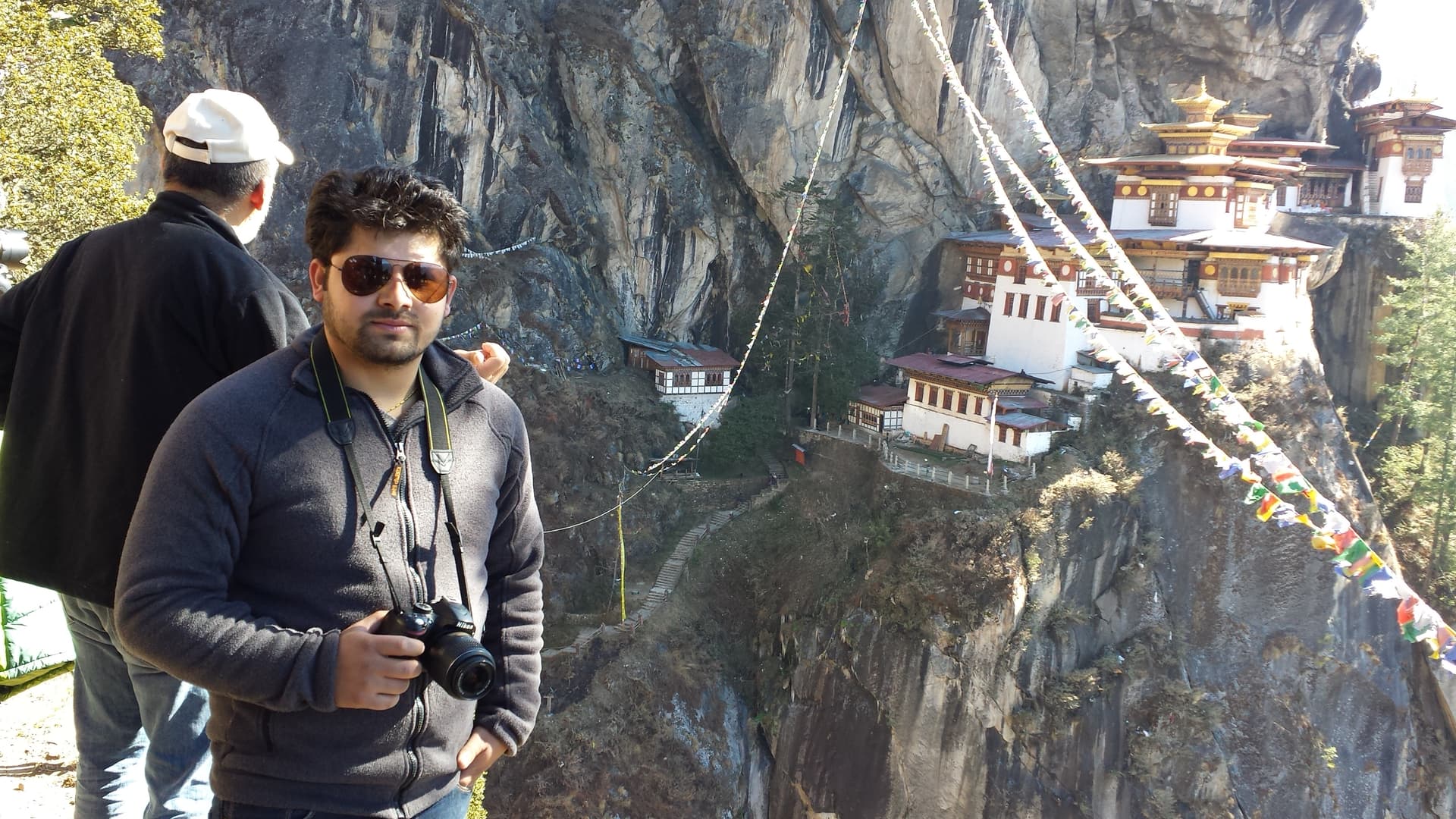
All You Need to Know about the Hike to Tiger’s Nest Bhutan
Planning to hike Tiger's Nest in Bhutan? Learn the trail distance, altitude, elevation gain, difficulty, walking time, number of steps, best seasons, packing essentials and practical visitor rules.
Planning the Tiger’s Nest hike in Bhutan is often the most anticipated part of a journey to the Land of the Thunder Dragon. Officially known as Paro Taktsang, Tiger’s Nest Monastery appears to cling dramatically to a forested cliff above the Paro Valley at approximately 3,120 metres. The hike covers around 6.4 kilometres (4 miles) round trip and normally takes five to seven hours, depending on your pace and rest stops. Although the Tiger’s Nest hike difficulty is considered moderate, its steady uphill trail, high altitude and final staircase require preparation. This complete guide explains the Tiger Nest Bhutan trek distance, altitude, elevation gain, hiking time, weather, route conditions and essential tips for reaching Bhutan’s most iconic monastery safely and comfortably.
Tiger's Nest Hike in Bhutan: What You Need to Know
The Tiger's Nest hike in Bhutan is the country's most celebrated day walk and one of the most memorable cultural journeys in the Himalayas. Officially called Paro Taktsang or Taktsang Palphug Monastery, the sacred complex appears to cling impossibly to a forested cliff above the Paro Valley. The setting is dramatic, but the experience is more than a photograph: the trail passes through blue-pine forest, prayer flags, viewpoints and a waterfall before reaching an active Buddhist monastery with deep spiritual significance.
Most visitors include the hike near the end of their Bhutan itinerary, after spending a few days adjusting to the altitude in Paro or Thimphu. You do not need technical trekking experience, ropes or specialist mountaineering equipment. However, the path climbs steadily, the air becomes thinner and the final approach includes a long series of stone steps. Comfortable footwear, a patient pace and an early start make a considerable difference.
This guide explains the Tiger Nest Bhutan trek distance, hiking duration, altitude, elevation gain, difficulty, steps, seasonal conditions, horse option, packing list and visitor etiquette. It also helps you choose a Bhutan tour that provides enough time to enjoy the monastery rather than treating it as a hurried photo stop.
Tiger's Nest Monastery Quick Facts
Essential trail, altitude and timing information for visiting Paro Taktsang.
Quick fact | Details |
Official name | Paro Taktsang or Taktsang Palphug Monastery |
Location | Upper Paro Valley, Bhutan |
Tiger's Nest altitude | Approximately 3,120 metres (10,236 feet) |
Round-trip distance | Approximately 6.4 kilometres (4 miles), depending on the trailhead and measurement method |
Approximate elevation gain | Commonly reported at around 500-900 metres, depending on the selected starting point and device used |
Average duration | About 4-6 hours for the return hike, plus time inside the monastery |
Difficulty | Moderate, with a sustained ascent and many stone steps |
Highest physical challenge | The staircase descent and ascent near the monastery |
Recommended start | Morning, before the trail becomes warmer or busier |
Horse option | Available for part of the ascent, normally only as far as the cafeteria area |
Distances, walking times and elevation readings can differ between guides, GPS devices and trailhead locations. Treat the figures as practical planning estimates rather than exact measurements for every visitor.
What Is Tiger's Nest Monastery?
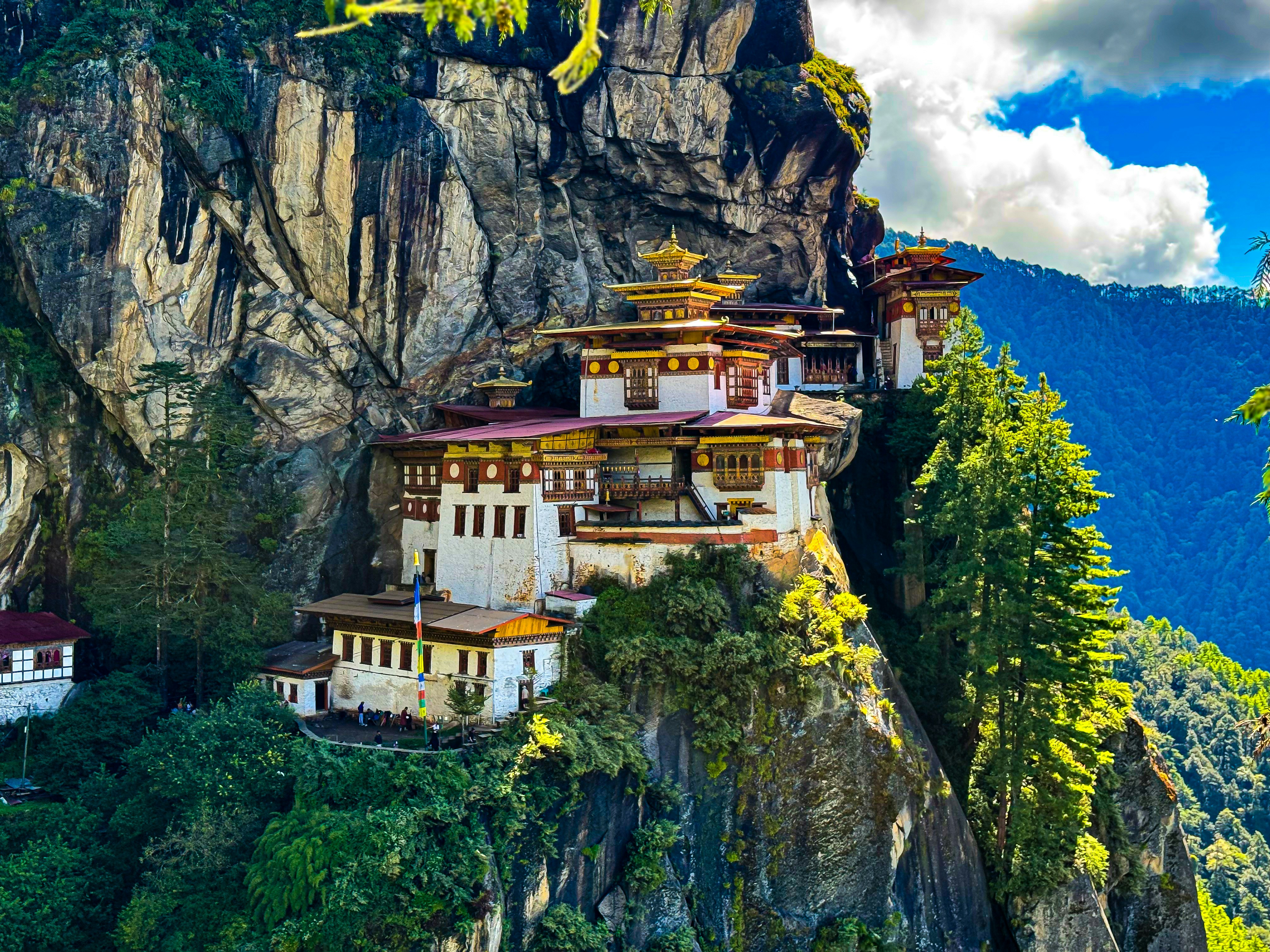
Tiger's Nest Monastery is a sacred Vajrayana Buddhist complex built into a cliff roughly 900 metres above the Paro Valley floor. Its whitewashed walls, golden roofs and dark timber balconies are framed by forest and rock, creating Bhutan's most recognisable landmark.
The site is associated with Guru Padmasambhava, also known as Guru Rinpoche, who is credited with helping establish Buddhism in Bhutan and across the Himalayan region. According to Bhutanese tradition, Guru Rinpoche reached the cliff in the eighth century on the back of a tigress and meditated in a cave here. The monastery's English name, Tiger's Nest, comes from this sacred story.
Although meditation caves at the site are much older, the main monastery complex was established in 1692. Fire caused extensive damage in 1998, after which the site was carefully restored. Today, Paro Taktsang remains a living religious place rather than simply a tourist attraction. Visitors should approach it respectfully, follow their guide and allow worshippers space for prayer.
Where Is Paro Taktsang, and How Do You Reach the Trailhead?
Paro Taktsang is located north of Paro town in western Bhutan. The road journey from central Paro to the hiking trailhead generally takes around 25-35 minutes, depending on the hotel, traffic and road conditions. Your guide and driver will normally collect you after breakfast and take you directly to the starting area.
At the trailhead, small stalls may sell or rent walking sticks, rain protection and souvenirs. Toilets are usually available before the climb, and horses may be arranged here when operating. After checking that you have water, sun protection and the correct clothing, you begin on a broad earth trail that rises through the forest.
Independent access is generally not how international leisure travel in Bhutan is organised. Your licensed Bhutanese guide handles entrance procedures, local timing, cultural interpretation and visitor rules. If you are still designing your route, read our guide on how to plan a Bhutan tour before selecting your package.
Tiger Nest Bhutan Trek Distance and Hiking Time
The Tiger Nest Bhutan trek distance is commonly described as approximately 6.4 kilometres or 4 miles for the round trip. The precise total varies because some walkers start at slightly different parking points, take short viewpoint detours or record the route differently on GPS devices.
Most travellers take 2-3 hours to reach the monastery and around 1.5-2.5 hours to return. Add time for the cafeteria, photography, rest stops and the guided monastery visit, and the entire outing generally occupies 5-7 hours. Strong hikers may complete the walking portion more quickly, while families, senior travellers and visitors adjusting to altitude should allow longer.
If you are wondering how long the hike to Tiger's Nest takes, plan a full morning and early afternoon rather than scheduling another demanding activity immediately afterwards. A relaxed timetable lets you manage your breathing, enjoy the forest and spend meaningful time inside the monastery.
Tiger's Nest Altitude, Height and Elevation Gain
The Tiger's Nest altitude is approximately 3,120 metres or 10,236 feet above sea level. Paro town is considerably lower, so most visitors spend at least one or two nights in Bhutan before attempting the climb. The height is not extreme by Himalayan trekking standards, but it is high enough for some travellers to notice heavier breathing or a faster heartbeat while ascending.
Searchers often ask about the Tiger Nest Bhutan height and Tiger's Nest elevation because published figures vary. Some sources describe the monastery's elevation above sea level, while others refer to its dramatic height above the Paro Valley floor. These are different measurements. The monastery stands about 900 metres above the valley floor, while the net walking ascent depends on the exact trailhead.
Likewise, recorded Tiger's Nest elevation gain can vary by map or GPS device. For practical preparation, expect a sustained climb of several hundred metres followed by many steps near the final approach. The most useful strategy is not to focus on one exact number but to prepare for two or more hours of steady uphill walking at altitude.
How Difficult Is the Tiger's Nest Hike?
The Tiger's Nest hike difficulty is best described as moderate. The route is not technical, and the main trail is generally clear, but the gradient is persistent. Loose dust, mud, rain, snow or ice can make sections more demanding depending on the season.
Travellers with average fitness can usually complete the walk if they move slowly and rest when needed. The biggest challenges are the continuous ascent, thinner air and staircase near the monastery. The descent can also strain knees, which is why a walking pole is often more useful on the return than on the climb.
Before travelling, prepare with regular walks, stairs or gentle hill training. You do not need an intensive trekking programme, but a few weeks of consistent activity will make the day more comfortable. Anyone with heart, respiratory, mobility or serious knee concerns should discuss the hike with a medical professional and tell the tour operator in advance.
How Many Steps Are There at Tiger's Nest Bhutan?
One of the most frequent questions is how many steps to Tiger's Nest Bhutan visitors must climb. The final section is often described as having roughly 700-800 stone steps, although counts vary depending on where a person begins counting and whether small landings are included.
From the principal viewpoint, the trail first descends a staircase toward a waterfall and bridge. It then climbs again to the monastery entrance. This means the steps are not simply a final upward climb: you descend, cross the gorge and climb once more. On the return, the sequence is reversed.
Handrails are available in parts, but surfaces may be wet. Take each step carefully, keep to the safer side of the staircase and allow faster walkers to pass. The viewpoint before the stair section provides the classic full view of the monastery and is a sensible place to rest.
The Tiger's Nest Trail: What to Expect Step by Step
1. Trailhead to the Forest Climb
The walk begins on a broad path used by hikers, local pilgrims and horses. The first section can feel deceptively steep, especially before your breathing settles. Walk slowly from the beginning rather than trying to keep pace with faster travellers.
2. Forest, Prayer Flags and First Views
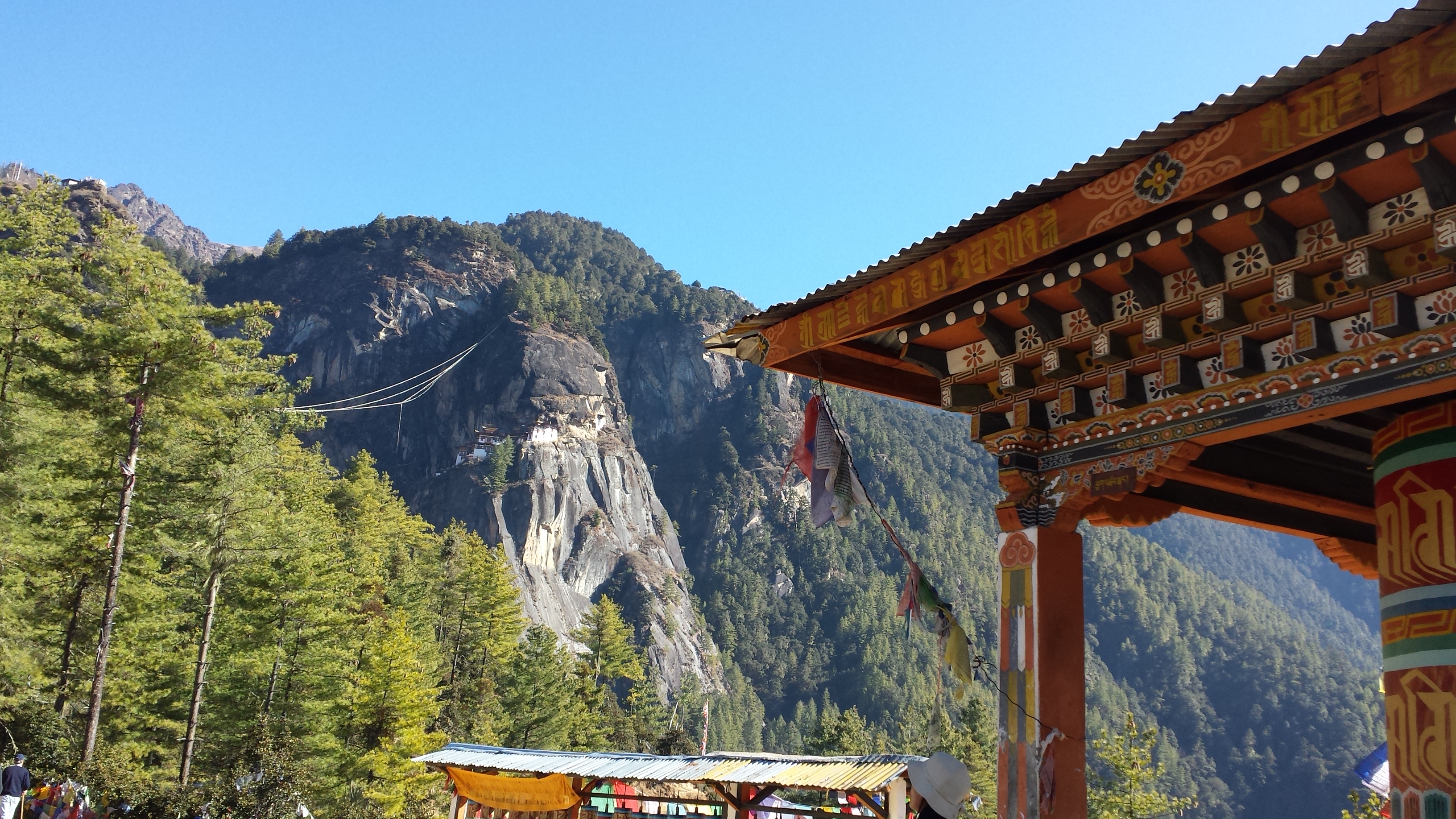
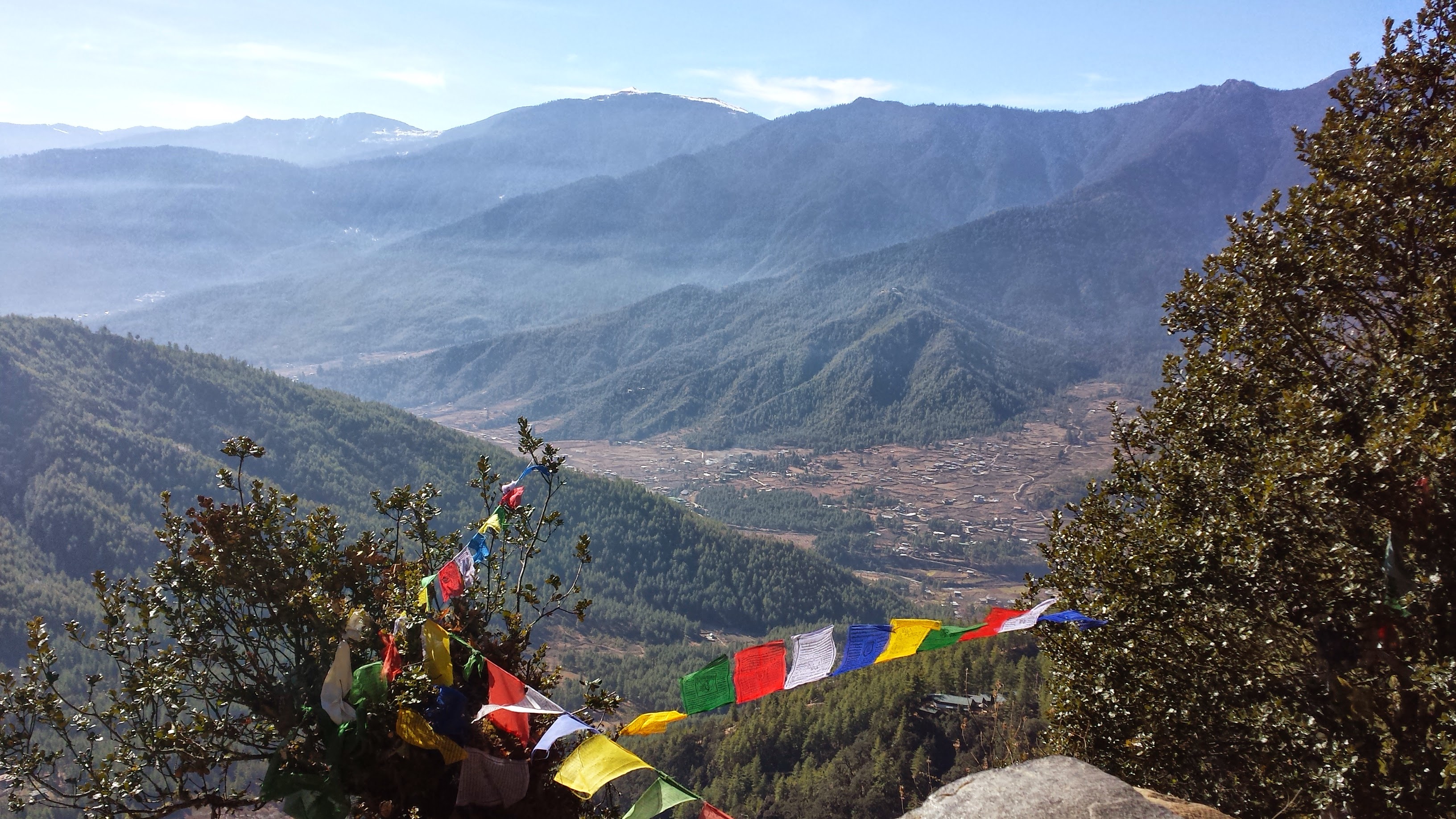
As the trail rises, pine forest offers shade and colourful prayer flags appear between the trees. Openings reveal the monastery across the valley. These early viewpoints help show how much elevation remains, but they also provide excellent motivation.
3. Taktsang Cafeteria
The cafeteria area is approximately halfway and is the usual turnaround point for horses. Many visitors stop for tea, water or a meal. It also offers a clear view of the monastery. A long stop can cool your muscles, so continue gently when you restart.
4. Main Viewpoint and Waterfall Steps
Above the cafeteria, the path becomes narrower in places before reaching the celebrated viewpoint. From here, stone steps descend toward a waterfall and bridge. The spray, prayer flags and cliffside buildings create the most atmospheric part of the approach.
5. Monastery Visit
At the entrance, visitors pass through security and follow monastery rules. Bags, phones, cameras and other items may need to be stored before entering prayer rooms. Your guide explains the temples, sacred caves, artwork and stories connected with Guru Rinpoche.
6. Return to the Trailhead
The descent is faster for most people, but loose surfaces and tired legs require care. Use a walking pole if you have one, shorten your steps and avoid rushing. A final stop at the cafeteria can be arranged if required.
Can You Take a Horse to Tiger's Nest?
Horses are often available for hire at the trailhead, but they do not carry visitors directly to the monastery. They normally travel only uphill to around the cafeteria area. From there, you must continue on foot, including the viewpoint approach and stone steps.
The horse option can reduce part of the uphill effort, but it is not suitable for everyone. The forest trail can be steep and uneven, and riders should be comfortable on an animal. Services depend on local conditions and availability, and the charge is usually separate from the tour package.
Horses are generally used for the ascent rather than the descent. Travellers with significant mobility limitations should not assume that horse hire makes the entire site accessible. Discuss realistic alternatives with Himalayan Windows before booking.
Best Time to Visit Tiger's Nest Monastery
The best time to visit Tiger's Nest Monastery depends on whether you prioritise clear views, warmer temperatures, quieter trails or green landscapes.
Spring: March to May
Spring offers comfortable hiking temperatures, blooming vegetation and good mountain visibility. It is one of the most popular seasons, so start early and book flights and hotels well in advance.
Summer and Monsoon: June to August
The landscape becomes intensely green, and the trail may be quieter. Rain, mist and slippery surfaces are possible. Carry proper rain protection, protect electronics and allow additional walking time.
Autumn: September to November
Autumn usually brings clearer skies, crisp air and excellent photography conditions. It is another peak travel season and combines well with Bhutanese festivals.
Winter: December to February
Winter often provides calm trails and clear views, but mornings can be cold. Shaded sections may hold frost or ice. Layer clothing and begin after conditions are safe rather than chasing an unnecessarily early start.
Tiger's Nest Weather and the Best Time of Day
Tiger's Nest weather can change quickly because the trail climbs through forest to an exposed cliff. A cool morning may become warm during the ascent, while clouds or rain can arrive later. Dress in removable layers and keep a light waterproof jacket in your daypack even when the forecast appears favourable.
Starting in the morning normally provides cooler walking conditions, more time for rests and a buffer before the monastery closes. Opening hours and prayer-room access may change for religious events, maintenance or seasonal arrangements. Reconfirm the current schedule with your tour operator or guide rather than relying on an old online timetable.
What to Wear and Pack for the Taktsang Monastery Hike
You do not need heavy expedition equipment for the Taktsang Monastery hike, but a few well-chosen items improve comfort and safety.
Comfortable hiking shoes or trail shoes with reliable grip
Lightweight layers suitable for changing temperatures
A waterproof or windproof outer layer
Sun hat, sunglasses and sunscreen
Refillable water bottle
Light snacks or energy bars
Walking pole, especially for the descent
Small daypack rather than a large trekking bag
Personal medication and basic blister care
Passport copy or permit documents if advised by your guide
For the monastery visit, wear respectful clothing that covers shoulders and knees. Avoid overly revealing clothing even if the hiking weather is warm. Your guide can advise whether a jacket, long sleeves or other formal adjustment is expected on the day.
Food, Water and Toilet Facilities
The cafeteria provides a convenient rest and meal point, but services and menus may vary. Your tour itinerary may include lunch there or arrange food before or after the hike. Carry enough water for the climb and refill only from a safe treated source.
Toilets are generally available near the trailhead and cafeteria. Facilities become limited closer to the monastery, so use them when you have the opportunity. Pack out tissues, snack wrappers and other waste.
Photography and Visitor Etiquette
Photography is one of the pleasures of the Tiger's Nest hike, but cameras and phones are normally not permitted inside the monastery's sacred rooms. Follow signs and your guide's instructions. Do not photograph worshippers without consent, fly drones without authorisation or climb barriers for a better angle.
Before entering, you may need to leave bags, cameras, phones and walking poles with security. Remove hats and shoes where instructed. Speak quietly, walk clockwise when directed and never touch religious paintings, statues or offerings.
The most famous exterior photograph is taken from the viewpoint before the waterfall staircase. Earlier forest openings and the cafeteria terrace offer different perspectives with fewer people in the frame.
Is the Tiger's Nest Hike Suitable for Children and Seniors?
Active children who are comfortable with long walks can complete the hike with supervision, regular breaks and sufficient food and water. Families should avoid turning the climb into a race and keep children close around horses, steep edges and stairs.
Many senior travellers also reach the monastery successfully. Fitness, balance and joint health matter more than age alone. Trekking poles, an unhurried pace and an early start are helpful. Some visitors may choose the cafeteria or main viewpoint as their personal destination instead of continuing to the monastery.
A private tour gives your group more flexibility than a tightly timed coach itinerary. Tell Himalayan Windows about mobility needs before arrival so the guide can plan timing and alternatives honestly.
Altitude and Safety Tips
Paro Taktsang is high enough for visitors to feel short of breath, but the hike is completed within one day and does not involve sleeping at extreme altitude. Ascend steadily, drink water and avoid excessive alcohol the night before.
Stop and tell your guide if you experience severe headache, dizziness, nausea, unusual weakness, chest pain or breathing difficulty that does not improve with rest. Do not hide symptoms to keep up with the group. The safest successful hike is one completed at your own pace.
Travel insurance should cover medical care, trip interruption and the activities included in your Bhutan itinerary. Keep essential medication in your hand luggage when flying to Paro.
Which Bhutan Tour Package Includes Tiger's Nest?
Almost every first-time Bhutan itinerary includes Paro Taktsang, but the amount of time available differs considerably.
If you have only a brief stop, the Shortest Bhutan Tour - 3 Days includes Paro, Thimphu and the Tiger's Nest hike. It is efficient but fast-paced.
The Short Bhutan Tour - 4 Days gives slightly more breathing room for Paro and Thimphu. It works well for travellers combining Bhutan with Nepal or India.
For many first-time visitors, the Bhutan Itinerary - 5 Days offers the best balance. It adds Punakha and Dochula Pass while protecting a full day for the Tiger's Nest hike. Read why the 4 Nights 5 Days Bhutan Tour is so popular for a detailed comparison.
Longer journeys can include Haa Valley, Phobjikha, Bumthang, festivals or multi-day trekking. Browse our Bhutan tour packages to compare routes and request a private itinerary.
Responsible Hiking at Paro Taktsang
Tiger's Nest is both a fragile mountain environment and a sacred pilgrimage site. Carry a refillable bottle, avoid single-use plastics where possible and take all rubbish back to the trailhead. Stay on the established path to reduce erosion and never write on rocks, trees or prayer flags.
Give way to local pilgrims, porters, horses and uphill walkers. Avoid loud music, shouting and disruptive posing. Purchasing refreshments or souvenirs from local operators can support the community, but bargain respectfully.
Frequently Asked Questions About the Tiger's Nest Hike
How long is the hike to Tiger's Nest?
Most travellers need 4-6 hours for the return walk. Including rest stops, photography, the cafeteria and the guided monastery visit, allow approximately 5-7 hours for the complete outing.
What is the Tiger's Nest hike distance?
The commonly quoted round-trip distance is approximately 6.4 kilometres or 4 miles. GPS readings vary with the parking point, detours and device settings.
What is the altitude of Tiger's Nest Bhutan?
The monastery is situated at approximately 3,120 metres or 10,236 feet above sea level.
How difficult is the hike to Tiger's Nest?
The hike is moderate rather than technical. Its challenges are the sustained ascent, altitude, uneven surfaces and numerous stone steps near the monastery.
How many steps lead to Tiger's Nest Monastery?
The final approach is commonly described as roughly 700-800 stone steps. Counts vary because visitors may begin counting from different points.
Can beginners hike to Tiger's Nest?
Yes. Beginners with average fitness can normally complete it by walking slowly, resting often and preparing with regular walks or stair climbing before the trip.
Can I ride a horse all the way to the monastery?
No. Horses generally travel uphill only to around the cafeteria. The remaining trail, viewpoint section and stone steps must be completed on foot.
Is there a cafe on the Tiger's Nest trail?
Yes, a cafeteria is located around halfway and provides a popular rest point with views of the monastery. Available meals and services may vary.
Can I take photographs inside Tiger's Nest Monastery?
Photography is generally prohibited inside the sacred rooms. Exterior photography is allowed from the trail and viewpoints unless local instructions state otherwise.
Do I need a guide for the Tiger's Nest hike?
International visitors normally explore Bhutan through organised arrangements with a licensed guide. Your guide manages local access, explains the site's history and helps with safety and cultural etiquette.
Final Thoughts
The Tiger's Nest hike in Bhutan succeeds because it combines a manageable physical challenge with history, spirituality and extraordinary scenery. The cliffside monastery is the goal, but the forest trail, prayer flags, waterfall, viewpoints and conversations with your guide are equally important parts of the experience.
Prepare sensibly, start with enough time and walk at a pace that allows you to absorb the setting. Whether you complete the climb quickly or spend most of the day on the mountain, reaching Paro Taktsang can become the defining memory of a Bhutan journey.
Plan your trip
Ready to experience this yourself?
Our Kathmandu-based specialists build tailor-made treks and tours across Nepal, Tibet and Bhutan — tell us what you want.